Hesai Launches EXT Lidar With Integrated Spatial and Color Detection for Nvidia ADAS
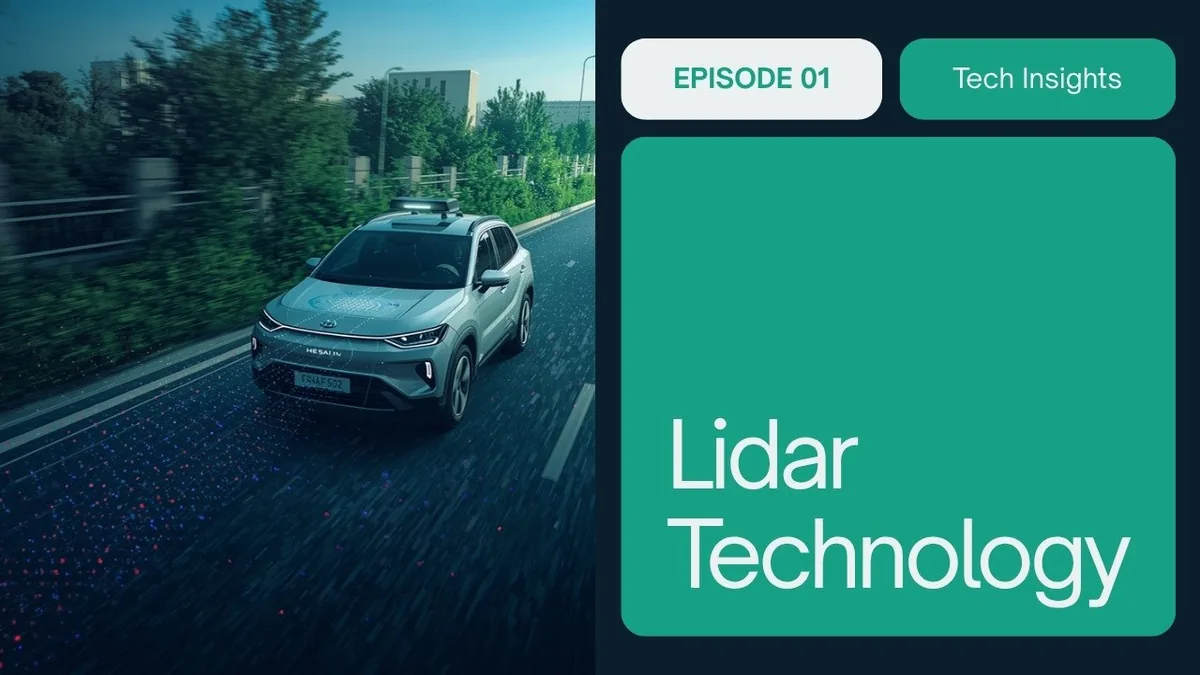
Chinese lidar manufacturer Hesai Technology, the primary lidar supplier for Nvidia's ADAS (Advanced Driver Assistance Systems) platform, has unveiled its EXT lidar — what the company calls the industry's first sensor to integrate both spatial detection and color detection in a single unit. The EXT represents a significant step toward richer environmental perception for autonomous vehicles and ADAS systems.
What Makes EXT Different
Traditional lidar systems measure distance and spatial geometry using laser pulses — they tell you where objects are in 3D space but not what color they are. Color information has historically been the domain of cameras. The EXT integrates color detection alongside spatial sensing, allowing the sensor to perceive both the shape and color of objects simultaneously. This matters for autonomous driving because color carries critical safety information: traffic light states, road markings, signage, and pedestrian clothing all rely on color cues that pure lidar misses.
Integration with Nvidia DRIVE Platform
Hesai's relationship with Nvidia is central to the EXT's significance. Nvidia's DRIVE platform — used by dozens of automotive OEMs and Tier 1 suppliers for ADAS development — relies on Hesai sensors for its reference hardware configurations. The EXT will integrate with Nvidia DRIVE through standard interfaces, giving ADAS developers a richer data stream without needing to separately fuse lidar and camera data for color information. This reduces system complexity and potentially improves real-time perception performance.
Hesai's Market Position
Hesai is the world's largest lidar company by shipment volume, having surpassed Velodyne and Luminar in unit sales. The company went public on Nasdaq in 2024 and has benefited from China's aggressive push into autonomous vehicle technology and smart transportation infrastructure. Its partnership with Nvidia gives it a critical foothold in the Western AV market despite growing US-China technology tensions. Hesai's ability to supply both Chinese and international customers has made it a pivotal player in the global lidar ecosystem.
Implications for the ADAS Industry
The EXT's color-spatial integration could reduce the number of sensors required in ADAS systems, lowering cost and complexity. Current ADAS setups typically require lidar for 3D mapping, cameras for color and texture, and radar for velocity measurement — each requiring separate processing pipelines. Combining lidar and color in a single sensor simplifies the perception stack and may reduce the data fusion challenges that contribute to edge case failures in autonomous systems.
FAQ
What is lidar?
Lidar (Light Detection and Ranging) uses pulsed laser light to measure distances and create detailed 3D maps of the surrounding environment. It is a core sensor technology for autonomous vehicles and advanced ADAS systems.
Why does color matter for autonomous driving?
Color provides contextual information that spatial geometry alone cannot: traffic light states (red/yellow/green), lane markings, road signs, and pedestrian visibility all depend on color perception for safe autonomous operation.
What is Nvidia DRIVE?
Nvidia DRIVE is a computing platform and software stack for developing autonomous vehicles and ADAS systems. It is used by automotive OEMs and suppliers to develop and test self-driving capabilities on Nvidia's AI hardware.
The Bottom Line
Hesai's EXT lidar pushes the boundary of what a single sensor can perceive, combining spatial and color detection in a way that could simplify ADAS architectures and improve perception reliability. Its integration with Nvidia DRIVE ensures it will reach a wide developer audience — and positions Hesai to maintain its lead as the lidar industry's most important supplier.
Related Articles
- Jensen Huang on Nvidia's AI Chip Moat
- Autonomous Vehicle Startups Raise Record $21.4B
- Mac Mini and Mac Studio Face 12-Week Wait Times