Half of U.S. AI Data Center Projects Are Being Delayed or Canceled
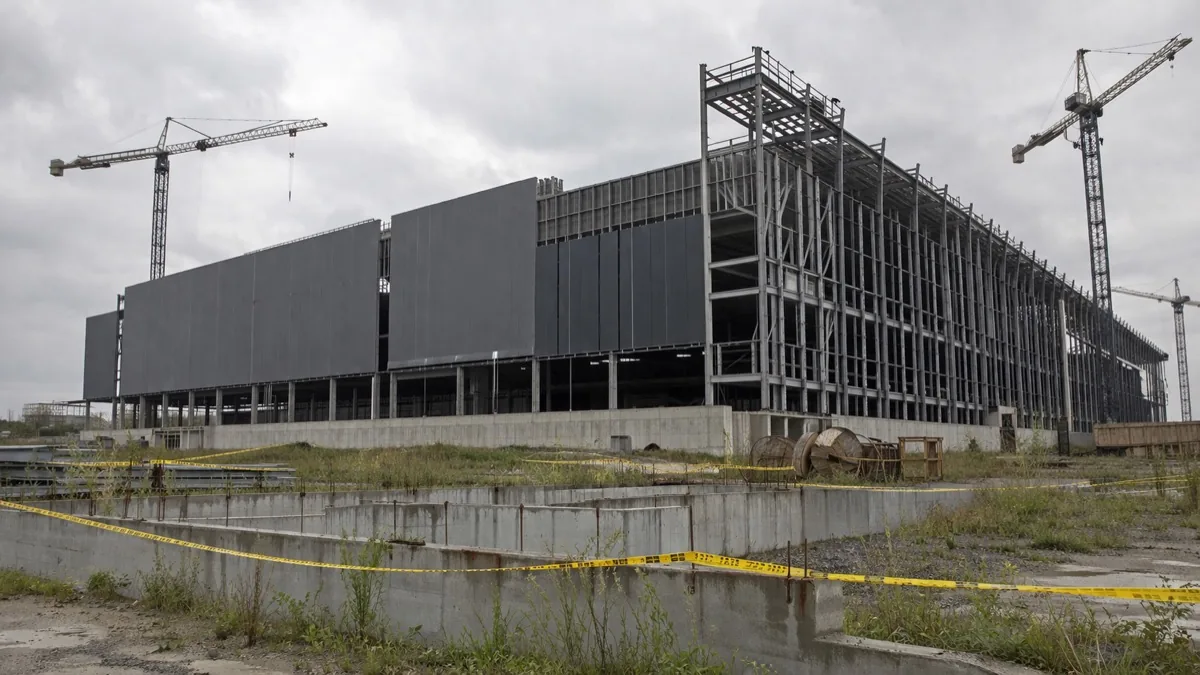
The AI infrastructure boom is running into a wall — literally. According to new research, nearly half of all planned AI data center projects in the United States are being delayed or canceled before completion. The data, drawn from construction permit filings, utility interconnection queues, and developer disclosures, reveals a significant gap between AI demand projections and infrastructure delivery reality.
The Scale of the Problem
Analysts tracking data center development across all 50 states found that of projects announced in 2023 and 2024:
- Approximately 47% have been delayed by 12 months or more beyond original timelines
- Roughly 12% have been formally canceled or placed on indefinite hold
- Only 41% are on schedule or ahead of schedule
The bottlenecks are varied, but power is the dominant theme. Building a hyperscale AI data center — the kind that can train frontier models — requires hundreds of megawatts of dedicated electrical capacity. In most US markets, that power simply isn't available on the timelines AI companies need.
Why Projects Are Stalling
Power Grid Constraints
The single biggest blocker is the electrical grid. Utilities in data center hotspots — Northern Virginia, Phoenix, Dallas, the Pacific Northwest — are telling developers that interconnection timelines for large industrial loads now stretch 3 to 7 years. Some developers have received "no capacity available" notices in markets they planned to build in.
Water and Cooling Concerns
AI compute clusters generate immense heat. Most modern data centers use evaporative cooling, which requires massive amounts of water. In drought-prone regions like the Southwest, local governments and water utilities are pushing back on new data center approvals, citing strain on regional water supplies. Arizona and Nevada have each seen multiple high-profile data center rejections on these grounds.
Zoning and Permitting Delays
Community opposition to data centers — over noise, light pollution, traffic, and environmental concerns — has grown significantly. Several major projects have faced multi-year permitting battles that added costs and killed timelines. Local governments, once eager for the tax revenue, are becoming more selective.
Tariffs and Construction Costs
The cost to build a hyperscale data center has risen dramatically. Steel, copper, transformers, and specialized cooling equipment are all more expensive than they were two years ago, partly due to tariffs and global supply chain strains. Some projects that penciled out at 2023 construction costs are no longer economically viable at 2025-2026 prices.
What This Means for AI Development
The AI industry's growth projections assume a steady pipeline of compute capacity coming online. If nearly half of planned projects are delayed or dead, those assumptions are off — and the gap between projected and actual compute capacity could meaningfully slow AI development timelines.
This doesn't mean AI progress halts. Existing data centers are being upgraded, and efficiency gains are reducing the compute required for certain workloads. But for frontier model training and large-scale inference, physical infrastructure is still the binding constraint.
The International Implication
As US buildout slows, there's growing pressure on the US-UAE Stargate deal and other international compute partnerships to fill the gap. But as recent reports indicate, even international facilities face security threats and geopolitical complications. There may be no easy path to the compute capacity AI companies say they need.
The AI build-out is not failing — but it is slower, harder, and more expensive than the industry projected. The gap between what AI companies need and what the infrastructure industry can deliver is real, and it's not closing fast.