Google's Nano Banana 2 Generates Images in Seconds — But Can It Actually Compete With Midjourney?
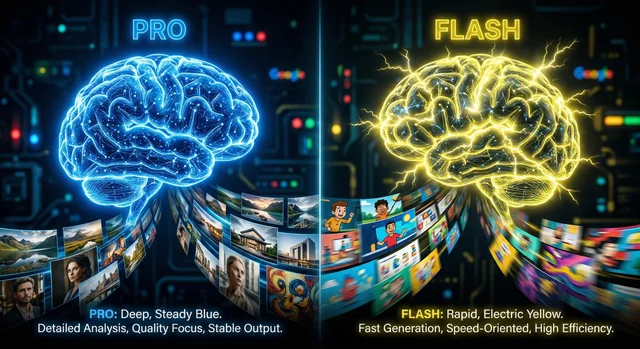
Google DeepMind has rolled out Nano Banana 2, the latest iteration of its AI image generation model that went viral earlier this year. The pitch? Combine the speed of the original Nano Banana with the intelligence and quality of Nano Banana Pro. Seconds-fast generation, 4K output, and consistency across characters and objects.
It sounds impressive on paper. But in a world where Midjourney, DALL-E, and Flux already dominate creative AI workflows, the question isn't whether Nano Banana 2 is fast — it's whether "fast" is enough.
What Nano Banana 2 Actually Does
Built on Google's Gemini Flash engine, Nano Banana 2 promises several upgrades over its predecessors:
- Speed: Generates multiple images in seconds, not minutes. The Flash engine is doing the heavy lifting here.
- Character consistency: Maintains up to 5 characters across multiple images — a persistent pain point in AI image generation.
- Object handling: Keeps up to 14 objects consistent without appearance drift.
- Resolution range: Supports everything from 512px thumbnails to full 4K output.
- Style variety: Photorealistic, cartoonish, flat lay infographic, and more.
- Real-world knowledge: Integrates web search for more accurate, contextual outputs.
Nano Banana 2 vs Nano Banana Pro: The Key Differences
Think of it this way: Nano Banana Pro was built for power users who wanted studio-level control and didn't mind waiting. Nano Banana 2 is built for everyone who wants Pro-quality results at Flash speed.
The Pro model still excels at complex, highly detailed compositions where you need maximum control. But Nano Banana 2 closes the gap significantly — especially for rapid iteration, storyboarding, social media content, and marketing visuals where speed matters more than pixel-perfect precision.
The Distribution Advantage
Where Google has a real edge isn't in the model itself — it's in distribution. Nano Banana 2 is rolling out across Gemini apps, Google Search (AI mode), Google Lens, Flow, Google Ads, and Vertex AI. That's over 140 countries and multiple languages at launch.
Midjourney lives in Discord. DALL-E lives in ChatGPT. Nano Banana 2 lives everywhere Google does — which is essentially everywhere. When your image generator is embedded in Search, Ads, and the Gemini app that ships on every Android phone, you don't need to be the best model. You just need to be good enough.
The Skeptic's Take
Here's the thing about "viral" AI tools: going viral on social media is not the same as becoming the tool professionals actually use. The original Nano Banana went viral because people were surprised Google could generate decent images. The novelty factor was high.
But now we're on version 2, and the competition isn't standing still. Midjourney V7 is redefining photorealism. Flux is winning over open-source enthusiasts. DALL-E keeps getting better inside ChatGPT's ecosystem. Google naming its model "Nano Banana" is fun marketing, but creative professionals care about output quality, not branding.
The Bottom Line
Nano Banana 2 is a legitimate step forward for Google's image generation capabilities. The speed improvements are real, the consistency features address genuine pain points, and the distribution across Google's ecosystem is unmatched. But being fast and everywhere isn't the same as being the best — and in creative AI, quality still wins over convenience.
The real test isn't whether Nano Banana 2 can generate an image in seconds. It's whether the image it generates is the one you actually want to use.