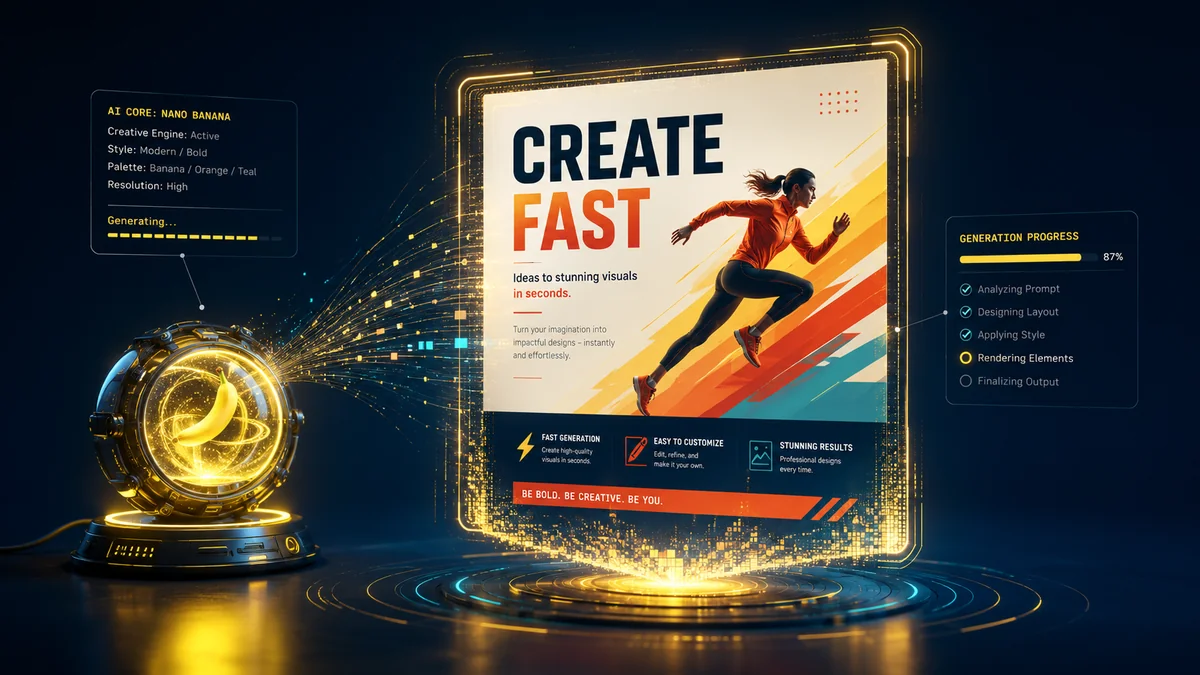
It has one of the silliest names in tech, but "Nano Banana" is now one of the most important tools in AI image generation. It's the community nickname for Google's family of Gemini image models, and with the June 30, 2026 release of a new, cheaper tier, the lineup is complete — and genuinely impressive.
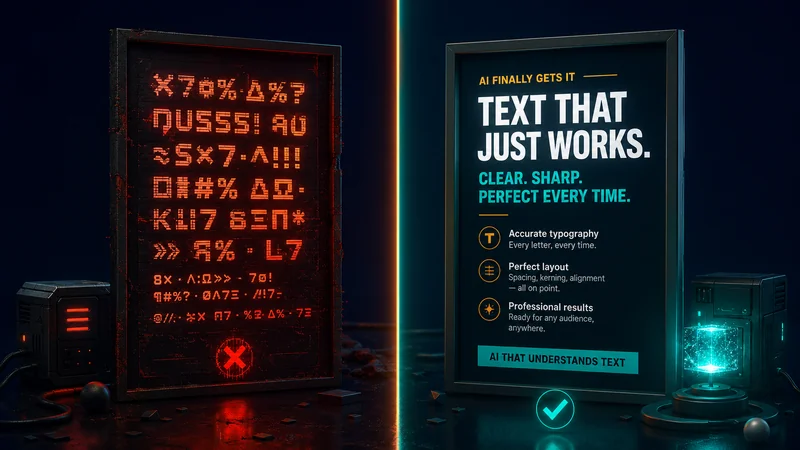
The headline isn't resolution or speed, though both are strong. It's something far more mundane and far more useful: these models can finally write legible text inside an image. If you've ever tried to make an AI poster and watched it produce beautiful, meaningless squiggles where words should be, you'll understand why that's a big deal.
What Is "Nano Banana"?
"Nano Banana" started as an internal/community codename and stuck. Officially, it's Google's Gemini image-generation family, now split into three tiers so you can trade quality for cost and speed. All three run through the Gemini API and Google AI Studio.
The Text Problem AI Couldn't Solve
For years, the dirty secret of AI image tools was text. Ask for a storefront that says "OPEN" and you'd get "OPNE" or worse. It made AI images useless for the exact things businesses wanted most — ads, posters, packaging, thumbnails, logos-in-context.
Google's flagship, Nano Banana Pro, is reportedly the first model where an instruction like "add the text 'Sale' in bold white on the product" reliably produces readable text — with accuracy around 94%, and across scripts including Latin, Chinese, Arabic, Cyrillic and Devanagari. That single fix changes what AI image generation is for.
The Three-Model Lineup
Think of it as a quality-versus-speed ladder:
| Model (nickname) | Official name | Best for |
|---|---|---|
| Nano Banana Pro | Gemini 3 Pro Image | Top quality, best text, up to 4K |
| Nano Banana 2 | Gemini 3.1 Flash Image | Fast, cheap, high-volume iteration |
| Nano Banana 2 Lite | Gemini 3.1 Flash-Lite Image | Cheapest & fastest (new, Jun 30) |
Pro is the one that "thinks" about composition before it generates, supports up to 4K resolution, and nails text. The Flash and Lite tiers trade some polish for speed and volume — ideal when you need dozens of quick options rather than one perfect hero image.
Speed & Pricing
Everything here is fast. Pro generates in roughly 2-5 seconds, and the Flash and Lite models can produce an image in under a few seconds. On cost, the tiers spread out sensibly:
- Nano Banana Pro: around $0.13 per image at higher quality — cheap for what it does.
- Nano Banana 2 / Lite: just a few cents per image, built for bulk generation.
Exact prices vary by resolution and provider, but the logic is simple: premium, text-perfect images cost a little more; fast, disposable drafts cost almost nothing. It's the same "right tool for the job" tiering we see across the best AI creative tools.
Editing, Not Just Generating
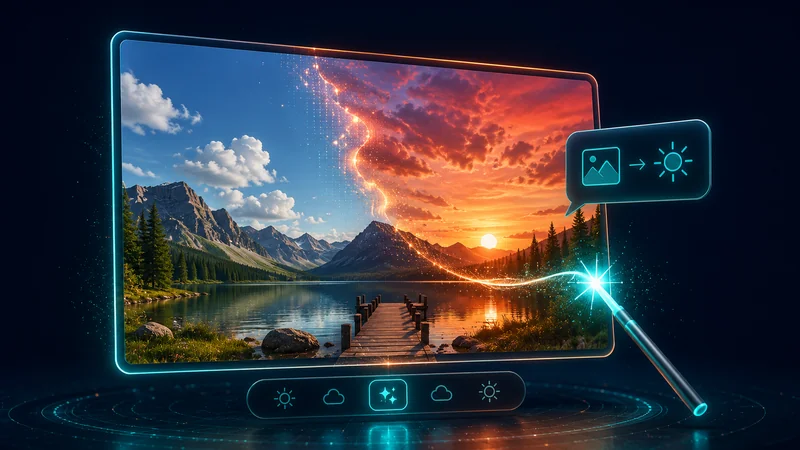
A quieter but equally important feature: instruction-based editing. You can hand the model an existing image and a plain-English request — "change the sky to sunset," "remove the person on the left" — and it applies only that change while preserving the rest. No masking, no layers, no Photoshop.
It can also ingest up to 14 reference images at once for style transfer and detail control, which makes it genuinely useful for consistent brand and character work — the thing older image models were notoriously bad at.
How It Stacks Up
On the metric that matters most for commercial use — text rendering — Google's lineup currently leads. Nano Banana Pro's reported ~94% accuracy sits well above DALL-E 3 (~78%) and Midjourney V7 (~71%). Add native editing, multi-image references and 4K output, and it's a formidable all-rounder.
Midjourney still wins fans on pure aesthetics, and it's part of the broader wave of tools reshaping creative work, much like Gemini's flagship text models did for writing and coding. But if your image needs words in it, this is the new default.
Why It Matters
- AI images are now "job-ready." Readable text unlocks real ads, posters, packaging and thumbnails — not just pretty art.
- Design gets democratized. A small business can produce on-brand marketing images in seconds, no designer required.
- Provenance is built in. Invisible SynthID watermarks help flag AI content as the line between real and generated blurs.
- The tiers make it practical. Cheap Flash/Lite for drafts, premium Pro for the final — usable at any budget.
Frequently Asked Questions
What is Nano Banana?
'Nano Banana' is the popular nickname for Google's family of Gemini image-generation models. It now spans three tiers: Nano Banana Pro (officially Gemini 3 Pro Image), the top-quality flagship; Nano Banana 2 (Gemini 3.1 Flash Image), the faster, cheaper workhorse; and Nano Banana 2 Lite (Gemini 3.1 Flash-Lite Image), the fastest and most affordable, released on June 30, 2026. All three are available through the Gemini API and Google AI Studio.
Why is everyone talking about the text feature?
Because text inside AI images has been broken for years — most models turn 'Sale' into decorative gibberish. Google's Nano Banana Pro reportedly renders readable text with around 94% accuracy, well ahead of rivals, and across many scripts including Latin, Chinese, Arabic, Cyrillic and Devanagari. For posters, ads, product shots and thumbnails, that turns AI image generation from a toy into a usable tool.
What's the difference between the three models?
It's a quality-versus-speed ladder. Nano Banana Pro (Gemini 3 Pro Image) is the highest quality — best text, up to 4K resolution, and it 'thinks' about composition before generating, but costs more per image. Nano Banana 2 (Flash) is much cheaper and faster for high-volume iteration, and Nano Banana 2 Lite is the cheapest and fastest of all, aimed at quick, low-cost enterprise generations.
How much do they cost?
Pricing scales with the tier. Nano Banana Pro runs around $0.13 per image at higher quality, while the Flash and Lite models drop to just a few cents per image for speed and volume. Exact costs vary by resolution and provider, but the practical point is clear: premium, text-accurate images cost a little more, and fast bulk images cost very little.
Can it edit existing images, not just generate new ones?
Yes, and that's a highlight. You can send an existing image plus a plain-English instruction — like 'change the sky to sunset' — and the model applies just that change while preserving everything you didn't mention. It can also take up to 14 reference images at once for style or detail control, making it strong for consistent brand and character work.
Are the images watermarked?
Yes. Images carry Google's SynthID — an invisible watermark embedded in the pixels that helps identify content as AI-generated without any visible mark. It's part of the industry's push toward provenance and transparency as AI images become harder to distinguish from real photos.
How does it compare to DALL-E and Midjourney?
On text rendering specifically, Nano Banana Pro's reported ~94% accuracy tops DALL-E 3 (~78%) and Midjourney V7 (~71%). It also offers native instruction-based editing, multi-image references and up to 4K output. Midjourney still has devoted fans for its aesthetic, but for anything involving legible words in an image, Google's lineup currently sets the bar.
Final Thoughts
It's funny that a model called "Nano Banana" may be the one that finally makes AI image generation useful for real work. The photorealism arms race was always the flashy part; the boring, unglamorous fix — text that actually reads — is what turns a novelty into a workhorse.
With a clear three-tier lineup, native editing, and provenance baked in, Google has quietly built one of the most practical creative toolkits in AI. The next question is how fast rivals respond — because the moment "AI can't do text" stopped being true, the bar for every image model went up. We'll keep tracking where it goes next.