Google Maps Gets Its Biggest AI Upgrade: Ask Maps and Immersive Navigation
Google Maps Is Getting the Gemini Treatment
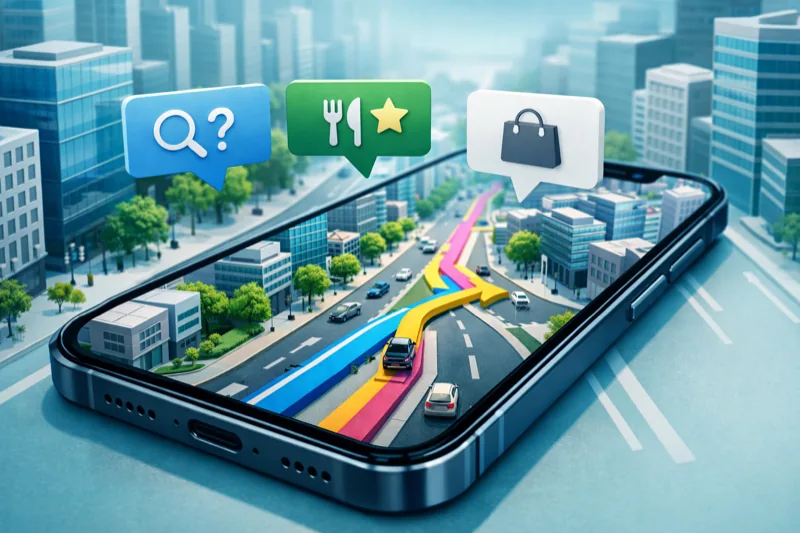
Google announced the biggest overhaul of Google Maps in over a decade, powered by its Gemini AI models. The update introduces two major features: Ask Maps, a conversational search tool, and Immersive Navigation, a 3D driving experience that aims to make navigation more intuitive.
Ask Maps: Talk to Your Map
Ask Maps lets you type natural-language questions like “My phone is dying — where can I charge it without waiting in a long line for coffee?” and get conversational answers with a customized map showing your options. It draws from over 300 million places and reviews from 500 million contributors to give you recommendations.
The feature personalizes results based on your saved places, search history, and preferences. If you’ve been searching for vegan restaurants, it already knows. You can also book reservations, save places, and get directions directly from the conversation — turning a simple question into an actionable plan.
Ask Maps is rolling out now in the U.S. and India on Android and iOS, with desktop coming soon.
Immersive Navigation: 3D Driving Gets Real
The navigation experience is getting a complete visual overhaul with Immersive Navigation. Your map now renders a vivid 3D view showing buildings, overpasses, and terrain around you. When needed, Maps highlights lanes, crosswalks, traffic lights, and stop signs to help you navigate complex intersections.
The 3D detail comes from Gemini models analyzing Street View imagery and aerial photos in real-time. New features include smart zooms that show upcoming turns, transparent buildings for visibility, and voice guidance that sounds more conversational — like a friend telling you “Go past this exit and take the next one for Illinois 43 South.”
Google also added alternate route comparisons showing tradeoffs (less traffic vs. tolls), real-time disruption alerts from community contributions (over 10 million updates daily), and arrival guidance showing building entrances, parking recommendations, and street-side positioning.
The Bottom Line
Google is essentially turning Maps into a concierge that happens to give directions. The Ask Maps feature is genuinely useful if it works as advertised — no more reading 50 reviews to decide between two coffee shops. But the real question is privacy: Google Maps already knows everywhere you go. Now it wants to know what you’re looking for, who you’re meeting, and when. That’s a lot of personal data feeding into one conversational interface. The 3D navigation looks impressive, but most of us just need to know when to turn left. Sometimes simpler is better.