Google Launches Nano Banana 2 — But Is Faster Image Generation Really What We Needed?
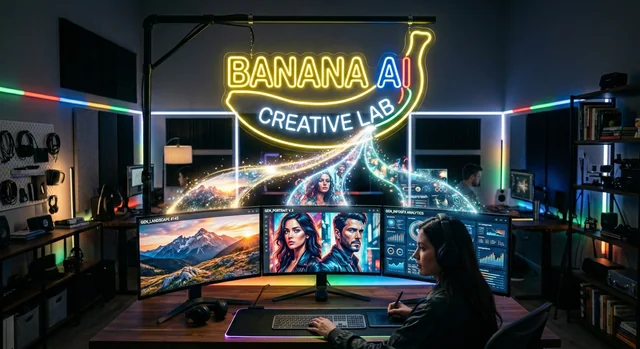
Google has launched Nano Banana 2, officially known as Gemini 3.1 Flash Image, its latest image generation model that promises Pro-level quality at Flash speed. It's rolling out across virtually every Google product — from the Gemini app to Search, Google Ads, and developer tools. But in a market already drowning in AI image generators, does the world really need another one?
What Nano Banana 2 Brings to the Table
The headline features are impressive on paper:
Advanced world knowledge: The model taps into Gemini's real-world knowledge base, powered by real-time web search, to more accurately render specific subjects. It can create infographics, turn notes into diagrams, and generate data visualizations.
Precision text rendering: One of the biggest pain points in AI image generation has been readable text. Nano Banana 2 claims accurate, legible text rendering for marketing mockups, greeting cards, and even cross-language translation within images.
Subject consistency: Maintain character resemblance for up to 5 characters and 14 objects in a single workflow — a game-changer for storyboarding and narrative content creation.
Production-ready specs: Full control over aspect ratios and resolutions from 512px to 4K, suitable for everything from vertical social posts to wide-screen backdrops.
Where It's Rolling Out
Google isn't being subtle about distribution. Nano Banana 2 is launching across:
- Gemini app — replaces Nano Banana Pro across Fast, Thinking, and Pro models
- Google Search — in AI Mode and Lens, across 141 new countries and 8 new languages
- AI Studio + API — available in preview for developers
- Google Cloud — via Vertex AI
- Flow — as the default model, zero credits required
- Google Ads — powering campaign creative suggestions
The Skeptical Take
Let's cut through the marketing. Google's strategy here is classic platform bundling: take a decent AI image model, make it fast and free, then embed it into every product in your ecosystem. It's not about being the best — it's about being everywhere.
And there's a reason Google is replacing Nano Banana Pro with this model across most tiers. Pro subscribers still get access to the original for "specialized tasks," which is Google's way of saying: the new model is good enough for most people, but not quite as good as what we had before.
The subject consistency feature (5 characters, 14 objects) sounds useful for professional workflows, but the real question is whether the output quality matches dedicated tools like Midjourney or even OpenAI's DALL-E 3. Speed is great, but if the images look like generic stock photos, does it matter how fast you can generate them?
The most telling detail? Google is making this the default in Google Ads. That's where the money is. Nano Banana 2 isn't really about empowering artists — it's about automating ad creative at scale.
The Provenance Question
Credit where it's due: Google's approach to AI image provenance — combining SynthID watermarking with C2PA Content Credentials — is industry-leading. Over 20 million SynthID verifications since November is a serious number. In a world increasingly worried about deepfakes and AI-generated misinformation, this matters more than any feature improvement.
The Bottom Line
Nano Banana 2 is a solid incremental upgrade that brings Pro-level capabilities to the masses at Flash speed. But Google's real play here isn't innovation — it's distribution. By embedding this model into Search, Ads, and every developer tool in the ecosystem, Google is ensuring that its image generation becomes the default for billions of users. Whether that's good for creativity or just good for Google's ad business is a question worth asking.