Google Classifies Back Button Hijacking as Malicious — Search Rankings Drop in June
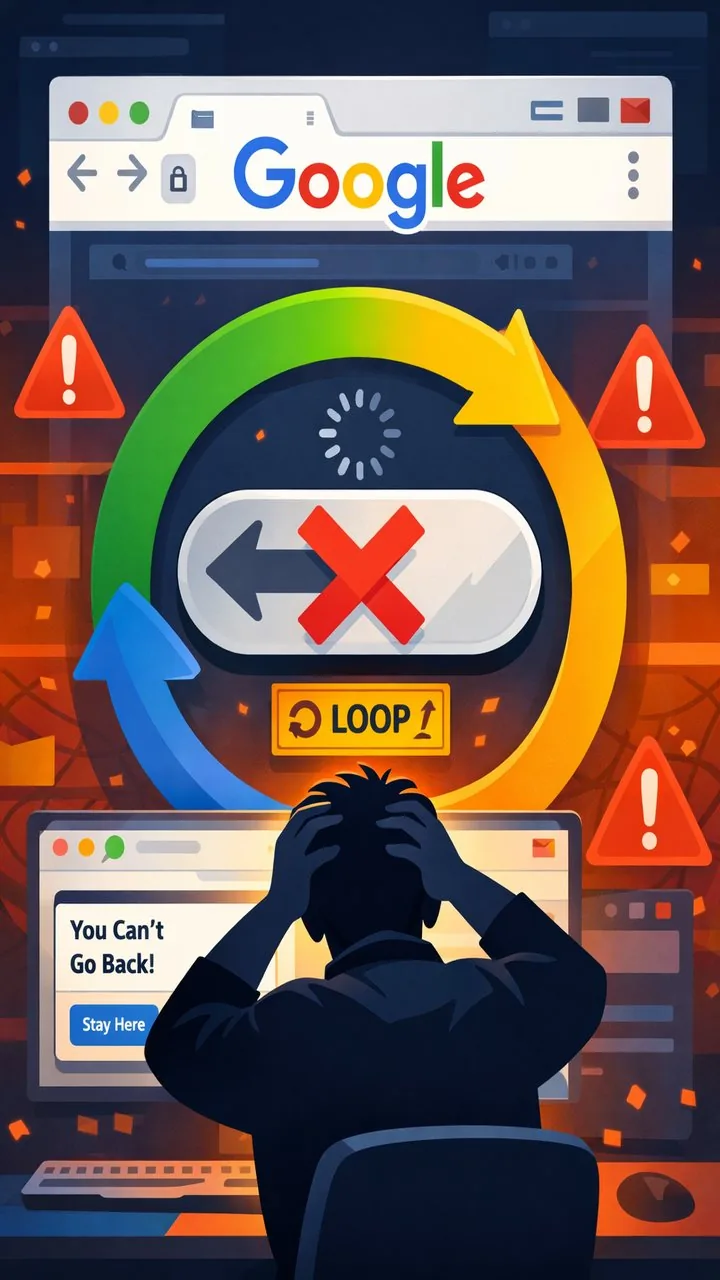
Google has officially classified "back button hijacking" as malicious behavior — and starting June 15, 2026, websites that interfere with browser navigation may face reduced visibility in Search. The policy update targets a long-standing dark pattern where sites manipulate the browser history stack to trap users in redirect loops, block the back button from functioning, or insert phantom pages that prevent users from leaving.
What Back Button Hijacking Actually Is
When you click a link and want to go back, your browser's back button should take you to the previous page. Back button hijacking defeats that expectation. Common techniques include pushing duplicate history entries programmatically, redirecting users to a new page when they try to navigate back, and inserting interstitial pages — usually ad-heavy or subscription prompt pages — into the navigation stack.
The practice is widespread in certain categories: mobile games, subscription services, and content farms use it to keep users on-page for engagement metrics. It is universally despised by users and has been a recurring complaint to browser developers for years.
What Google's Policy Change Means in Practice
Google's Search team will begin treating back button hijacking as a signal in its quality ranking systems starting June 15. Sites identified as engaging in the behavior "might appear less prominently in Google Search," according to the policy update. Google's crawler will identify the pattern by analyzing JavaScript-driven history manipulation and redirect behavior during page evaluation.
This follows Google's broader approach of encoding user experience signals directly into ranking — Core Web Vitals, mobile usability, HTTPS, and intrusive interstitial penalties have all preceded this move. Back button hijacking is the latest UX dark pattern to get the penalty treatment.
Who Gets Hit
The policy will disproportionately affect mobile-optimized content farms, ad networks that inject navigation interference, and any site using JavaScript frameworks that manipulate browser history for engagement. Legitimate single-page applications that manage their own routing should not be affected — Google's documentation distinguishes between navigation management and navigation trapping.
The Bottom Line
Back button hijacking is one of the oldest tricks in the dark pattern playbook, and Google has finally decided it constitutes bad enough user experience to warrant a ranking signal. If your site or any site you're responsible for uses history stack manipulation to keep users engaged, the June 15 deadline gives you roughly two months to fix it before Search traffic takes the hit.