Google Sets 2029 Deadline for Post-Quantum Cryptography as Encryption Threats Accelerate
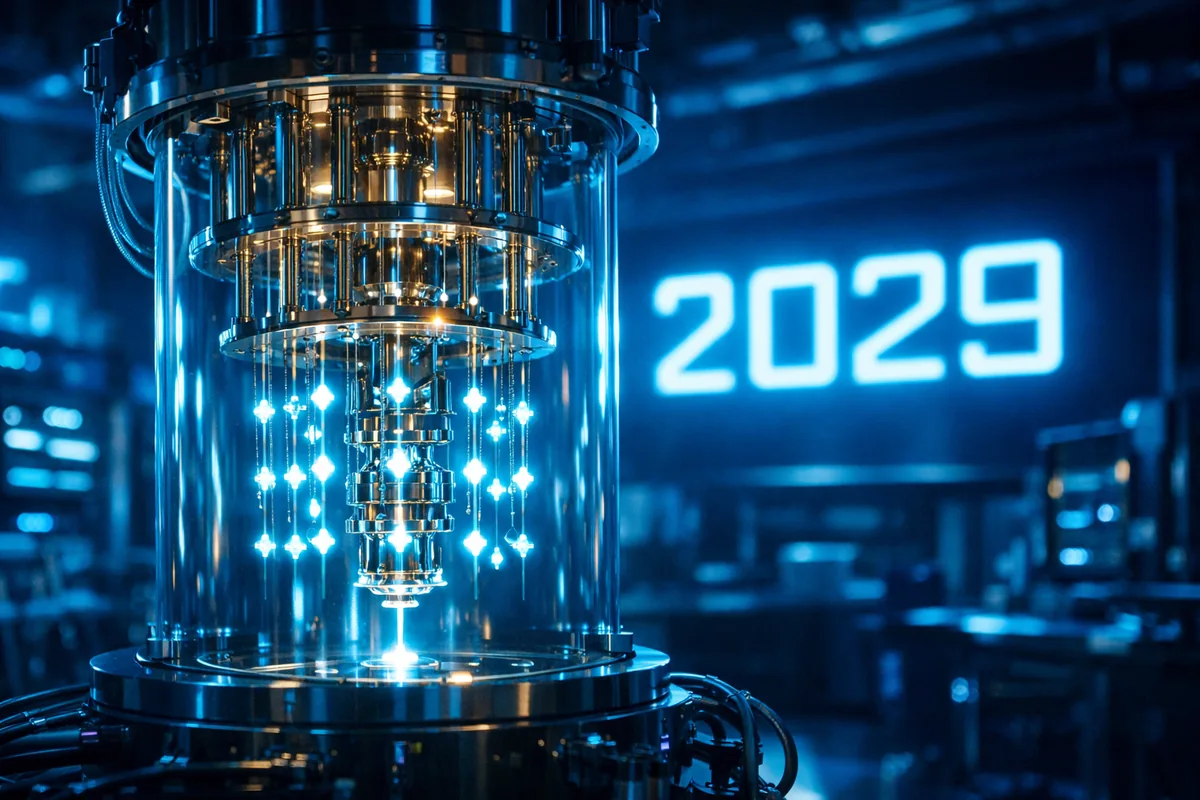
Google has set 2029 as its deadline for migrating to post-quantum cryptography, warning that "quantum frontiers may be closer than they appear." This is the first time Google has set a specific timeline for rolling out quantum-resistant security across its products — and the urgency is real.
Why 2029?
Google's researchers recently discovered that cracking RSA encryption may require 20 times fewer quantum resources than previously estimated. This finding compressed the security timeline dramatically — what was once thought to be a distant theoretical threat is now a near-term practical concern.
The announcement, signed by Google VP of Security Engineering Heather Adkins and Senior Cryptography Engineer Sophie Schmieg, frames the 2029 target as a direct response to rapid advances in:
- Quantum hardware development — physical qubit counts are growing rapidly
- Error correction techniques — making quantum computers more reliable
- Factoring resource estimates — the computational cost of breaking encryption is dropping faster than expected
The Two Quantum Threats
Google's warning focuses on two distinct dangers:
"Harvest Now, Decrypt Later" (Present Threat)
Bad actors are already stealing encrypted data today, confident they'll be able to unlock it once quantum computers become powerful enough. This means sensitive data encrypted with today's standards — government communications, financial records, medical data — is being stockpiled for future decryption. The clock is already ticking.
Digital Signature Collapse (Future Threat)
Digital signatures are the cryptographic foundation of authentication across the entire internet — from HTTPS certificates to software updates to banking transactions. These will need to be replaced before a cryptographically relevant quantum computer (CRQC) arrives, or the entire trust infrastructure of the internet collapses.
What Google Is Doing About It
Google isn't just issuing warnings — it's actively deploying solutions:
- Android 17 will integrate post-quantum digital signature protection using ML-DSA, an algorithm standardized by NIST
- Google Cloud is implementing PQC across its infrastructure
- Internal communications are being migrated to quantum-resistant protocols
- Chrome browser has already begun supporting post-quantum key exchange
What This Means for Bitcoin and Crypto
The crypto community is paying close attention. Bitcoin and most cryptocurrencies rely on the same elliptic curve cryptography that quantum computers threaten. Ethereum and Solana have already begun exploring quantum-resistant upgrades, but Bitcoin's decentralized governance makes rapid protocol changes challenging.
Google's compressed timeline adds urgency to these efforts — if 2029 is the new horizon, crypto projects have roughly three years to implement quantum-resistant solutions or face existential risk.
Bottom Line
When Google — which operates one of the world's most advanced quantum computing programs — says the quantum threat to encryption is closer than expected and sets a 2029 deadline for migration, that's not hype. It's a warning from the people who understand quantum computing better than almost anyone. The "harvest now, decrypt later" threat means your encrypted data today could be readable tomorrow. Organizations that haven't started their post-quantum migration are already behind.
Frequently Asked Questions
What is post-quantum cryptography?
Post-quantum cryptography (PQC) refers to encryption algorithms designed to be secure against both classical and quantum computers. These algorithms use mathematical problems that remain hard even for quantum computers to solve.
Can quantum computers break all encryption?
Not all — but they can break the most widely used types (RSA, elliptic curve). Symmetric encryption like AES-256 is considered quantum-resistant with larger key sizes. The vulnerable systems are public-key cryptography used for key exchange and digital signatures.
What is "harvest now, decrypt later"?
It's a strategy where attackers collect encrypted data today, store it, and plan to decrypt it later when quantum computers become powerful enough. This means sensitive data encrypted now could be exposed in the future.
Is my data at risk right now?
Data encrypted with standard methods today is safe from classical computers but potentially vulnerable to future quantum computers. If your data needs to remain confidential beyond 2030, migration to post-quantum cryptography should be a priority.