FTC in Settlement Talks with Ad Companies Over Alleged Coordinated Boycott of X
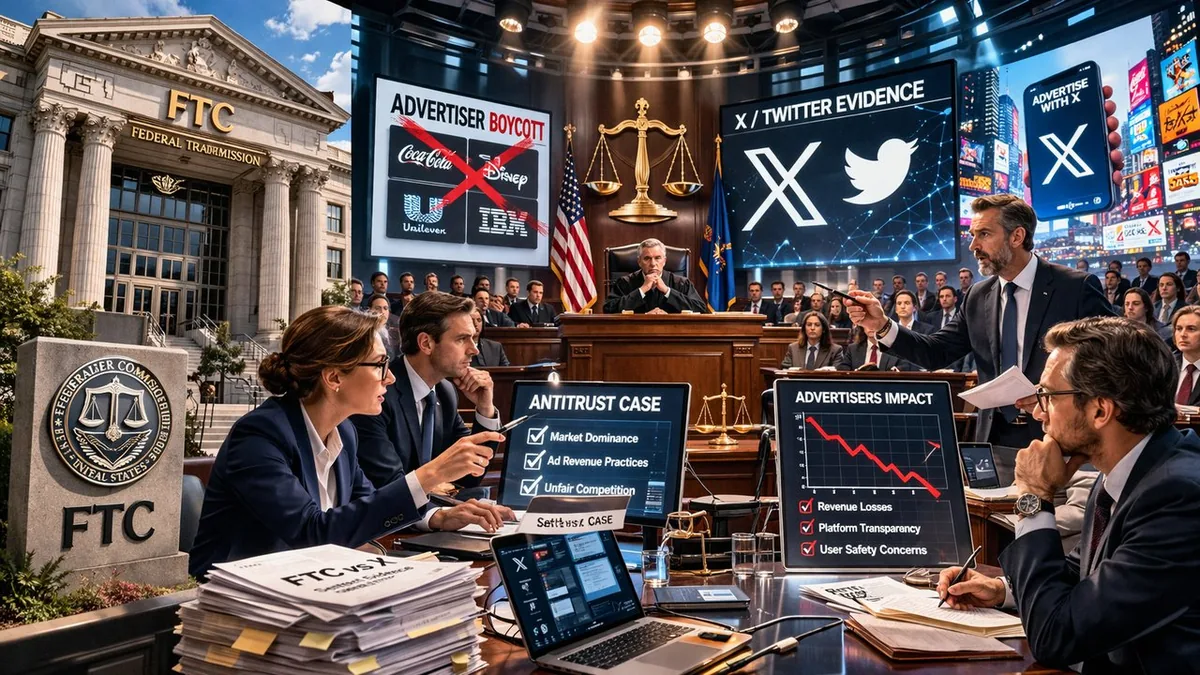
The US Federal Trade Commission is in settlement talks with advertising companies to resolve an antitrust probe into alleged coordinated boycotts of platforms including X, formerly known as Twitter, following pressure from allies of Elon Musk, Bloomberg reported. The investigation centers on whether major advertisers and advertising trade groups coordinated to withhold ad spending from X in a way that constitutes an unlawful group boycott under antitrust law. The FTC's settlement talks suggest the agency has found enough evidence of coordination to pursue resolution — the question is whether it can construct a settlement that satisfies both the legal standard and the political environment around Musk-aligned enforcement priorities.
What the Probe Alleges
The FTC investigation focuses on the Global Alliance for Responsible Media (GARM), a World Federation of Advertisers initiative that set brand safety standards for advertising placement. Critics, including Musk and his allies in Congress, alleged that GARM was used to coordinate advertiser withdrawals from X in a way that constituted an antitrust boycott rather than independent brand safety decisions. The World Federation of Advertisers disbanded GARM in August 2024 following a House Judiciary Committee report and subsequent scrutiny. The FTC probe represents the next phase of legal pressure on the advertising industry over the X advertiser pullback.
The legal theory is contested. Advertising brand safety decisions — choosing not to place ads next to certain content — are generally considered independent business judgments protected by antitrust law. Critics of the probe argue that coordinated brand safety standards are pro-competitive rather than anticompetitive, allowing advertisers to efficiently communicate content standards to platforms. Proponents argue that group boycotts causing specific competitive harm — if GARM's standards were specifically designed to target X rather than address genuine brand safety — cross the line into antitrust violation.
The Political Dimension
The FTC probe occurs in a political context where the Trump administration has been broadly supportive of Musk's positions and critical of what it characterizes as politically motivated advertiser coordination against conservative-aligned media platforms. Ad network dynamics have become increasingly politicized, and the FTC's willingness to pursue settlement talks — rather than dropping the probe — reflects the enforcement priorities of a Republican-led commission under the current administration.
Frequently Asked Questions
What is the FTC investigating regarding X and advertisers?
The FTC is investigating whether advertising companies coordinated to withhold ad spending from X (formerly Twitter) in a way that constitutes an unlawful group boycott under antitrust law, potentially through advertising trade group GARM's brand safety standards.
What happened to GARM?
The Global Alliance for Responsible Media (GARM) was disbanded by the World Federation of Advertisers in August 2024 following a House Judiciary Committee investigation and mounting political pressure over its role in coordinating advertiser pullbacks from X.
What would an FTC settlement mean?
A settlement would likely require ad companies to modify or limit coordinated brand safety activities and potentially pay penalties, without the companies admitting liability. It would resolve the probe without a court ruling on whether the conduct actually violated antitrust law.
The Bottom Line
The FTC settling with ad companies over X advertiser coordination is less about antitrust law than about the political economy of the current regulatory moment — enforcement against perceived anti-Musk coordination, in an administration closely aligned with Musk's interests. Whether the underlying legal theory is sound is a question that a settlement avoids answering. For the advertising industry, the settlement talks signal that coordinated brand safety activities will face ongoing regulatory scrutiny regardless of their competitive effects, which will have a chilling effect on industry-wide content safety standards that extend well beyond any settlement's specific terms.