Flagging Patterns
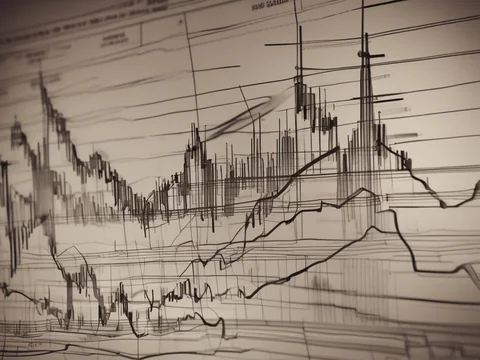
For successful trading, luck is not enough. You need to research the market and have different trading strategies and tools. The more of them a trader has in the arsenal, the better. So, let's take a closer look at the features of one of the most popular and effective methods, namely, flagging patterns.
Features of a trading flag pattern
Flagging patterns are beneficial for the work of a successful trader. They are divided into several types and help better understand price movements and changes in market trends. In general, flagging patterns is the most convenient solution for setting up technical analysis. It is useful for both short-term and long-term tactics, as it can predict the continuation of trends. The direction of price movement is unimportant because the stock flag pattern is formed both during a downtrend and a rise.
Therefore, flagging patterns are among the main figures of graphical analysis and an important tool for working on financial markets. Along with the speed and quality of communication, it creates a trader's success. As for the above parameters, you should also pay special attention to them, taking care of a VPS in advance. MyForexVPN will help you by providing high-quality communication with the lowest possible signal delay, which is extremely critical for a trader. After all, speed often plays a key role in financial markets.
How do I decipher stock values from flagging patterns?
In the long run, a flag pattern will create two parallel lines over time. Their peaks and troughs are correlated with each other. For using these stock charts on Forex, it is essential to understand their composition and features. Only then will they become a convenient tool for improving trading efficiency. Specialized software can help you create flagging patterns.
Interestingly, experts and beginners have different perceptions of these stock charts. The former sees them as a slowdown, after which the trend should continue. But for the latter, the appearance of flagging patterns is more likely an indicator that the market has moved into a flat state.
Typically, a stock chart is formed as a result of an increase or decrease in the stock price over a short period. That is, such flagging patterns are a consequence of a bullish or bearish trend. Financial markets are a highly volatile environment. At the same time, the trading flag pattern describes temporary stops in the overall price dynamics.
Basic principles of flagging patterns formation
Certain conditions must be met for a stock chart to form flagging patterns. They are worth paying special attention to.
- The price has had a sharp decline or increase during several sessions.
- Then comes the flat. The price range is quite narrow. The boundaries of the side channel are clear. In ideal flagging patterns, the flat is oriented in the opposite direction from the previous movement. This indicator is worth paying special attention to. Usually, if flagging patterns go in the same direction, a trend reversal is expected, and if they go in the opposite direction, it is expected to continue.
- The boundaries of the flat channel should be marked. After that, you can predict further price movements. To do this, measure the length of the last fall or rise from the edge of the range. The point that will be obtained as a result of such actions will be the continuation of the stock chart.
- The resulting segment should be divided into three parts. The first 30% of it is the entry point. The remaining 70% of the chart is the closing of positions.
You should also pay attention to a sharp price rise before the flagging patterns are formed. This may indicate the appearance of some news that can significantly change the situation on the market.
Types of flagging patterns
An individual trading approach is usually formed under the influence of the investor's goals and a certain charting option. Several flagging patterns are worth paying special attention to. The most relevant stock charts are the following:
- Bullish flag;
- Bearish flag.
The first option indicates a continuation of the trend and an increase in prices. The second of flagging patterns suggests a decline in prices. In this case, the bearish pattern begins on the chart above and is effective in the long run. In the case of flagging patterns, however, the signs of both bullish and bearish markets are the same and are regulated by price and demand, which often change under the influence of each other. Analyzing the market with the help of a flag pattern is quite justified. Knowing the current trends allows you to make the right decisions and diversify your investment portfolio profitably. However, when choosing such flagging patterns, it is important to study in detail the reasons that form them. At the same time, it should be remembered that the market is unpredictable, and no graphical model can guarantee success.