Fermi Data Center CEO Steps Down Amid AI Infrastructure Expansion Challenges
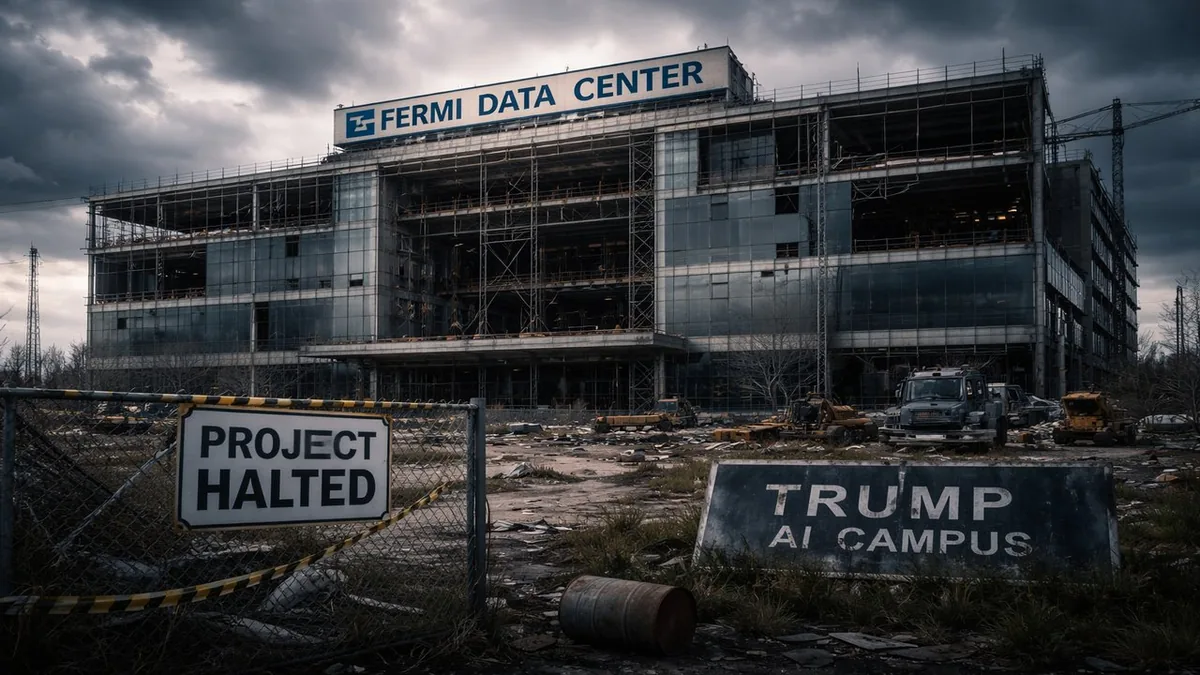
Fermi, the AI data center startup backed by major infrastructure investors, has announced the sudden departure of its CEO as the company navigates a complex expansion phase marked by ballooning capital requirements and delivery timeline pressures. The exit comes at a critical juncture for the company, which had announced plans to deploy more than 2 gigawatts of AI compute capacity by 2027.
Background on Fermi
Fermi was founded to address the growing gap between AI compute demand and available data center capacity. Backed by infrastructure funds and strategic investors from the energy and telecom sectors, the company acquired multiple data center sites across the U.S. and Europe with the goal of delivering purpose-built AI compute facilities faster than legacy hyperscalers could expand their own footprints.
Reasons Behind the Departure
Sources close to the company say the CEO's departure stems from disagreements with the board over the pace of capital deployment and the company's debt load. Fermi has been aggressive in acquiring land, securing power agreements, and placing orders for GPU clusters — but the build-out has taken longer and cost more than initial projections, creating tension with investors who expected faster revenue ramp-up.
The Broader AI Data Center Crisis
Fermi's leadership challenges reflect a broader pattern across the AI infrastructure sector: the gap between the urgency of AI compute demand and the practical constraints of data center construction timelines. Power procurement, grid interconnection queues, and semiconductor supply chain delays have consistently caused AI data center projects to run 12-18 months behind initial projections — a mismatch that has strained management teams across the industry.
The Bottom Line
Fermi's CEO departure is a symptom of the fundamental difficulty of building AI infrastructure at the speed the market demands. Until the power grid, semiconductor supply chains, and construction timelines catch up with AI's growth trajectory, expect more leadership turbulence at data center companies caught between investor expectations and physical reality.
Related Articles
- Amazon's $25 Billion Mississippi Data Center Expansion
- AI Chip Export Controls and the Data Center Bottleneck