EU Launches Open-Source Age Verification App to Protect Children From Harmful Online Content
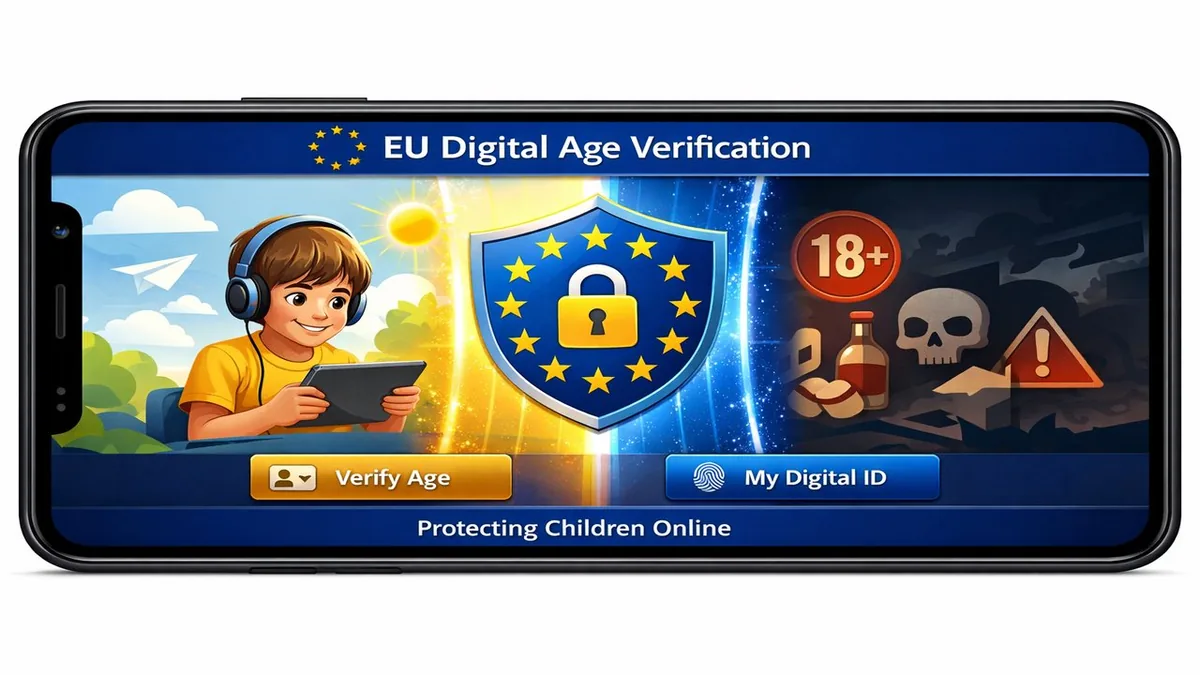
The European Union has announced that its open-source age verification app is technically ready for deployment, marking a major step in the bloc's effort to protect children from harmful online content. EU Commission President Ursula von der Leyen described the app as ticking "all the boxes" — highest privacy standards, works on any device, easy to use, and fully open source.
How the App Works
The system requires users to verify their age using official identification before accessing age-restricted content on social media platforms and other online services. Because it's open source, platforms can implement it directly without building proprietary verification systems. The app is designed to be interoperable across devices and services, with the EU positioning it as a reusable infrastructure layer for digital age gating rather than a one-off solution.
Privacy by Design — or Surveillance Risk?
The EU has framed the app around privacy-first principles, noting it adheres to the bloc's strict data protection standards. Von der Leyen emphasized that the system is designed to confirm age without creating central databases of user identities. However, critics have raised concerns about what mandatory ID verification actually means at scale. Some observers argue the system could be repurposed to eliminate online anonymity — with one critic warning it's "about eliminating anonymity so they can arrest anyone who posts opinions they disagree with."
Who Must Adopt It
The app targets social media platforms and other services serving minors. Under the EU's Digital Services Act framework, large platforms face obligations around protecting younger users. The age verification app provides a standardized tool to meet those obligations, though enforcement timelines and mandatory adoption requirements were not specified at launch.
The Broader Push on Children's Online Safety
The EU launch is part of a global wave of government action on children's digital safety. Australia recently passed legislation requiring age verification for social media. The UK's Online Safety Act includes similar provisions. The EU's open-source approach attempts to solve the same problem while avoiding the vendor lock-in and data sovereignty concerns that proprietary solutions create.
The Bottom Line
The EU's age verification app is a serious policy tool backed by technical infrastructure — but its success depends on both platform adoption and whether the privacy guarantees hold under real-world implementation. The tension between child protection and anonymity preservation will define how this plays out.
Related Articles
- Apple threatened to remove Grok from App Store over deepfakes
- Fake Ledger Live app stole $9.5M in crypto from 50 victims
- AI deepfake nude images hit 640 students across 90 schools