EU Parliament Delays AI Act Deadlines and Votes to Ban Nudify Apps in Landmark 569-45 Decision
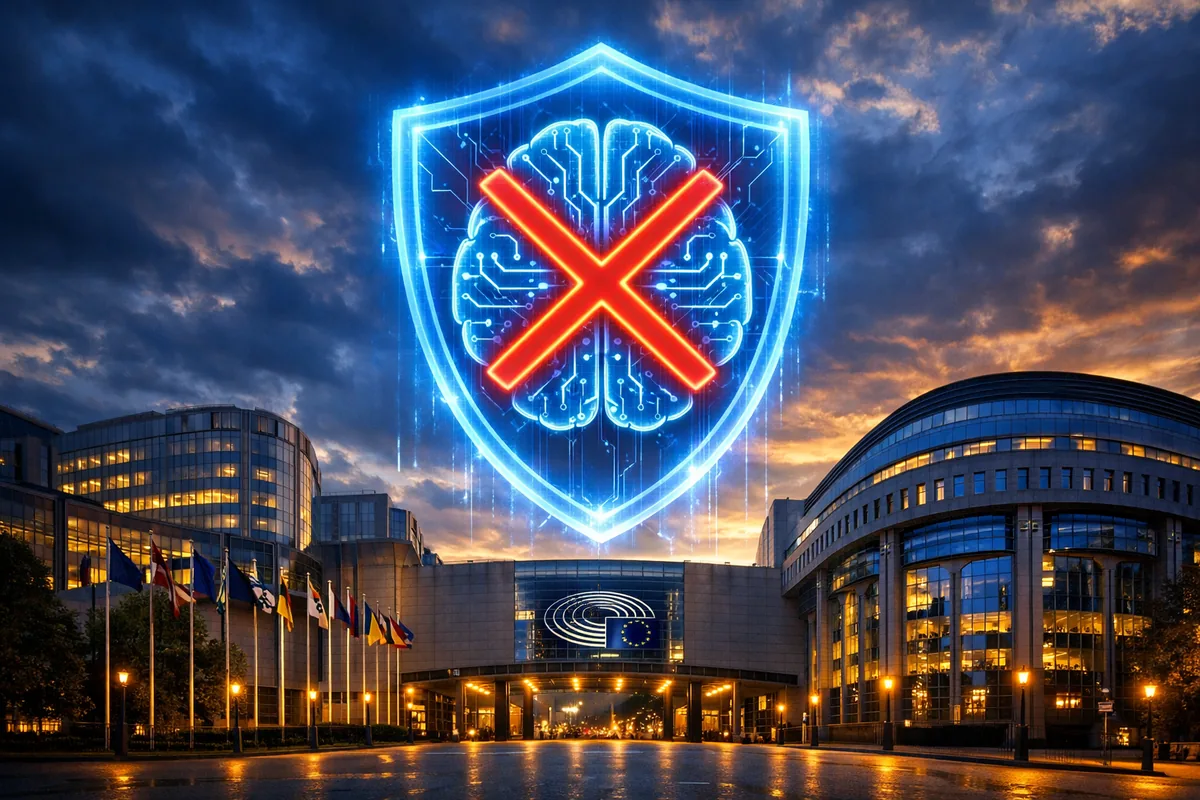
The European Parliament has voted to delay key EU AI Act deadlines and introduce a ban on AI "nudifier" apps, in a sweeping decision that passed with 569 votes in favor, 45 against, and 23 abstentions. The move gives companies more time to comply while cracking down on one of AI's most harmful applications.
What Got Delayed
The Parliament's simplification proposal pushes back several critical compliance deadlines:
- High-risk AI systems (biometrics, critical infrastructure, education, employment, law enforcement): Pushed to December 2027
- Sector-specific systems: Extended to August 2028
- Watermarking requirements: Deferred to November 2026
The delays acknowledge that many companies — especially smaller ones — need more time to understand and implement the complex requirements of the world's first comprehensive AI regulation.
The Nudify App Ban
The most headline-grabbing element of the vote is the proposed ban on AI "nudifier" systems — tools that use artificial intelligence to create or manipulate images that are sexually explicit or intimate, resembling an identifiable real person without their consent.
The ban would:
- Prohibit AI systems that generate non-consensual intimate imagery of real people
- Apply to both creation and manipulation of such images
- Include an exception for AI systems with "effective safety measures" that prevent users from creating such content
This directly targets apps like those that went viral on social media, allowing users to "undress" photos of real people — a practice that has disproportionately affected women and minors.
Why This Matters
The EU AI Act was already the world's most ambitious AI regulation. These amendments make it both more practical (by extending deadlines) and more protective (by banning nudify tools). The nudify ban fills a gap that many critics had identified — the original act didn't specifically address non-consensual intimate imagery generation.
The timing is significant. AI-generated deepfake intimate content has exploded over the past two years, with school-age victims becoming increasingly common. The Grok AI controversy, where X's chatbot was found to generate such content, helped accelerate the legislative push.
What Happens Next
Parliament must now negotiate the final text with the European Council before the changes can take effect. This negotiation process typically takes several months, but given the overwhelming vote margin (569-45), significant changes to the core proposals are unlikely.
Bottom Line
The EU is threading a difficult needle: giving companies breathing room on compliance (the delays) while drawing a hard line on AI's most harmful applications (the nudify ban). The 569-45 vote margin shows near-universal agreement that non-consensual intimate AI imagery has no place in European society. Whether the ban is technically enforceable is another question — but the signal is unmistakable.
Frequently Asked Questions
When does the nudify ban take effect?
The Parliament has voted its position, but must still negotiate with the European Council. The final text could take effect in late 2026 or early 2027, depending on negotiations.
Are all AI image generators affected?
No. The ban specifically targets systems that create non-consensual intimate imagery of identifiable real people. General-purpose image generators with effective safety measures would be exempt.
What about the high-risk AI deadlines?
Companies now have until December 2027 (instead of the original timeline) to comply with requirements for high-risk AI systems in areas like biometrics, education, employment, and law enforcement.
Does this affect AI companies outside Europe?
Yes. The EU AI Act applies to any AI system that affects EU citizens, regardless of where the company is headquartered. This means US and Asian AI companies serving European users must comply.