Drift Protocol Raises $147.5M Led by Tether to Replace USDC With USDT After $270M North Korea Exploit
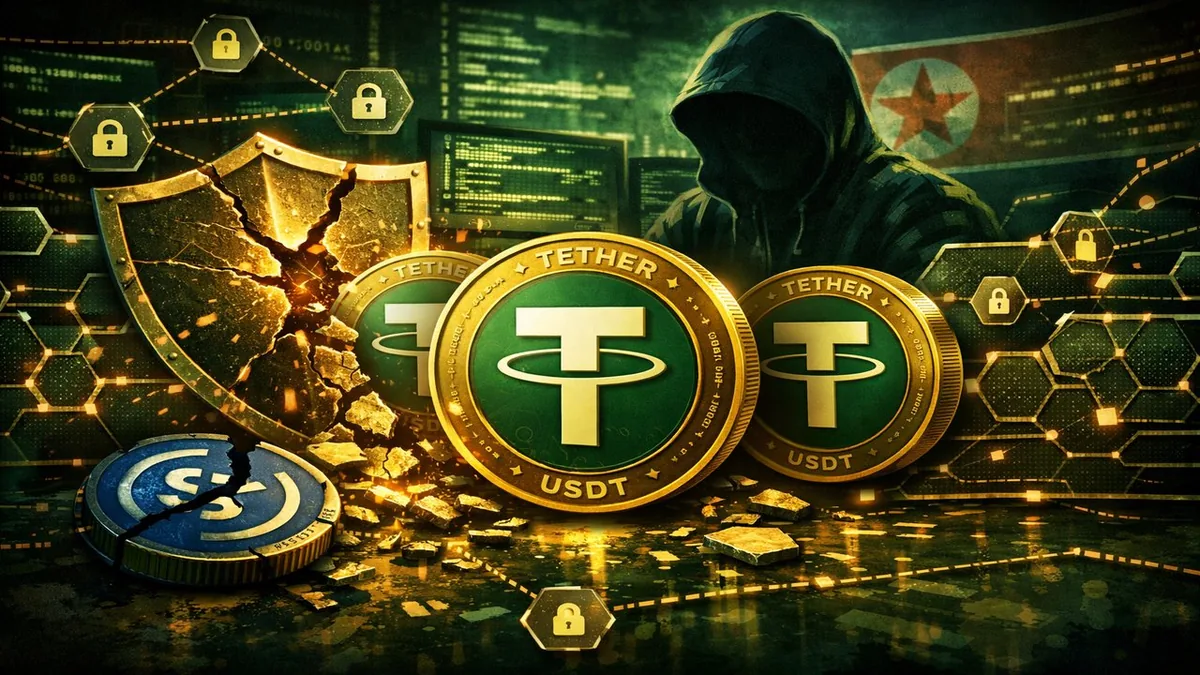
Drift Protocol, a decentralized exchange (DEX) built on Solana, has raised $147.5 million in new funding, with $127.5 million coming from Tether — the company behind USDT, the world's largest stablecoin by market capitalization. The capital raise follows a $270 million exploit that was linked to North Korean state-sponsored hackers, which drained Drift's liquidity pools and devastated user funds. A central condition of the Tether investment is that Drift will replace Circle's USDC with Tether's USDT as the primary stablecoin used across its protocol.
What the Exploit Did to Drift
The $270 million exploit — one of the largest DeFi hacks in recent years — was attributed by blockchain security researchers to the Lazarus Group, North Korea's state-sponsored hacking operation. The attack exploited a vulnerability in Drift's smart contract architecture to drain funds from liquidity pools. North Korean hackers have been responsible for billions of dollars in cryptocurrency theft over the past five years, using the proceeds to fund Pyongyang's weapons programs in circumvention of international sanctions. For Drift, the exploit was existential: without significant capital injection to rebuild liquidity and restore user confidence, the protocol would have been effectively finished.
Why Tether Is the Lead Investor
Tether's $127.5 million investment is explicitly tied to replacing USDC with USDT across Drift's protocol. USDC, issued by Circle, is the second-largest stablecoin and has been the dominant stablecoin in the Solana DeFi ecosystem. For Tether, funding Drift's recovery in exchange for USDT adoption is a market share play: it acquires a meaningfully large DeFi protocol as a primary distribution channel. For Drift, Tether's investment provides both capital and liquidity depth — Tether can backstop USDT liquidity in ways that a purely financial investor cannot.
USDC vs. USDT: The Stablecoin Competition
The Drift Protocol switch reflects a broader competition between Tether and Circle for stablecoin dominance in DeFi. USDT has significantly higher total market cap ($110B+ vs. Circle's $43B for USDC) and dominates on centralized exchanges. USDC has historically been preferred in DeFi contexts due to Circle's US regulatory compliance posture and transparent reserve attestations. Tether's investment strategy — funding DeFi protocol recoveries in exchange for USDT adoption — is an aggressive market expansion tactic that trades capital for distribution in high-activity DeFi venues.
The North Korea DeFi Threat
The Drift exploit is the latest in a pattern of North Korean cryptocurrency theft that has accelerated since 2022. The FBI, CISA, and international partners have attributed billions in DeFi exploits to Lazarus Group. The techniques used — smart contract vulnerabilities, social engineering of developers, and sophisticated money laundering through mixers and cross-chain bridges — have become more sophisticated over time. DeFi protocols, which are often small teams moving fast with minimal security audit budgets, remain high-value targets.
The Bottom Line
Drift Protocol's $147.5 million raise is a survival story enabled by Tether's strategic interest in expanding USDT adoption. The terms — USDC out, USDT in — reflect how DeFi capital raises increasingly come with stablecoin ecosystem strings attached. For the broader crypto market, the raise signals that major hacked protocols can recover with the right capital structure, but the price of that recovery is often strategic alignment with the largest stablecoin issuer.
Related Articles
- Charles Schwab to Launch Spot Bitcoin and Ether Trading for Retail Customers
- Morgan Stanley Launches MSBT Bitcoin ETF at 0.15% Fee
- Kraken Raises $200M From Deutsche Borse Ahead of Potential IPO