Disney Builds Walking Olaf Robot Using AI and Reinforcement Learning
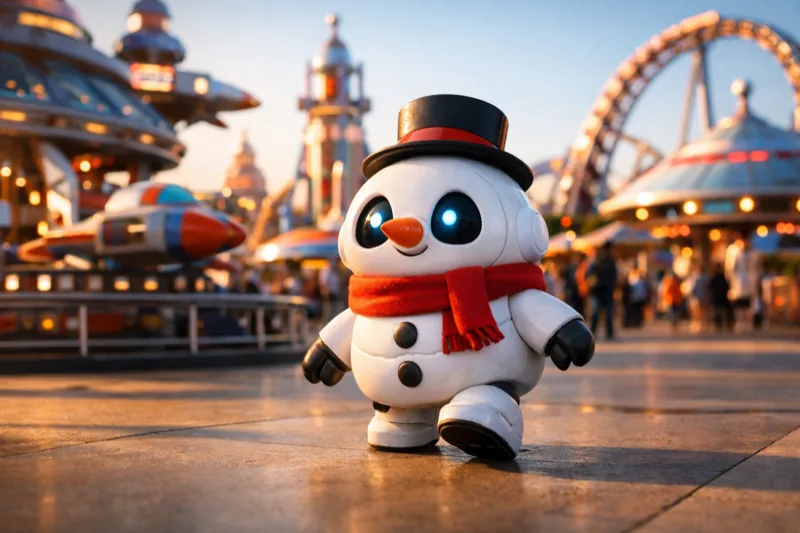
Walt Disney Imagineering has built a walking, talking Olaf robot that will debut at Disneyland Paris's new Adventure World on March 29, 2026. The character was developed in roughly four months using a combination of reinforcement learning, simulation, and direct collaboration with Walt Disney Animation Studios.
How Disney Turned Animation into Robotics
What makes the Olaf robot possible isn't just engineering — it's the structure of The Walt Disney Company itself. The robotics team at Imagineering worked directly with animators at Walt Disney Animation Studios, using the same digital animation rigs from the Frozen films to train the physical robot.
Instead of hand-programming every step and gesture, Imagineering used reinforcement learning to teach the robot how Olaf should move. The same approach was previously used with Disney's BDX droids. This ability to translate animation directly into robotics is a major reason the character could be built so quickly.
A Robot That Balances Itself on Water
Olaf won't just walk across a flat stage. The character will perform on a moving boat as part of a live entertainment show. Engineers built a mock boat inside Imagineering's R&D facilities to test whether Olaf could stay upright on water.
"All of the self-balancing is happening in real time from sensor data and motor data," said Kyle Laughlin, SVP of R&D at Walt Disney Imagineering. The robot's sensors constantly feed information into its control systems, allowing dynamic posture adjustments even as the ground shifts beneath it.
AI Solves the Overheating Problem
One unexpected engineering challenge came from Olaf's proportions. His large head sits atop a narrow body, meaning the neck motors must work especially hard to keep the character upright and engaged with guests. That constant movement generates enough heat to potentially shut down the robot mid-performance.
Rather than redesigning the character, Imagineering used reinforcement learning to solve the problem. The robot estimates motor heat buildup in real time and automatically adjusts its posture to reduce torque before overheating occurs — all while maintaining eye contact with guests.
Still Controlled by Humans
Despite the advanced robotics and AI-assisted training, Olaf isn't operating autonomously. The character is still powered by human performers using either remote control or time-code synchronization during live shows. This human element ensures Olaf can improvise and react to guests naturally.
The Bottom Line
Disney's Olaf robot is genuinely impressive engineering — a walking character that can self-balance on a moving boat, manage its own heat, and move like the animated version. But let's be clear: the "AI" here is a training tool, not an autonomous brain. The robot still needs a human behind the curtain. It's a clever use of reinforcement learning for motion optimization, not a step toward sentient theme park characters. Arriving at Disneyland Paris March 29 and Hong Kong Disneyland later in 2026, with plans for Marvel and Star Wars characters to follow.