Dario Amodei: The Negative AI Narrative Dominates Because the Industry Hasn't Delivered Yet
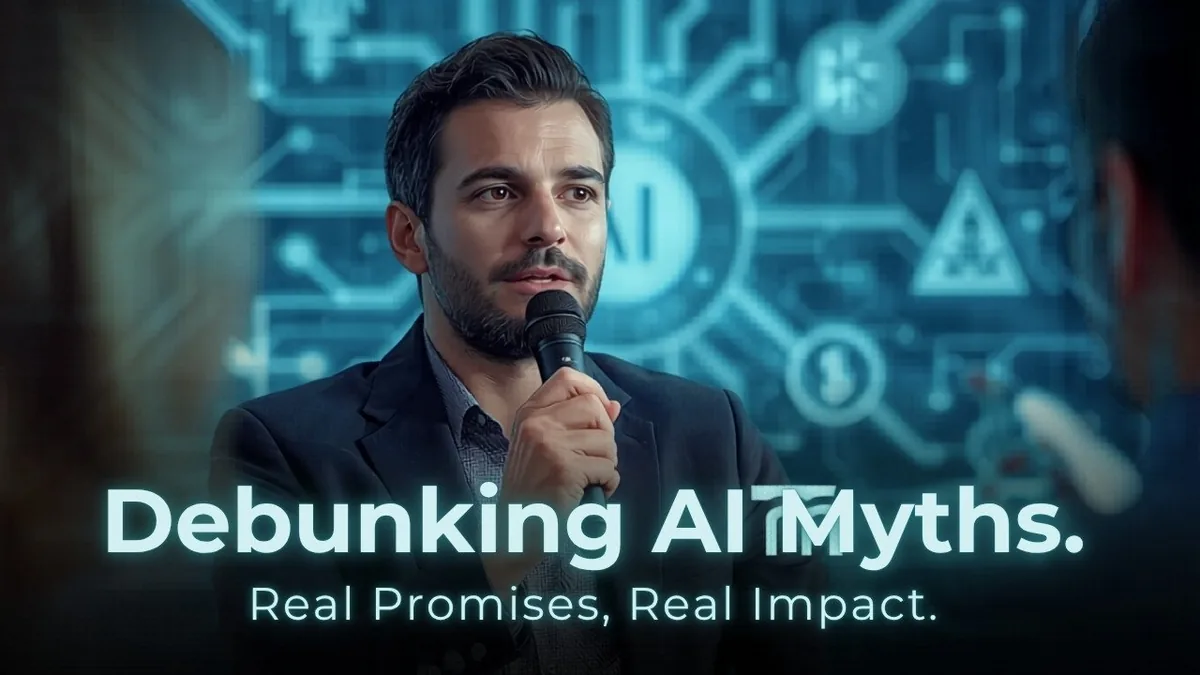
In a wide-ranging interview, Anthropic CEO Dario Amodei offered a candid diagnosis of why the public narrative around artificial intelligence has turned more negative despite rapid technical progress: the industry simply hasn't delivered on its promises yet. According to Amodei, the benefits of AI remain largely hypothetical to most people, while the risks and disruptions are already visible — and that asymmetry shapes public perception.
The Core Argument
Amodei's thesis is straightforward: narratives are shaped by lived experience, not by potential. AI's transformative promises — curing diseases, accelerating scientific discovery, dramatically improving productivity — remain mostly aspirational. Meanwhile, the disruptions AI is already causing — job displacement anxiety, deepfake-fueled misinformation, algorithmic bias — are tangible and immediate. When benefits are promises and costs are reality, the cost narrative wins.
Why the Industry Has Struggled to Deliver
The gap between AI's promise and its delivery has multiple causes. Enterprise AI deployment is harder than demos suggest, requiring workflow integration, data governance, and change management that take years not months. Consumer AI products have improved dramatically but often feel unreliable in ways that erode trust. And the most dramatic applications — AI-accelerated drug discovery, AI-assisted scientific breakthroughs — operate on timelines that don't generate daily headlines.
Amodei's Unusual Position
It's notable that Amodei is making this argument publicly. Most tech executives promote their products' benefits while minimizing acknowledged shortcomings. Amodei's willingness to say "we haven't delivered yet" is a form of inoculation — setting expectations more realistically so that when benefits do arrive, they feel like validation rather than overdue correction. It also positions Anthropic as the AI company that takes a clear-eyed view of its own industry.
What Would Change the Narrative
Amodei's implicit argument is that delivered value will eventually shift the narrative. A drug discovered meaningfully faster because of AI, a patient diagnosed more accurately, a scientific problem solved that wouldn't have been without AI assistance — these are the stories that could change public perception. The challenge is that these wins are often attributed to science rather than to the AI tools that enabled them, making the narrative shift harder to achieve even when the impact is real.
The Bottom Line
Dario Amodei's interview is a reminder that the most important measure of AI isn't benchmark performance or model capability — it's whether AI actually improves people's lives in ways they can see and feel. Until the industry can answer that question with concrete examples at scale, the skeptical narrative will remain dominant, regardless of how impressive the technology becomes in lab settings.
Related Articles
- White House Meets Anthropic's Dario Amodei in "Productive" AI Policy Session
- Anthropic Delays Mythos Release Over Reliability Concerns
- Anthropic Launches Claude Design: A New Visual Creation Tool