China Approves First Commercial Brain-Computer Interface Implant
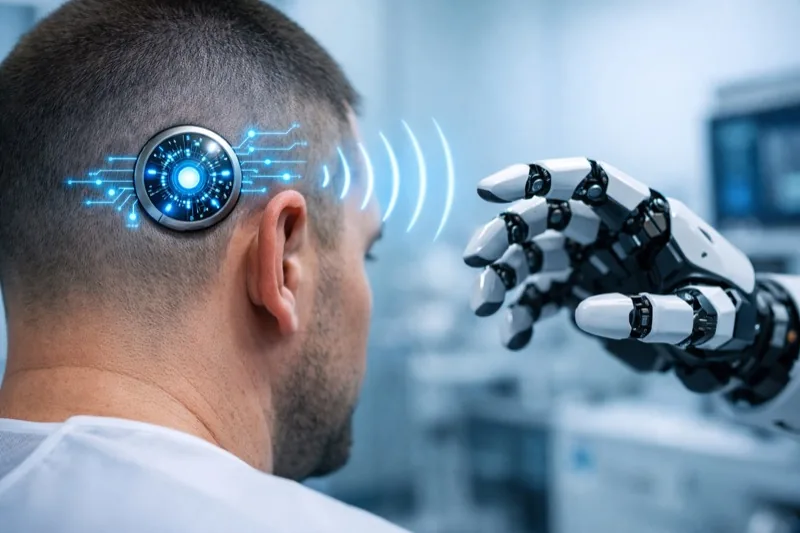
China Greenlights the World's First Commercial Invasive BCI
China has approved the world's first commercial invasive brain-computer interface (BCI) for clinical use. The device, developed by Shanghai-based Borui Kang Medical Technology, received regulatory clearance from China's National Medical Products Administration (NMPA) on March 13, 2026 — making it the first BCI implant anywhere in the world to move beyond clinical trials into commercial deployment.
The device is designed to help patients with cervical spinal cord injuries regain hand grasping function. It uses a wireless extradural implant — meaning the electrodes sit on top of the brain's protective membrane rather than penetrating brain tissue directly — to decode motor intention signals and translate them into movement commands.
Who Can Get It and What It Does
The approved BCI targets patients aged 18 to 60 with cervical spinal cord injuries who have lost hand function. The implant captures neural signals from the motor cortex and wirelessly transmits them to an external processor, which then stimulates the muscles in the forearm and hand to produce grasping movements.
This is not a full restoration of natural hand movement — it is a targeted intervention that gives paralyzed patients the ability to perform basic grasping tasks like holding a cup, picking up objects, or operating simple controls. For patients who currently have zero hand function, even this limited capability represents a significant quality-of-life improvement.
How It Differs from Neuralink
The obvious comparison is to Elon Musk's Neuralink, which has been conducting human trials in the United States. But the two devices differ in important ways:
- Invasiveness: Neuralink's N1 chip uses thin threads inserted directly into brain tissue. Borui Kang's device sits extradurally — on top of the dura mater — which is less invasive and carries lower risk of brain tissue damage.
- Regulatory status: Neuralink is still in clinical trials (FDA breakthrough device designation). Borui Kang now has full commercial approval in China.
- Target application: Neuralink is pursuing broader brain-computer communication (cursor control, typing). Borui Kang is focused specifically on restoring hand grasping in spinal cord injury patients.
The trade-off is clear: Borui Kang's approach is less ambitious but more immediately deployable. By choosing an extradural placement and a narrow clinical application, they navigated the regulatory pathway faster than any competitor.
China's Strategic Play
This approval does not exist in a vacuum. Brain-computer interfaces are explicitly listed as a "future industry" in China's current five-year plan. The government has been pouring funding into neurotechnology research, and fast-tracking regulatory approval for a commercial BCI sends a clear signal: China intends to lead in this space.
The geopolitical dimension is hard to ignore. While the US debates the ethics and safety of brain implants through lengthy FDA processes, China has moved first to commercialize. Whether this represents genuine regulatory confidence in the technology or a willingness to accept more risk in exchange for being first to market is an open question.
The Bottom Line
China approving the world's first commercial brain-computer interface is a milestone regardless of how you feel about the geopolitics. A device that can restore hand function to paralyzed patients is now available outside of clinical trials — that is real progress. The question is whether the extradural approach can deliver reliable, long-term results in commercial use, and whether this puts pressure on Neuralink and other Western BCI companies to accelerate their own regulatory timelines. The brain-computer interface race just got a lot more interesting.