China Drone Ban and Its Impact on U.S. Drone Businesses
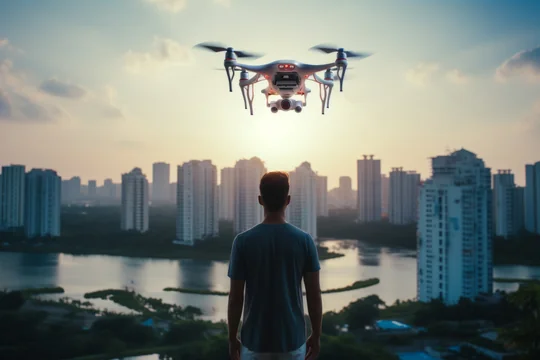
China Drone Ban Explained: Why U.S. Pilots Are Alarmed
The U.S. government has taken its strongest action yet against China-made drones. What sounds like a technical regulatory move is, in reality, a seismic shift for an entire industry.
For nearly half a million American drone pilots—many of them small-business owners—the China drone ban isn’t about geopolitics. It’s about whether they can keep flying, keep earning, and keep competing.
The Key Facts Behind the China Drone Ban
This week, the Federal Communications Commission (FCC) banned new drones and critical components made by major Chinese manufacturers, including DJI and Autel Robotics, from entering the U.S. market.
Here’s what matters most:
-
The ban applies to new imports and sales, not drones already owned or currently on store shelves.
-
The FCC retains the authority to retroactively block older models in the future.
-
The decision was driven by national-security concerns raised by a White House–led committee.
-
DJI controls an estimated 70% to 90% of the U.S. commercial and hobby drone market.
In short: the pipeline is being shut off, and the clock is ticking.
Why the China Drone Ban Matters to Pilots and Businesses
The China drone ban isn’t happening in a vacuum. It reflects a broader shift in U.S. drone regulations toward national security, supply-chain control, and domestic manufacturing.
But the immediate burden falls on operators, not policymakers.
Commercial drone pilots rely on DJI drones because they are affordable, reliable, and versatile. For industries like real estate, construction, agriculture, and renewable energy, drones are essential tools—not luxury gadgets.
One survey of 8,000 pilots found that 43% expect the ban to be business-ending, while 85% believe they could only survive two years or less without access to Chinese drones.
As one pilot put it, people buy DJI drones “because they’re available, affordable, and capable”—not because of where they’re made.
The Bigger Picture: Security vs. Market Reality
The U.S. government argues that Chinese-made drones pose unacceptable risks, including potential data access or remote interference. DJI strongly disputes this, stating that data is stored locally and independent audits have found no evidence of misuse.
This tension highlights a deeper issue: policy goals are moving faster than market readiness.
While Washington wants domestic drone manufacturing, Western alternatives currently struggle to match DJI on price, performance, and scale. Removing a dominant player without a clear substitute creates a gap that regulation alone can’t fill.
This is less about banning drones—and more about forcing a rapid industrial transition.
Practical Implications for Commercial Drone Pilots
For pilots and drone-based businesses, the China drone ban creates immediate and long-term challenges:
-
Rising Costs – Hoarding drones, batteries, and spare parts ties up capital.
-
Limited Alternatives – U.S.-made drones often cost more and offer fewer features.
-
Operational Risk – Future retroactive bans could ground existing fleets.
Some pilots are already stockpiling equipment to stretch their operations through 2026. Others are lobbying lawmakers, hoping for exemptions or delays.
The most realistic short-term strategy is diversification: testing non-Chinese platforms where possible while extending the life of existing fleets.
What Comes Next for the U.S. Drone Industry?
The China drone ban may accelerate domestic innovation—but not overnight.
The Pentagon’s $1.1 billion “Drone Dominance” initiative aims to scale U.S. drone manufacturing by 2027. That’s promising, but it doesn’t solve today’s problem for small operators.
In the near term, expect:
-
Higher prices across the drone market
-
Consolidation among drone service providers
-
Increased lobbying from pilot associations
-
Gradual emergence of U.S. and allied manufacturers
Long term, this ban could reshape the industry. Short term, it’s a shockwave.
Final Takeaway: A Defining Moment for Drone Aviation
The China drone ban marks a turning point for U.S. drone policy. It signals a clear shift toward security-first regulation—even if the market isn’t ready.
For pilots, adaptation is no longer optional. For policymakers, the challenge will be ensuring that protecting national interests doesn’t unintentionally ground an entire generation of drone-powered businesses.
The sky isn’t closed yet—but the flight path has changed.
FAQ SECTION:
Q: What is the China drone ban in the U.S.?
A: The China drone ban refers to the FCC’s decision to block new imports and sales of drones and components from major Chinese manufacturers like DJI, citing national-security risks.
Q: Can I still use my existing DJI drone?
A: Yes. Currently owned and already-sold drones are not banned, though the FCC has the authority to restrict older models in the future.
Q: Why are U.S. pilots upset about the DJI drone ban?
A: Many pilots rely on DJI drones for affordability and performance. Alternatives are often more expensive and less capable, threatening business viability.
Q: Are there U.S.-made alternatives to DJI drones?
A: Some exist, especially for public safety, but they generally cost more and lack the same range of features for commercial pilots.