China Bars Manus AI Co-Founders From Leaving Country as Meta $2B Deal Faces Review
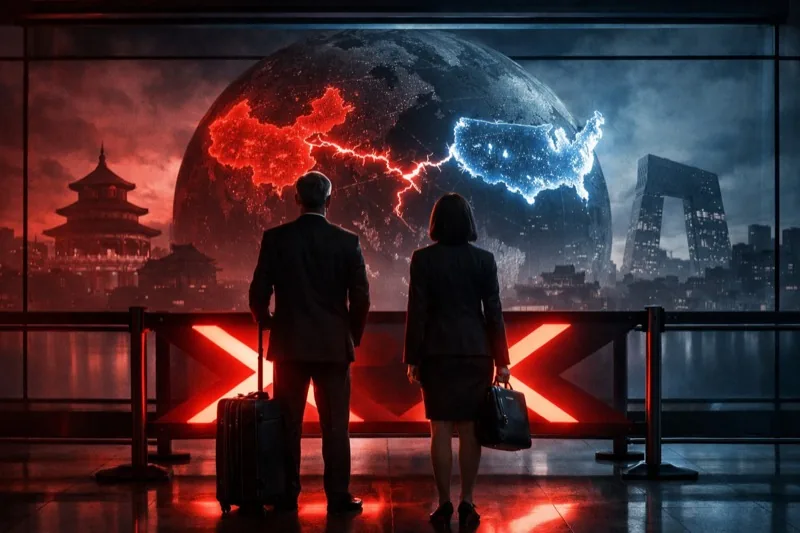
China has barred the co-founders of Manus, the AI agent startup, from leaving the country while regulators review whether Meta’s proposed $2 billion acquisition violates foreign direct investment rules. Manus co-founders Xiao Hong and Ji Yichao were summoned to a meeting in Beijing with the National Development and Reform Commission (NDRC) earlier this month and told afterward that they could not leave China pending the review.
What Is Manus?
Manus is a Chinese AI startup that builds general-purpose AI agents — digital employees capable of executing tasks like research, data analysis, and automation independently with minimal human prompting. The company gained significant attention in late 2025 for its advanced autonomous agent capabilities, drawing comparisons to products from OpenAI and Anthropic.
Meta announced in December that it would acquire Manus for approximately $2 billion, one of the largest acquisitions in the AI agent space. The deal would give Meta access to Manus’s technology for building AI-powered digital assistants across its platforms.
Why China Stepped In
The NDRC is examining whether the sale of a Chinese AI company to an American tech giant violates China’s foreign investment regulations. This comes at a time of escalating tensions between the US and China over AI technology, with both countries increasingly viewing advanced AI capabilities as a matter of national security.
The founders remain free to travel within China but cannot leave the country until the regulatory review concludes. Manus is actively seeking law firms and consultancies to help resolve the situation.
Meta’s Response
Meta stated that “the transaction complied fully with applicable law” and that they “anticipate an appropriate resolution to the inquiry.” However, the travel restrictions on the founders suggest Chinese regulators are taking a harder look than Meta expected.
The Bigger Picture
This is the latest flashpoint in the increasingly complex global AI supply chain. China has been tightening controls on AI technology exports, while the US has imposed sweeping chip export restrictions. A Chinese government blocking the sale of an AI company to Meta would be a significant escalation — essentially saying that Chinese AI talent and technology are now strategic national assets that cannot be transferred to American companies.
The Bottom Line
The Manus situation reveals just how geopolitically fraught AI acquisitions have become. Meta thought it could buy a Chinese AI agent startup for $2 billion. China responded by effectively holding the founders hostage pending a review. Whether the deal ultimately closes or not, this sets a precedent: cross-border AI acquisitions now require navigating not just antitrust regulators, but national security apparatuses on both sides of the Pacific.