Canada's Cohere and Germany's Aleph Alpha Are in Merger Talks to Create a European AI Champion
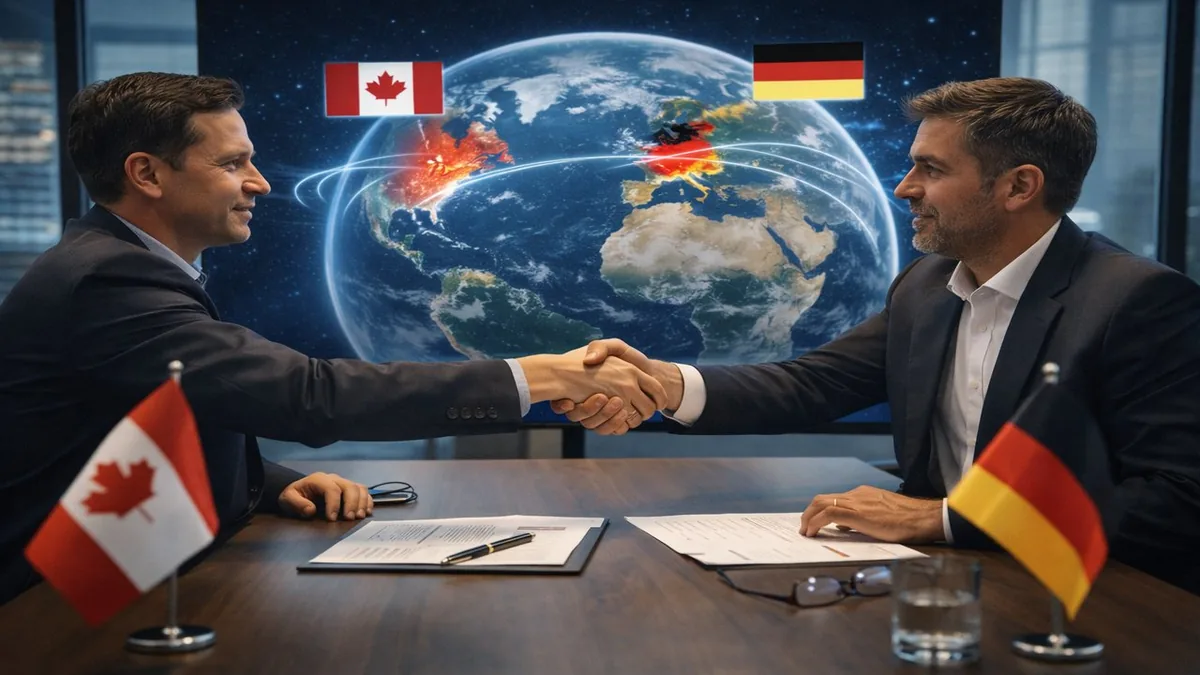
Canada's Cohere and Germany's Aleph Alpha are in merger talks, with the German government signaling it would be willing to become a key customer of a combined company, Reuters reported citing Germany's Handelsblatt. The potential deal would create the largest purely Western AI company outside the United States — combining Cohere's enterprise AI platform and large language model expertise with Aleph Alpha's European AI research capabilities and German government relationships. The merger talks reflect a growing conviction in Europe and Canada that national and allied AI champions require a scale that individual companies cannot achieve alone. It follows the broader pattern of frontier AI development concentrating in a small number of well-capitalized players.
What Each Company Brings
Cohere, founded in Toronto in 2019 by former Google Brain researchers, has built one of the most widely adopted enterprise AI platforms, focusing on large language models for business applications including search, summarization, and automation. The company has raised over $1 billion in funding and counts major financial institutions, technology companies, and government agencies among its customers. Cohere has positioned itself explicitly as a sovereign AI provider — offering models that enterprises can deploy in their own infrastructure without routing data through US hyperscalers.
Aleph Alpha, founded in Heidelberg, Germany in 2019, has been the primary European attempt at building a frontier AI lab with strong government backing. The company's Luminous model series was designed with European data sovereignty requirements in mind, and Aleph Alpha has cultivated deep relationships with German federal ministries and EU institutions. Its technology focus has increasingly shifted toward enterprise deployment and what it calls "AI sovereignty" — giving European governments and companies AI capabilities that are not dependent on US or Chinese providers.
The European Sovereign AI Rationale
The merger logic is strategically clear even if the execution complexities are significant. Both companies share the same market thesis — that European governments and enterprises will pay a premium for AI capabilities that are sovereign, auditable, and not subject to US export controls or Chinese government access. Together, they would have the customer relationships, technical depth, regulatory familiarity, and geographic reach to credibly serve that market at scale. The German government's willingness to become a key customer — reported by Handelsblatt — would provide the revenue anchor that both companies need to compete with US frontier labs on investment and talent. This aligns with growing enterprise AI adoption globally that European companies risk missing without competitive offerings.
Frequently Asked Questions
What would a Cohere and Aleph Alpha merger create?
A merged Cohere-Aleph Alpha would be the largest Western AI company focused on enterprise and sovereign AI outside the United States — combining Canadian enterprise AI expertise with European government AI relationships and German federal backing as an anchor customer.
Why is the German government involved in this merger?
The German government has been Aleph Alpha's primary institutional backer, viewing it as a strategic asset for European AI sovereignty. Handelsblatt reports the government is willing to become a key customer of a combined entity — providing the revenue stability needed to compete with better-capitalized US rivals.
Are the merger talks confirmed?
Reuters reported the talks citing Handelsblatt. Neither Cohere nor Aleph Alpha has publicly confirmed or detailed the scope of the discussions. Merger talks at this stage do not guarantee a deal will be completed.
The Bottom Line
A Cohere-Aleph Alpha merger would be the most significant consolidation in European and allied AI to date — and a direct response to the growing dominance of US frontier labs that individual European companies cannot match alone. The German government's willingness to anchor the combined entity as a customer transforms what would otherwise be a commercial merger into something with strategic policy dimensions. Whether the cultures, technologies, and business models of two companies built in very different markets can be successfully integrated is the key execution question — but the strategic rationale for trying is stronger now than it has ever been.