ByteDance's Seedance 2.0 AI Video Spooked Hollywood: Here's Why
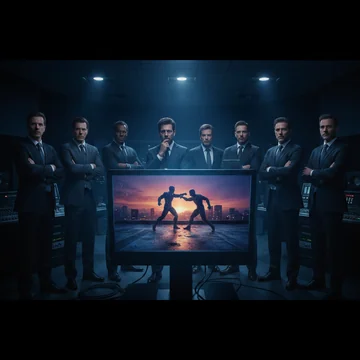
It took just 15 seconds to rattle all of Hollywood. A short AI-generated clip showing Tom Cruise and Brad Pitt brawling on a crumbling rooftop at twilight went viral last week — and it wasn't made by a studio with a $200 million budget. It was created by an Irish director named Ruairi Robinson using Seedance 2.0, a powerful new AI video generation tool owned by ByteDance, the Chinese tech giant behind TikTok.
What Made This Video Different
AI-generated videos have been around for a while, but most have been laughably bad — the kind of glitchy, uncanny "AI slop" that's easy to spot and easier to dismiss. Seedance 2.0 is different. The Tom Cruise vs. Brad Pitt clip featured sweeping camera angles, realistic stunt choreography, crisp sound effects, and haunting music — all generated from a two-sentence text prompt and the click of a button.
Rhett Reese, the screenwriter behind the Deadpool franchise, said the video sent a "cold shiver" up his spine. "For all of us who work in the industry and devoted our careers and lives to it, I just think it's nothing short of terrifying," he said. "I could just see it costing jobs all over the place."
This was a 2 line prompt in seedance 2. If the hollywood is cooked guys are right maybe the hollywood is cooked guys are cooked too idk. pic.twitter.com/dNTyLUIwAV
— Ruairi Robinson (@RuairiRobinson) February 12, 2026
Hollywood's Swift Response
The backlash was immediate and came from the top. Charles Rivkin, chairman and CEO of the Motion Picture Association, demanded that ByteDance "immediately cease its infringing activity," accusing Seedance 2.0 of unauthorized use of copyrighted works on a "massive scale."
Disney went further, sending a cease-and-desist letter accusing ByteDance of supplying Seedance with a "pirated library" of Disney characters — treating the company's intellectual property "as if Disney's coveted intellectual property were free public-domain clip art."
This is notable because Disney itself signed a watershed $1 billion deal with OpenAI last year, allowing Sora users to generate video content with Disney characters. The difference? That deal was licensed and controlled. Seedance operates without such agreements.
The Viral Flood
Once Seedance 2.0 launched, users wasted no time. Among the viral creations:
- An alternate ending to "Game of Thrones"
- A fake clip of Kendrick Lamar and Drake burying the hatchet on The Tonight Show
- Samara Morgan from The Ring crawling out of a TV to pet a cat
- Robinson's own follow-ups: Pitt and Cruise battling a robot, and Pitt fighting a "zombie ninja" with a sword
The Legal and Ethical Minefield
SAG-AFTRA's chief negotiator Duncan Crabtree-Ireland pointed out that existing union contracts have specific rules about digital replication. The Cruise-Pitt video "could not be produced by any of the signatories to our contracts — the studios, the streamers — without the specific, informed consent of those individuals."
The real concern, he noted, is that even if these AI videos "are not malicious in intent," they "could really violate someone's right to control how their image, their likeness and their voice is used." This echoes the 2023 Writers Guild strike, where thousands of union members fought for protections against AI encroachment on their jobs and intellectual property.
Not Everyone Is Worried
Heather Anne Campbell, executive producer and writer on Rick and Morty, offered a more skeptical view. "I haven't seen anything good yet. Nothing that has taken my breath away, nothing that is poignant, nothing that is provocative even. It's all just garbage," she said, calling AI tools like Seedance "averaging machines" at best.
But even skeptics acknowledge the economic pressure. "It would be cheaper to have A.I. write a screenplay than it would be for me to write a screenplay," Reese admitted. "That's where the terror comes from."
The Bottom Line
ByteDance — valued at $480 billion — says it "respects intellectual property rights" and is "taking steps to strengthen current safeguards." But the genie is out of the bottle. Seedance 2.0 represents a genuine leap in AI video quality, and Hollywood's response — from cease-and-desist letters to existential dread — suggests the industry knows it. The question is no longer whether AI can make convincing video content. It's who controls it, who profits from it, and whose jobs and likenesses are at stake.