ByteDance Orders 36,000 Nvidia B200 Chips for Malaysia Data Center
ByteDance Goes Big on Nvidia Hardware — Outside China
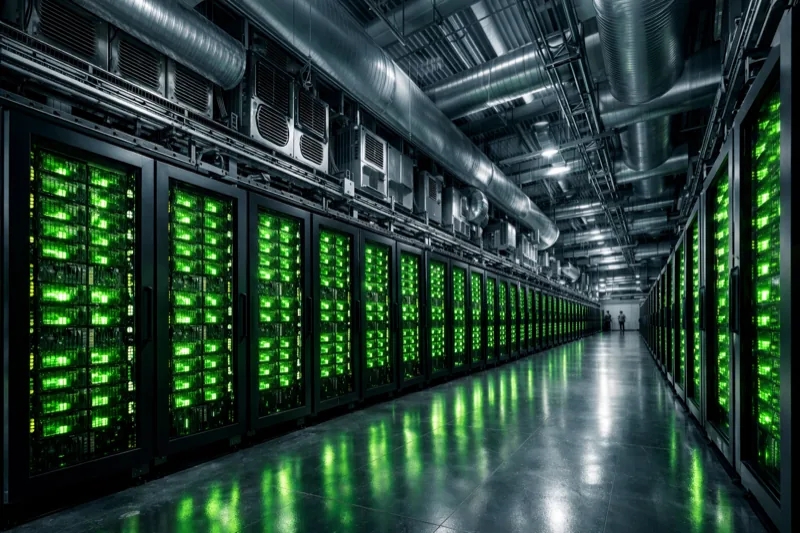
ByteDance, the parent company of TikTok, has placed an order for approximately 36,000 Nvidia B200 GPUs — enough to fill roughly 500 Blackwell-architecture server systems. The chips are destined for a massive new data center in Malaysia, part of ByteDance's Aolani Cloud infrastructure. The deal is worth an estimated $2.5 billion or more, making it one of the largest single GPU orders in the AI industry.
The B200 is Nvidia's latest and most powerful data center GPU, built on the Blackwell architecture. Each chip delivers significantly more AI training and inference performance than the previous-generation H100, which ByteDance has already been leasing since February 2025.
Why Malaysia? Export Controls, Obviously
The location is the story within the story. The United States has imposed increasingly strict export controls on advanced AI chips to China, restricting shipments of Nvidia's most powerful GPUs to Chinese companies. ByteDance, as a Chinese-owned company, cannot import B200 chips directly to China.
But the export controls apply to the destination country, not the company's nationality. By building a data center in Malaysia — a country not subject to US chip export restrictions — ByteDance can legally acquire the most advanced Nvidia hardware available. The chips stay in Malaysia, the AI models get trained in Malaysia, but ByteDance controls the infrastructure and the output.
This is not a loophole in the traditional sense. It is a completely legal workaround that multiple Chinese tech companies are pursuing. The US government is aware of it, and there have been discussions about extending export controls to cover end-user nationality rather than just geographic destination — but as of now, the Malaysia route remains open.
What ByteDance Needs 36,000 GPUs For
ByteDance is not just a social media company. Its AI ambitions span:
- TikTok's recommendation algorithm — one of the most sophisticated content recommendation systems in the world, requiring massive compute for continuous training
- Large language models — ByteDance has been developing its own LLMs to compete with Chinese rivals like Baidu's Ernie and Alibaba's Qwen
- Generative AI features — video effects, filters, music generation, and other AI-powered creator tools
- Enterprise AI services — ByteDance's cloud division offers AI services to businesses across Southeast Asia
With 36,000 B200 chips, ByteDance would have one of the largest privately-owned GPU clusters outside of the United States — rivaling the compute capacity of major US tech companies.
The Geopolitical Chess Match
This order highlights the fundamental tension in US chip export policy. The goal of the restrictions is to slow China's AI development. But Chinese companies with deep pockets can simply build their compute infrastructure in third countries that are not restricted. The chips do not go to China, but the AI capabilities developed on those chips absolutely benefit Chinese companies.
Malaysia, Singapore, and the UAE have all become popular destinations for Chinese-backed data centers for exactly this reason. Whether the US will tighten restrictions to address this pattern remains one of the most consequential tech policy questions of 2026.
The Bottom Line
ByteDance ordering 36,000 Nvidia B200 chips for a Malaysian data center is a $2.5B+ bet that the current export control framework has a geography-shaped gap in it. The company gets access to the world's best AI hardware without violating any rules, and Nvidia gets one of its biggest orders ever. The only party that might not be happy is the US government — but so far, they have not moved to close this particular door.