Bryan Johnson Longevity: The Rise of $1M Health Plans
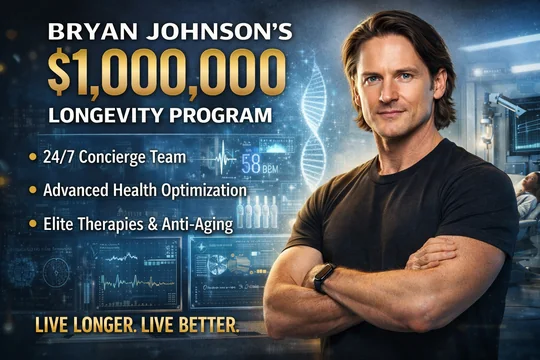
Bryan Johnson’s Longevity Offer Signals a New Trend
Longevity entrepreneur Bryan Johnson is now offering a private, ultra-premium service that costs $1 million per year—and yes, people are already paying attention.
At first glance, this sounds like the kind of thing you’d laugh at, screenshot, and send to a friend with a “we live in a simulation” caption.
But underneath the internet-friendly absurdity is something more important: this is what happens when health becomes a luxury product, and aging becomes a status problem.
This isn’t just about Bryan Johnson. It’s about where the longevity industry is heading—and what it means for everyone else.
Key Facts: What Bryan Johnson Is Selling
Bryan Johnson, a fintech founder turned longevity influencer, announced a new program called “Immortals.” According to the report, it offers only three spots at a cost of $1 million per year.
The service reportedly includes:
-
A dedicated concierge team
-
“BryanAI” available 24/7
-
Extensive medical testing and tracking
-
Large-scale biological data collection
-
Premium skin and hair protocols
-
Access to high-end therapies
There’s also mention of lower-priced tiers, including a “supported” level around $60,000 annually.
Meanwhile, other longevity-focused membership clinics aimed at wealthy clients are expanding, including premium preventive health services costing $15,000 to $21,500 per year.
Why Bryan Johnson Longevity Matters (Even If You’re Not Rich)
Let’s be real: most people reading this are not in the market for a million-dollar longevity program.
So why does Bryan Johnson longevity matter?
Because this is a preview of what modern healthcare could become: a world where the wealthy buy early detection, personalized diagnostics, constant monitoring, and premium interventions—while everyone else gets generic advice and late-stage treatment.
The bigger story is not “Bryan Johnson is eccentric.” The bigger story is that longevity is turning into an elite subscription model.
And that should make people pause.
The Underlying Trend: Aging Is Becoming a Tech Product
For decades, “anti-aging” was mostly skincare marketing and vague wellness claims.
Now, it’s being repackaged as a measurable engineering challenge. The new pitch looks like this:
-
Collect huge amounts of biological data
-
Track changes over time
-
Apply interventions like a software update
-
Measure results
-
Repeat forever
This is why wealthy health optimization is booming. The promise isn’t just “live longer.” It’s “control the system.”
And in a world where people feel like everything else is unstable—jobs, housing, climate, politics—control becomes the ultimate luxury.
The Hard Truth: Most Longevity Gains Aren’t Hidden Secrets
Here’s the part that doesn’t sell for $1 million.
Most of the biggest, most proven longevity levers are not exotic:
-
Sleep consistency
-
Strength training
-
Daily movement
-
Blood pressure control
-
Eating enough protein and fiber
-
Not smoking
-
Stress management
-
Staying socially connected
A concierge program can optimize around the edges. But for most people, it’s not the difference between life and death—it’s the difference between “pretty healthy” and “hyper-optimized.”
The report highlights Johnson’s extreme personal brand, and it’s worth noting that this style of marketing is part of the business model. One quote sums up the pitch clearly: the program includes “millions of biological data points” and “continuous tracking.”
That sounds impressive. It also sounds like a product brochure—because it is.
What Happens Next: Longevity Concierge Services Will Multiply
This is likely not a one-off stunt. It’s a signal.
Here’s what we’ll probably see next in the longevity industry:
1) More “health membership” business models
Expect more clinics selling annual packages for diagnostics, scans, bloodwork, and personalized plans. The goal is recurring revenue, not one-time treatment.
2) AI health coaching becomes a standard add-on
“BryanAI” is flashy branding, but the concept—AI-driven health tracking and coaching—is going mainstream. Most companies will offer a version of this soon.
3) A widening health gap
If wealthy people can buy constant early detection, they will catch problems earlier, treat them faster, and reduce long-term decline.
That creates a world where lifespan and healthspan are increasingly tied to income.
4) A backlash against “longevity theater”
As more influencers push extreme protocols, audiences will start asking harder questions:
What’s proven? What’s placebo? What’s just expensive routine?
What You Can Actually Do (Without a Million Dollars)
You don’t need Immortals. You need a plan you can follow for 10 years.
Here are practical, high-impact moves that are boring—but work:
-
Get basic labs yearly (lipids, A1C, blood pressure)
-
Lift weights 2–4 times a week
-
Walk daily (even 20–30 minutes matters)
-
Prioritize sleep like it’s medicine
-
Eat mostly whole foods and hit protein targets
-
Stop chasing miracle supplements before fixing basics
If you want a “longevity protocol,” start with the fundamentals and measure them consistently. That’s what most people are missing—not access to a billionaire’s concierge.
Conclusion: Bryan Johnson Longevity Is the Start of a New Health Class System
The headline number—$1 million per year—makes Bryan Johnson’s program easy to mock.
But the smarter response is to notice what it represents.
Bryan Johnson longevity isn’t just a weird internet moment. It’s a sign that the future of health may split into two tracks: one for people who can afford constant optimization, and one for everyone else.
The next phase of longevity won’t be about immortality. It’ll be about access.
And the real question isn’t whether Bryan Johnson can slow his aging.
It’s whether the rest of the world gets left behind while the wealthy beta-test the future.