Beijing Robots Compete in World's First Half Marathon for Humanoid Machines
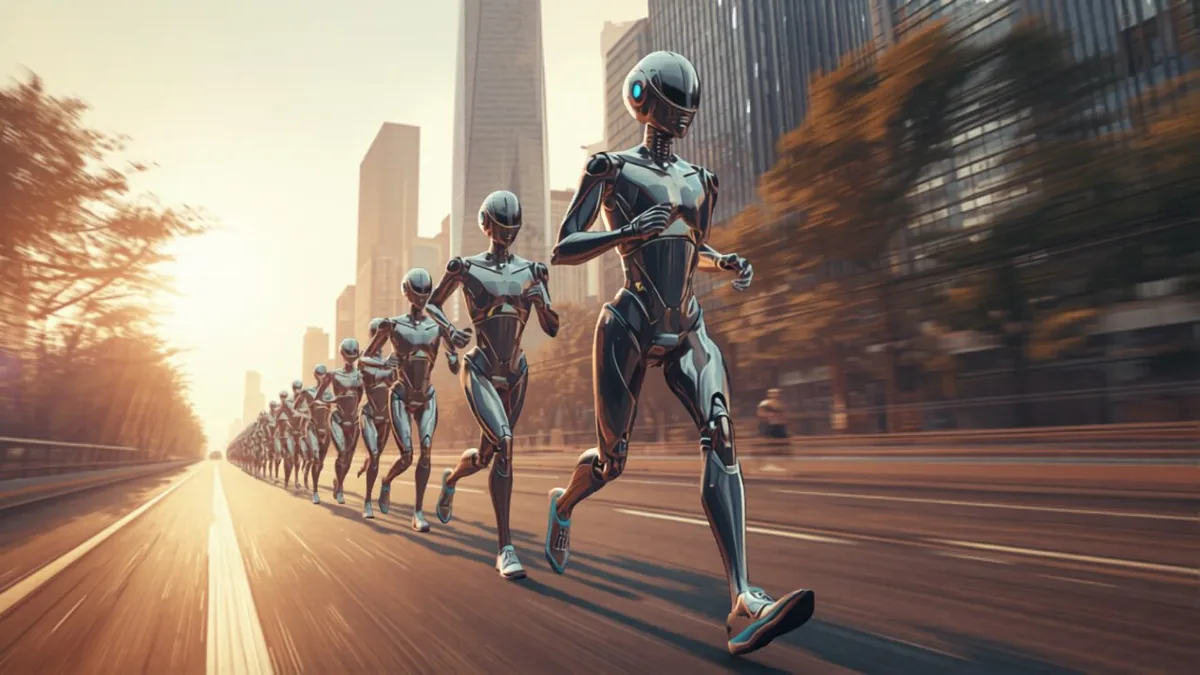
In a landmark event for robotics, Beijing hosted the world's first half marathon featuring humanoid robots competing alongside human runners. The race, organized as part of China's push to showcase its robotics capabilities, drew dozens of robot models from leading domestic manufacturers, highlighting the rapid progress in bipedal locomotion technology.
Inside the Beijing Robot Half Marathon
The event took place on a regulation 21-kilometer course, with robots navigating real-world terrain including hills and turns. Top performers completed the race in under two hours, an impressive achievement for bipedal machines that struggled with basic walking just a few years ago. Notable entrants included models from Unitree Robotics, Fourier Intelligence, and several university research teams. The robots operated autonomously without remote control intervention during the race.
China's Strategy Behind the Robot Race
The half marathon is part of Beijing's broader strategy to position China as the global leader in humanoid robotics by 2030. The event serves dual purposes: demonstrating technical prowess and attracting international investment in Chinese robotics companies. China has poured billions into humanoid robot development as it competes directly with Boston Dynamics, Figure AI, and Tesla's Optimus program in the United States.
Technical Achievements and Challenges
Completing a half marathon required significant advances in energy efficiency, balance control, and heat dissipation. Several robots dropped out due to joint failures or battery depletion, revealing ongoing engineering challenges. However, the robots that finished demonstrated remarkable stability on uneven surfaces, a major hurdle for previous generations of bipedal machines. Engineers noted that AI-driven gait optimization was crucial to the top performers' success.
The Bottom Line
The Beijing robot half marathon is more than a spectacle — it's a benchmark for the state of humanoid robotics globally. While robots completing a half marathon doesn't mean they're ready for complex real-world tasks, it demonstrates the pace of progress. China is clearly using competitive events to accelerate development and signal its ambitions in what may become one of the most important technology sectors of the next decade.
Related Articles
- Google Gemini Robotics ER Advances Spatial Reasoning
- Physical Intelligence PI-0.7 Robot Achieves New Generalization
- Jensen Huang on AI Supply Chains and the Future of Computing