Behind the Scenes of Personalized Medicine and How Science is Quietly Rewriting the Future of Healthcare
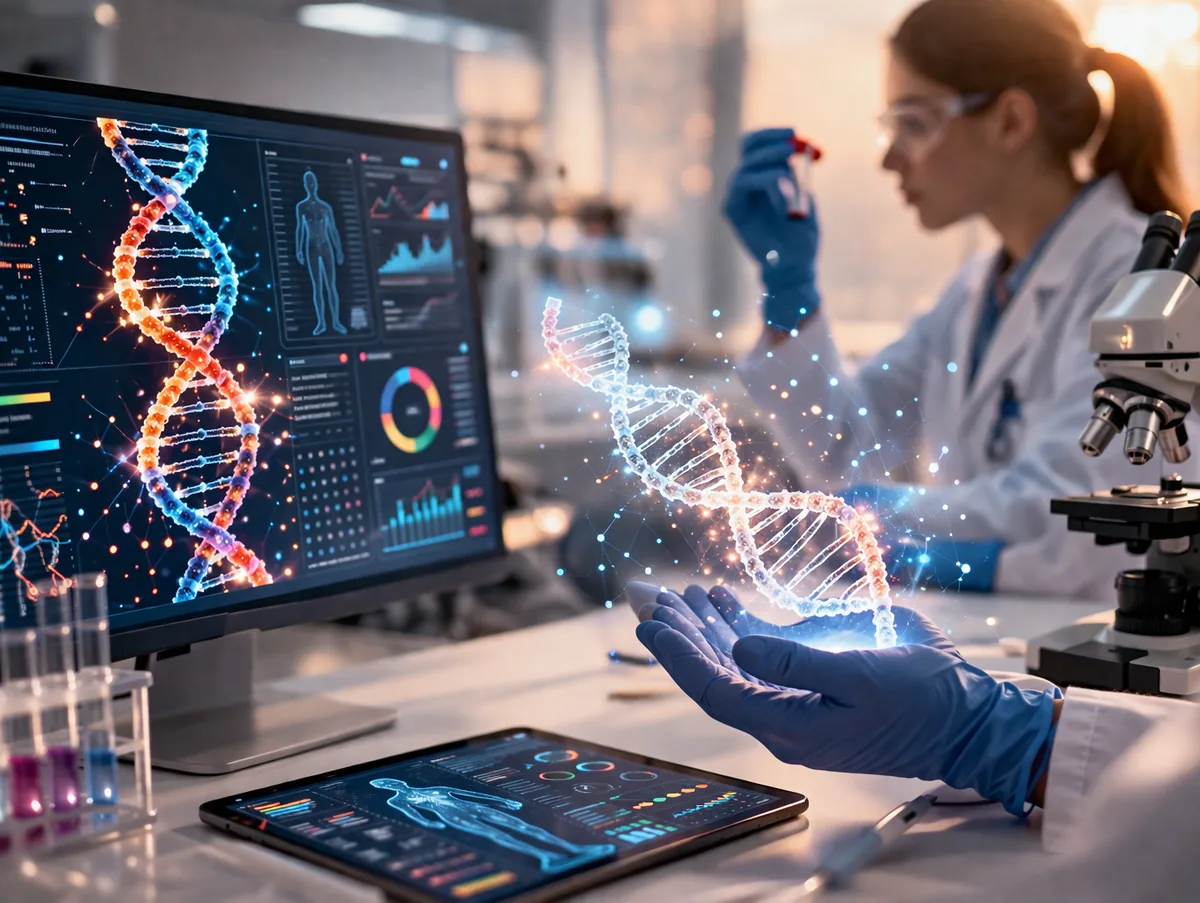
Personalized medicine often sounds like something out of science fiction. The idea that doctors could tailor treatments specifically to your DNA rather than relying on broad guidelines used for millions of people still feels futuristic. Yet behind the scenes, this approach is already reshaping how healthcare works.
At its core, personalized medicine is about understanding that every patient is biologically unique. Two people with the same diagnosis might respond very differently to the same medication or therapy. Advances in genetics, computing, and laboratory science are helping researchers understand why those differences occur and how to respond to them.
What most patients never see, however, is the vast infrastructure that makes these breakthroughs possible. Long before a treatment plan reaches a clinic, teams of scientists, engineers, data analysts, and researchers are working quietly in labs and research centers around the world. Their work involves analyzing genetic material, building specialized research tools, and developing technologies that can interpret enormous amounts of biological data. Here are some of the complex systems that make individualized care possible in the first place.
The Role of Genetic Building Blocks in Modern Research
Many of the discoveries powering personalized medicine begin at the smallest biological level, and that’s DNA. Researchers spend countless hours analyzing genetic sequences to understand how specific variations influence disease risk, drug responses, and biological processes.
In laboratory environments, scientists often work with carefully prepared genetic materials to test theories and validate discoveries. One important example involves the use of specialized DNA fragments, which allow researchers to isolate specific sections of genetic code for experimentation and analysis. These help researchers replicate and study genetic sequences under controlled conditions.
By examining how specific sequences behave in cells or interact with other molecules, scientists can determine which genes play critical roles in disease pathways. This kind of controlled experimentation is essential for developing therapies that precisely target the biological causes of illness. Without these foundational tools, the progress seen in personalized medicine over the past decade would not be possible. They allow researchers to move beyond theory and test how genetic changes actually influence biological systems.
The Advanced Tools Scientists Use Every Day
The work behind personalized medicine depends on a remarkable collection of scientific technologies. Many of these tools are rarely discussed outside research environments, yet they play a central role in modern healthcare breakthroughs.
Genomic sequencing systems allow scientists to read the entire genetic code of an individual or tumor sample. High-resolution microscopes reveal how molecules behave inside living cells. Automated laboratory platforms process thousands of biological samples with incredible precision.
Computational modeling tools are equally important. Researchers simulate biological processes in digital environments to test hypotheses before conducting physical experiments. Artificial intelligence systems are also being used to detect patterns that would be nearly impossible for humans to identify manually.
These technologies collectively allow scientists to explore the human body at levels of detail that were unimaginable just a generation ago and help researchers examine how genes interact with environmental factors, lifestyle choices, and medical treatments.
Turning Laboratory Discoveries Into Real Treatments
One of the biggest challenges in personalized medicine is translating laboratory discoveries into therapies that can be used in everyday clinical practice. Scientific insights must go through multiple stages of validation before they reach patients.
Researchers first identify potential targets for treatment, often through genetic studies or molecular experiments. These targets might involve specific proteins, signaling pathways, or genetic mutations linked to disease progression.
From there, pharmaceutical developers design drugs or therapies intended to influence those targets. Early experiments test whether these treatments behave as expected in laboratory models. Only after extensive testing do researchers begin clinical trials involving human participants.
Personalized medicine adds another layer of complexity because treatments may be effective only for patients with specific biological profiles. Clinical trials must therefore include detailed genetic analysis to determine which individuals are most likely to benefit. Although this process can take years, it dramatically improves the likelihood that new treatments will deliver meaningful results.
The Ethical and Practical Questions Still Ahead
Despite its promise, personalized medicine raises important questions about ethics, accessibility, and cost. Genetic testing and advanced diagnostics can be expensive, and ensuring that these technologies reach a broad population remains a significant challenge.
Privacy is another concern. Genetic data is highly personal information, and healthcare systems must carefully manage how it is stored and shared. Researchers and policymakers continue to develop frameworks that protect patient privacy while allowing scientific collaboration.
There are also questions about how much genetic information patients want to know. Some tests may reveal predispositions to diseases that have no current cure, creating difficult decisions for individuals and families. Addressing these challenges will require cooperation between scientists, healthcare providers, regulators, and patient communities.