Bangladesh Post-Election Violence: BNP-Jamaat Clashes Leave 9 Injured Across 5 Districts
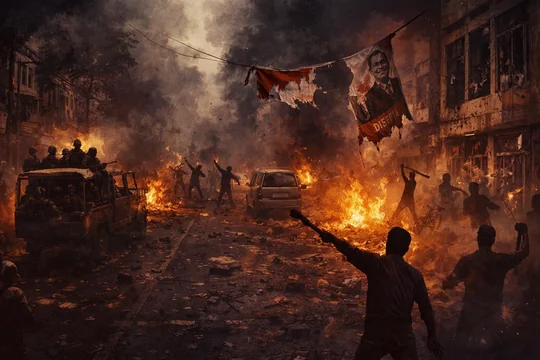
Post-Election Unrest Grips Bangladesh as Political Rivalries Turn Violent
Bangladesh is witnessing a disturbing wave of post-election violence as clashes between supporters of the Bangladesh Nationalist Party (BNP) and Jamaat-e-Islami have left at least 9 people injured across five districts. The violence, which erupted in Bogura, Naogaon, Kushtia, Jessore, and Gazipur, has included arson attacks on homes, physical assaults, and targeted intimidation of political workers and journalists.
District-by-District Breakdown of the Violence
In Bogura, BNP supporters allegedly attacked Jamaat workers, leaving several injured. The violence spread to Naogaon where homes belonging to political activists were set ablaze. In Kushtia, clashes broke out during a local political gathering, while Jessore saw targeted attacks on opposition party offices. Gazipur, an industrial hub near the capital Dhaka, witnessed street confrontations that disrupted normal life.
Perhaps most alarmingly, a journalist covering the unrest was physically attacked, raising serious concerns about press freedom in an already fragile democratic environment.
A Larger Pattern of Political Violence
These incidents are not isolated. According to the Human Rights Support Society (HRSS), between October 2025 and February 14, 2026, Bangladesh has recorded:
- 10 people killed in political violence
- 2,503 people injured in clashes
- Over 500 properties destroyed or damaged
These staggering numbers paint a picture of a nation struggling to maintain civil order in the aftermath of contested elections, where political rivalries have devolved into systematic violence at the grassroots level.
Why This Matters Beyond Bangladesh
The deteriorating security situation in Bangladesh has regional implications. As India's eastern neighbor sharing a 4,096-km border, instability in Bangladesh directly affects India's northeastern states, cross-border trade, and regional security architecture. The targeting of minority communities and political workers also raises humanitarian concerns that the international community cannot afford to ignore.
The BNP-Jamaat rivalry has been a defining feature of Bangladeshi politics for decades, but the current scale of violence suggests that democratic institutions are failing to channel political competition through peaceful means. With over 2,500 injuries in just four months, Bangladesh's post-election trajectory is a cautionary tale for democracies across South Asia.
The Bottom Line
Bangladesh's post-election violence is not just a domestic political problem — it is a humanitarian crisis in the making. The international community, particularly regional powers like India, must engage diplomatically to prevent further escalation. When political parties treat elections as zero-sum wars rather than democratic exercises, it is ordinary citizens — and the journalists who cover them — who pay the price.