Apple's New Siri May Auto-Delete Your Chats: Here's What That Actually Means for Your Privacy
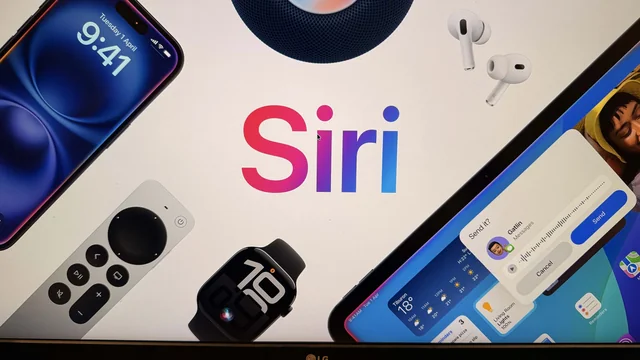
Apple is finally getting ready to fix Siri — and the headline feature might not be how smart it gets, but how little it remembers about you.
According to a new report, Apple's upcoming Siri overhaul could ship with a privacy feature that automatically deletes your conversations with the assistant after a set period. If that sounds familiar, it's because it works a lot like the disappearing-messages option Apple already offers in its Messages app. And the timing is no accident: Apple is positioning privacy as the centerpiece of its big AI comeback story.
Let's break down what's actually been reported, why it matters, how it stacks up against ChatGPT and Gemini, and what you as a user should actually take away from all this.
The Quick Summary
Bloomberg's Mark Gurman — easily the most reliable Apple leaker in the business — reports that privacy will be a major theme when Apple unveils a new version of Siri at its Worldwide Developers Conference in June. The most interesting detail: Siri could include a feature similar to the Messages app that lets users automatically delete conversations after 30 days or one year, or keep them indefinitely.
In other words, you'd get to decide how long Siri keeps a memory of what you asked it — and you could tell it to forget everything on a rolling schedule.
The Bigger Picture: This Is Apple's AI Redemption Arc
To understand why this matters, you need the backstory.
Siri has been the punchline of the AI era. While ChatGPT, Gemini, and Claude raced ahead with genuinely capable conversational AI, Siri stayed stuck answering the weather and setting timers. Apple even agreed to pay $250 million to settle a lawsuit over Siri's delayed AI features earlier this month — a pretty clear signal of how badly the rollout went.
So the relaunch isn't just an update. The Siri relaunch is widely seen as Apple's big chance to reestablish its relevance in artificial intelligence, and the company's executives are reportedly planning to argue that they're taking a more privacy-friendly approach than most other AI companies.
Here's the twist that makes this story more nuanced than a simple "Apple cares about privacy" headline: the new Siri isn't entirely Apple's own brain. Apple will reportedly launch its first standalone Siri app, powered by Google Gemini, offering users a chatbot experience reminiscent of ChatGPT. So Apple is leaning on Google's AI models to make Siri competitive — while simultaneously selling privacy as its differentiator.
What "Auto-Deleting Chats" Actually Means
If you've ever used the disappearing-messages setting in Messages, WhatsApp, or Signal, you already understand the concept. Instead of your conversation history piling up forever, it self-destructs on a timer.
For the new Siri, the reported options would be:
- Delete after 30 days — a short memory window. Good for people who want a clean slate fast.
- Delete after 1 year — a middle ground that keeps some continuity without indefinite storage.
- Keep indefinitely — the traditional "store everything" mode for users who want Siri to remember context long-term.
The key word here is user control. Compared to other chatbots, the app is supposed to have more limitations on how long user information can be used and stored. That's a meaningful contrast with how most AI assistants behave today, where chat history is retained by default and you usually have to dig into settings to change it.
Why this is genuinely useful
Think about what people actually type into AI assistants: health questions, financial worries, relationship problems, work documents, half-formed business ideas. That's an extraordinarily sensitive data trail. An auto-delete setting means that even if you forget to clean up, your most personal queries don't sit on a server for years waiting to be breached, subpoenaed, or used for training.
This is exactly the kind of "set it and forget it" privacy hygiene we constantly recommend here at SaveDelete — the best privacy setting is the one that works automatically, without you having to remember to use it.
The Catch: Read the Fine Print
This is where the report gets interesting, and where you should keep your skeptic hat on.
Gurman also raised a pointed observation: Apple might be emphasizing privacy partly as a way to excuse Siri's shortcomings compared to competing products — and this emphasis could obscure the fact that Google is handling some of the security.
Unpack that and you get two real concerns:
1. Privacy as a marketing shield. If the new Siri turns out to be less capable than ChatGPT or Gemini, "but it's private" becomes a convenient way to reframe a weakness as a feature. Privacy is great — but it shouldn't be a distraction from whether the assistant actually works well.
2. Google is in the loop. This is the big one. Siri is reportedly powered by Google Gemini. Auto-deleting chats on your iPhone is reassuring, but it raises the obvious question: what happens to your queries when they're processed by Google's models? Apple has historically used clever architecture (like Private Cloud Compute) to keep data sealed off, but until we see exactly how the Apple–Google handoff is structured, the privacy promise has an asterisk on it. The auto-delete feature governs Apple's stored history — it doesn't automatically tell you what a third-party model provider does on its end.
The honest takeaway: auto-deleting chats is a real, positive feature, but "Apple Siri is the private AI" deserves scrutiny, not blind trust, until the technical details are public.
How This Compares to ChatGPT, Gemini, and Claude
To put Apple's reported approach in context, here's roughly how the major assistants handle chat retention today:
- ChatGPT — Keeps history by default. Offers a "Temporary Chat" mode and lets you turn off training on your data, but persistent memory and history are opt-out, not opt-in.
- Google Gemini — Retains activity by default tied to your Google account, with auto-delete windows you can configure (3, 18, or 36 months) buried in account settings.
- Claude — Does not train on your conversations by default for consumer chats and has more conservative data-use defaults, though retention still exists for safety and operational reasons.
- Apple Siri (reported) — Would offer a built-in, front-and-center auto-delete choice (30 days / 1 year / keep) framed as a primary feature rather than a buried setting.
The differentiator Apple is reportedly going for isn't that auto-delete is unique — Gemini already has versions of it. It's that Apple wants to make it visible, simple, and default-friendly instead of hidden three menus deep. For most non-technical users, that packaging genuinely matters. A privacy feature nobody can find protects nobody.
What You Should Actually Do (Practical Takeaways)
Whether or not you use Apple devices, this news is a good prompt to audit your own AI privacy. Here's the SaveDelete checklist:
-
Find the retention setting on every AI tool you use. ChatGPT, Gemini, Copilot, and others all have data controls — most people have never opened them. Set an auto-delete window if one exists.
-
Treat AI chats like search history, not a private diary. Until you've verified retention and training settings, assume anything you type could be stored. Avoid pasting passwords, full financial details, or other people's private information.
-
Use temporary/incognito modes for sensitive questions. Most major assistants now have a "don't remember this" mode. Use it for health, legal, and financial queries.
-
Don't let "privacy-focused" branding switch off your brain. As this very story shows, a privacy-first marketing message can coexist with a third-party model quietly processing your data. Always ask: who else touches this data, and what do they do with it?
-
Wait for WWDC before forming a verdict. This is still a report, not an official announcement. Apple unveils the new Siri at WWDC in June — that's when the real technical details (and the fine print) will land.
The Bottom Line
If the report holds up, Apple's revamped Siri will let you put an expiry date on your conversations — 30 days, a year, or forever, your choice. That's a genuinely user-friendly privacy move, and making it a headline feature rather than a hidden toggle is the right instinct.
But the more important story underneath is the tension at the core of the new Siri: Apple is selling privacy as its big differentiator while leaning on Google's Gemini to make the assistant actually competitive. Auto-deleting chats addresses one slice of the privacy question. It doesn't, on its own, answer the bigger one about what happens to your data once it leaves your phone.
We'll be watching WWDC in June closely and will update this post once Apple makes it official. For now: the feature is promising, the skepticism is warranted, and the smartest move is to tighten up your AI privacy settings today instead of waiting for any company to do it for you.
Want more no-nonsense breakdowns of AI news and privacy tools? Explore our free online tools and AI guides at SaveDelete.com.