Apple's iPhone Is Now NATO-Approved for Classified Data — But Don't Salute Just Yet
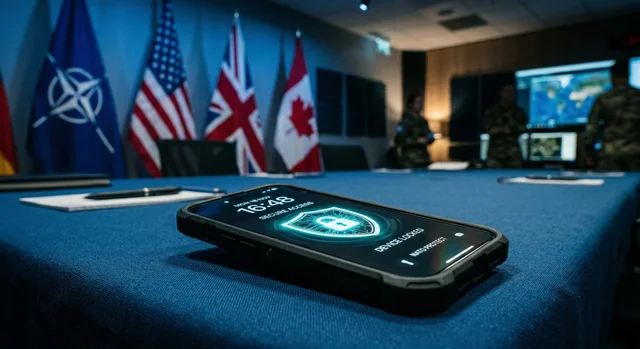
Your iPhone just got a security clearance. Not a metaphorical one — a literal NATO classification approval that makes Apple's consumer devices the first in history to be trusted with classified military alliance data.
What Actually Happened
NATO has officially approved iPhones and iPads running iOS 26 and iPadOS 26 to handle classified information up to the "restricted" level. These aren't custom-built, locked-down military phones. They're the exact same consumer devices sitting in your pocket right now — just running the latest software.
According to Apple, no other consumer device in the world holds this distinction. The devices are now listed in the NATO Information Assurance Product Catalogue, alongside traditional defense and government vendors who've been in this space for decades.
How Apple Got Here
The certification didn't happen overnight. iPhones and iPads first received approval to handle classified German government data after an evaluation by Germany's Federal Office for Information Security (BSI). That agency conducted extensive technical assessments, security analysis, and testing before determining Apple's devices met the requirements.
That German certification became the foundation for the broader NATO approval, which now covers all NATO member nations. The security stack that convinced NATO includes Apple silicon with its Secure Enclave for isolating encryption keys and biometric data, Face ID and Touch ID, and Memory Integrity Enforcement that blocks entire classes of memory-based attacks.
The "Restricted" Level — What It Actually Means
"Restricted" is the lowest classified tier in NATO's hierarchy, sitting below "Confidential" and "Secret." But make no mistake — it's still classified data. For years, the baseline assumption was that no consumer phone could be trusted at any classified level. Apple just shattered that assumption.
Ivan Krstić, Apple's VP of Security Engineering and Architecture, said: "Prior to iPhone, secure devices were only available to sophisticated government and enterprise organizations after a massive investment in bespoke security solutions."
The Skeptic's Take
Let's pump the brakes before we crown Apple the Pentagon's favorite phone maker. First, "restricted" is the lowest rung of the classified ladder. NATO isn't handing iPhones to intelligence officers running covert ops. Second, this announcement drops conveniently ahead of Apple's March event — marketing timing that would make any PR team proud.
And here's the real irony: Apple uses "security" as the justification for its walled garden approach — the same approach that's attracted antitrust scrutiny worldwide. Getting NATO's stamp of approval is an incredibly convenient defense against regulators who want to force sideloading and third-party app stores.
The cynic in us wonders: is this a genuine security milestone, or is it Apple weaponizing a government endorsement to protect its business model?
The Bottom Line
Regardless of the timing or the motives, the technical achievement is real. Consumer hardware meeting military classification standards is unprecedented. Whether Apple deserves a standing ovation or a raised eyebrow depends on how much weight you give to the word "restricted" — and how closely you watch Apple's lobbying calendar.