Apple Under John Ternus: What Comes Next for the Tech Giant's Hardware Strategy
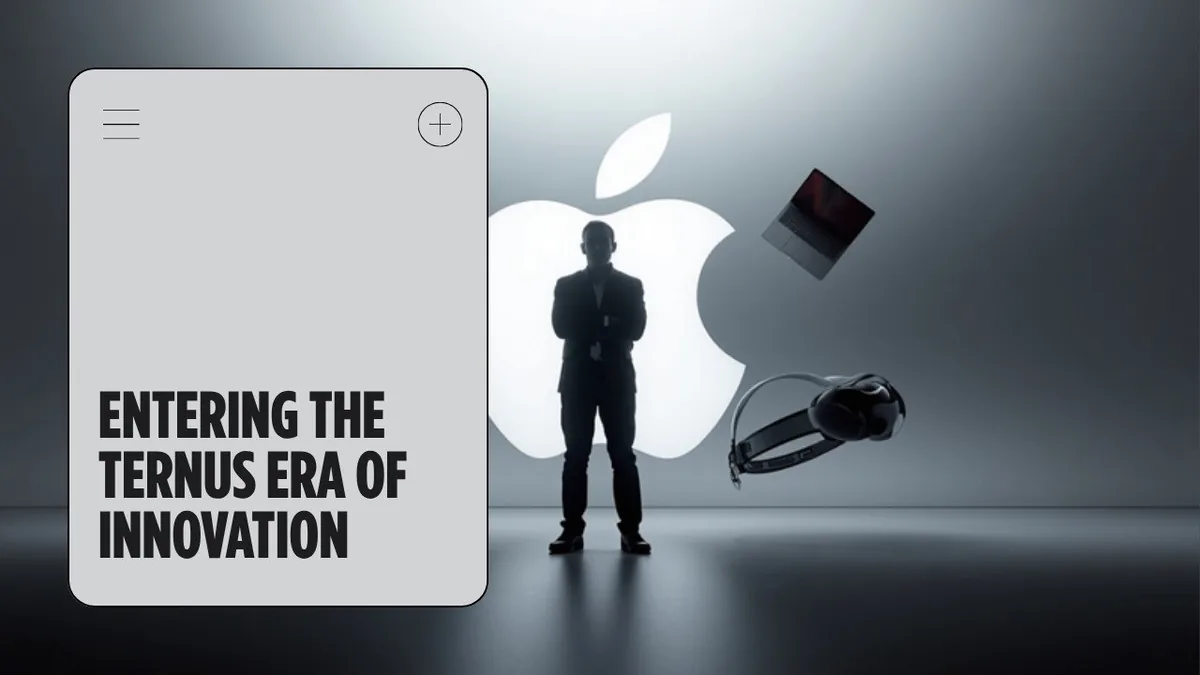
For the first time in 14 years, Apple is being run by someone whose primary expertise is hardware, not operations. John Ternus — the engineer who quietly led Mac and iPad hardware for the past decade — has stepped into the CEO role, and that shift is going to ripple through the entire Apple product roadmap. The question is no longer "will Apple change" but "how aggressively, and how fast".
Why Ternus Is Different From Tim Cook
Tim Cook was an operations savant. He turned Apple into the most efficient supply chain on Earth, expanded margins to obscene levels, and protected the iPhone golden goose. What he did not do — and what critics have complained about for years — is move with the bold hardware ambition of the Steve Jobs era.
Ternus has the opposite background. He has been the engineer behind the M-series chips, the redesigned Mac Pro, the Vision Pro hardware, and recently the four smart glasses frame designs Apple is testing for the 2027 launch. His instincts skew toward "ship the next hardware leap" rather than "protect the existing margin".
The Three Hardware Moves to Watch in 2026 and 2027
First, smart glasses. The 2027 launch is now Ternus's signature project. Insiders expect Apple to skip a heavy display in v1 and focus on audio plus camera plus AI agents — directly competing with Meta's Ray-Ban line, but with Apple's full ecosystem behind it.
Second, the M-series chip cycle. Ternus is the executive most associated with the silicon transition that left Intel behind, and he is expected to push aggressively on M5 and M6 generations, including a potential server-grade variant for AI workloads inside Apple data centres.
Third, foldables. Apple has been quietly working on a foldable iPhone for at least four years. With Apple now leading global smartphone share for the first time at 21 percent, Ternus has the political capital to ship a foldable in 2027 even if early margins are tight.
Apple Intelligence and the Looming AI Reset
Apple Intelligence has been a polite disappointment. Siri's full LLM upgrade has been delayed repeatedly, on-device models lag the open-source frontier, and the company has had to lean on partnerships with OpenAI and (reportedly) Google's Gemini. Ternus is going to have to make a decision in his first six months: either commit to building genuinely competitive in-house AI, or formally embrace a "best partner per task" stack.
The hardware angle here is critical. Whatever AI strategy Apple chooses, it will be enabled or limited by the next-gen Neural Engine. That is exactly the kind of system-level bet that suits Ternus's strengths far more than Cook's.
My Take
This is a smart succession that most observers underestimated. Cook's job — making Apple a profitable global juggernaut — is done. Ternus's job — keeping Apple ambitious enough to lead the next hardware platform — is just starting. The right person took the chair at exactly the right time.
That said, Ternus has a narrow window. If smart glasses flop or foldables slip, Apple's "next platform" story is in real trouble. He cannot ship a polite Tim Cook era product in 2027 — he has to ship a Steve Jobs-grade swing. We will know within 18 months whether he can.
Frequently Asked Questions
Who is the new Apple CEO?
John Ternus, the longtime hardware engineering chief at Apple, has succeeded Tim Cook as CEO. Ternus previously led Mac, iPad, and Apple silicon hardware development and was widely considered the leading internal candidate for years.
What is John Ternus's background?
Ternus joined Apple in 2001 and rose through the hardware engineering ranks, leading the team behind M-series Macs, the Vision Pro, and recent iPad redesigns. He is regarded as one of the most technically credible CEOs in Apple's history.
Will Apple ship smart glasses in 2027?
Yes — Apple is testing four frame designs for a 2027 launch. The first version is expected to focus on audio, cameras, and AI agents rather than a heavy in-lens display, similar in spirit to Meta's Ray-Ban line.
What happens to Tim Cook?
Cook is expected to remain on Apple's board in a chairman or advisor role for at least the next two to three years, providing continuity on operations, geopolitics, and Asia supply-chain relationships.
The Bottom Line
Apple is no longer being run by an operator. It is being run by an engineer. That single fact will reshape product priorities, AI strategy, and probably margin discipline over the next three years. If you have been waiting for "interesting Apple" to come back, you are about to find out whether Ternus can deliver it.