Apple Leads Global Smartphone Market for First Time in Q1 2026 with 21% Share
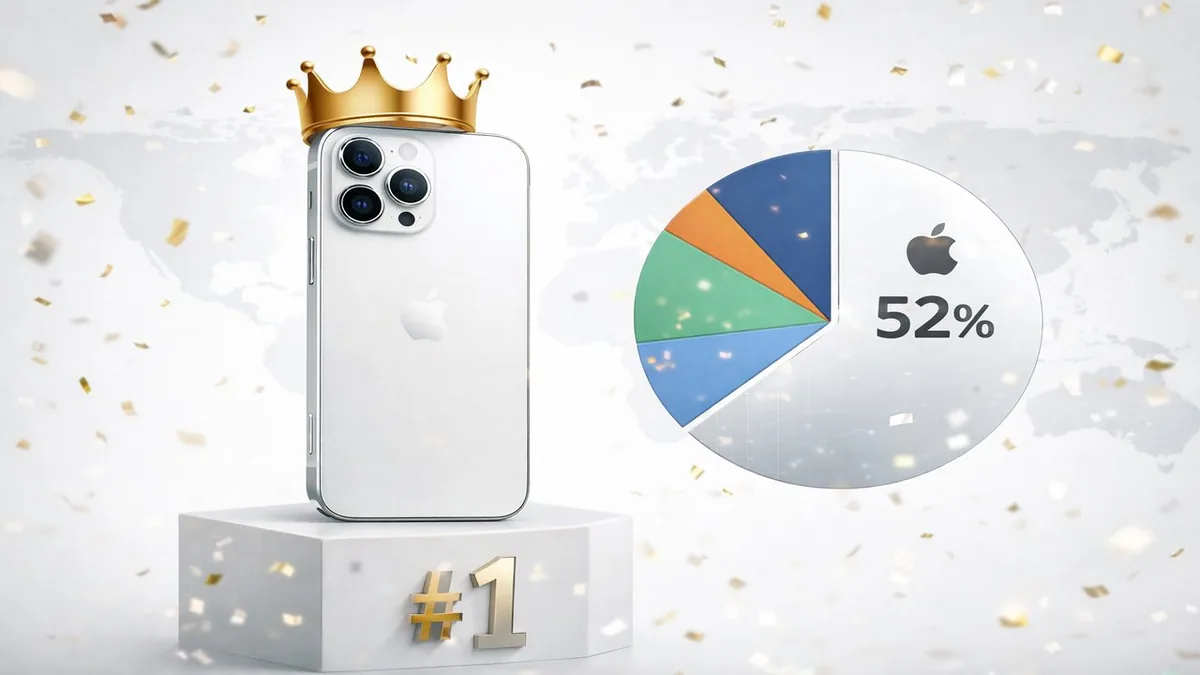
Apple topped global smartphone shipments in Q1 2026 for the first time, capturing a 21% market share in a quarter where overall industry shipments declined 6% year-on-year, according to Counterpoint Research. The milestone is significant: Apple has historically led in revenue and profit share due to iPhone's premium pricing, but unit volume leadership in a full quarter marks a new competitive threshold for a company that has never positioned itself as a volume player. The result comes as Apple prepares for its Worldwide Developers Conference in June — where AI features are expected to dominate — and as the company continues testing four smart glasses frame designs for a 2027 launch.
What Drove Apple to Volume Leadership
Apple's Q1 2026 unit leadership reflects several converging factors. iPhone 17 series demand remained robust through the quarter, supported by Apple Intelligence features that have driven upgrade cycles among users holding older models. The contraction in overall smartphone shipments — down 6% industry-wide — disproportionately affected Android mid-range and budget segments where Chinese manufacturers compete most aggressively. As weaker demand hit those tiers harder, premium segment relative strength pulled Apple's share higher.
Geographic mix also mattered. Apple's recovery in China, where it had ceded significant share to Huawei and domestic brands in 2024 and 2025, contributed to Q1 volume. Combined with strong performance in the US, Europe, and India — where Apple has been aggressively expanding its retail presence — the geographic breadth of demand was unusually wide for a single quarter.
The Market Context: A Declining Industry Where Premium Won
A 6% year-on-year decline in overall smartphone shipments in Q1 2026 is a notable industry signal. Post-pandemic replacement cycles have largely normalized, 5G upgrade urgency has faded, and economic pressure on consumers in key markets has suppressed discretionary spending. In that environment, the premium tier — where Apple competes almost exclusively — held better than mid-range and budget, because the consumers who buy $800-$1,200 smartphones are less exposed to economic pressure than those buying $200-$400 devices. Apple's Q1 leadership is partly a story about Apple's strength and partly a story about what happens to market share arithmetic when volume contracts at the bottom of the market faster than at the top.
Frequently Asked Questions
Did Apple really sell more smartphones than Samsung in Q1 2026?
Yes. According to Counterpoint Research, Apple captured 21% global smartphone market share in Q1 2026 — its first quarterly unit volume leadership position. Overall industry shipments declined 6% year-on-year, with the premium segment where Apple competes holding better than mid-range and budget tiers.
Why did overall smartphone shipments decline 6%?
The decline reflects normalization of post-pandemic replacement cycles, fading 5G upgrade urgency, and consumer spending pressure in key markets. Budget and mid-range Android tiers were hit harder than the premium segment, shifting market share math in Apple's favor.
What does Apple's Q1 leadership mean for the rest of 2026?
Q1 is historically one of Apple's stronger quarters due to holiday gift activations. Whether Apple can maintain volume leadership through the year depends on the iPhone 17 upgrade cycle sustaining through mid-year and on whether the anticipated AI-heavy iPhone 18 line generates another step-change in upgrade demand.
The Bottom Line
Apple leading global smartphone shipments for the first time is a milestone, but it arrives in a quarter where winning meant taking share in a shrinking market. The real story is not that Apple sold more phones than Samsung — it is that Apple's premium positioning insulated it from the 6% industry decline better than any other major manufacturer. As Apple heads toward a June WWDC with AI features at the center and a 2027 smart glasses launch in development, Q1 unit leadership is a strong platform — but the harder test is whether Apple Intelligence can sustain the upgrade cycle that delivered it.