Apple iPhone Fold to Feature iPad-Like Interface With Side-by-Side Multitasking
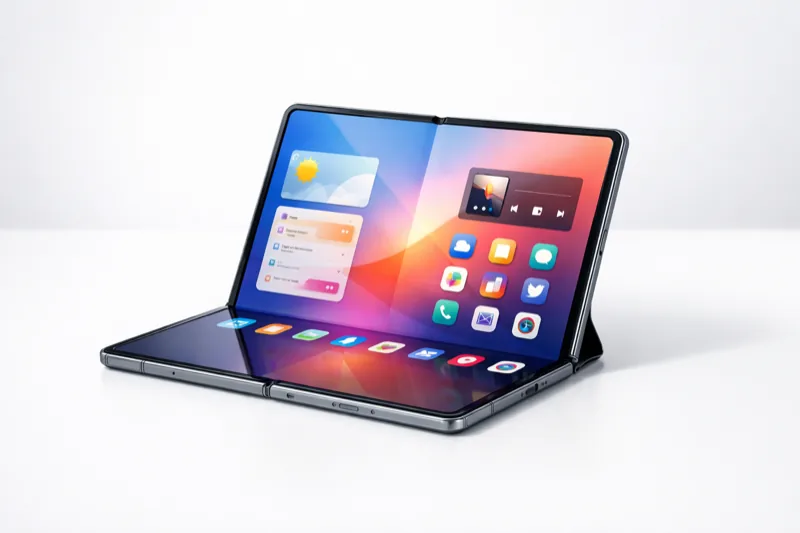
Apple’s first foldable iPhone will run an iPad-like interface when unfolded, according to Bloomberg’s Mark Gurman. The device — expected in September 2026 — will support side-by-side multitasking with two apps running simultaneously on a 7.76-inch inner display. Apple is revamping its core apps to include sidebars along the left edge of the screen, similar to iPad apps like Mail and Notes. It’s the most aggressive iPhone redesign since the original, and it comes five years after Samsung proved the foldable market was real.
The iPad-Like Interface
When unfolded, the iPhone Fold will display a layout with proportions similar to an iPad in landscape mode thanks to a 4:3 aspect ratio inner display. Apple is adding sidebars to core apps and giving developers tools to adapt their existing iPhone apps for the new layout.
The critical distinction: the device runs iOS, not iPadOS. It won’t support iPad apps, won’t have Stage Manager, and won’t offer the full windowed multitasking system of iPadOS. The split-screen is simpler — two apps side by side, more like what Android foldables have offered for years. Apple is essentially copying Samsung’s homework and presenting it as innovation.
Display and Design
The numbers are impressive on paper:
- Inner display: 7.76 inches, 2713 x 1920 resolution, Samsung OLED with LTPO for 120Hz refresh rate
- Outer display: 5.49 inches, roughly the size of a smaller iPhone
- Crease: Apple claims just 0.15mm in depth with a 2.5-degree angle — using ultra-thin glass instead of plastic
- Folded thickness: approximately 9.6mm; unfolded: just 4.5mm thin
- Weight: around 255 grams
The build uses a titanium alloy casing with a stainless steel and titanium hinge that incorporates liquid metal for improved durability. Apple has licensed Samsung Display’s hinge technology — which means the company that positioned itself as the innovation leader is literally using its competitor’s parts.
Camera, Chip, and Authentication
The iPhone Fold will feature a dual-lens rear camera in an iPhone Air-like oval bar arrangement, with cameras on both the inner and outer displays. Authentication switches from Face ID to a Touch ID side button to save space and reduce thickness.
Under the hood, an A20 processor is expected to outperform Qualcomm’s Snapdragon 8 Gen 5 by approximately 30% in single-core performance. Battery capacity sits between 5,400 and 5,800 mAh.
The Price Problem
Analyst estimates range from $1,800 to $2,500, with most settling around $2,000. UBS estimates $1,800–$2,000, while Fubon Research’s Jeff Pu puts it closer to $2,399. Either way, it will be the most expensive iPhone in the 2026 lineup — and a tough sell when Samsung’s Galaxy Z Fold has been steadily dropping in price.
IDC projects Apple could capture 22% of global foldable shipments and 34% of market value in its first year. The foldable market is expected to grow 30% year-over-year in 2026, partly driven by Apple’s entry.
Five Years Late to the Party
Samsung launched its first Galaxy Fold in 2019. Google followed with the Pixel Fold in 2023. Apple is arriving in 2026 with a device that offers side-by-side multitasking — a feature Android foldables have had since day one. The nearly crease-free display and titanium build are genuine differentiators, but the software story is essentially “we made our iPhone apps look like iPad apps when you unfold the screen.”
Samsung isn’t sitting still either. The company is launching three foldables in fall 2026 — the Galaxy Z Fold 8, a new Wide Fold, and Z Flip 8 — specifically to counter Apple’s single entry.
The Bottom Line
Apple’s iPhone Fold will have best-in-class hardware: near-invisible crease, titanium build, ultra-thin glass, and liquid metal hinges. But the software pitch is underwhelming — it’s iPad-style sidebars on iOS, not actual iPad capabilities. At $2,000+, Apple is betting that its ecosystem lock-in and brand premium will convince buyers to pay significantly more for features that Samsung and Google have offered for years at lower prices. The nearly crease-free display might be enough to justify the late arrival. The price probably isn’t.