Apple's Home Hardware Chief Just Defected to Oura — And It Tells You Everything About Apple's Smart Home Mess
A 20-Year Apple Veteran Walks Out the Door
Brian Lynch, the senior engineering director who ran Apple's home hardware team since 2022, has left the company to join smart ring maker Oura as SVP of hardware engineering. Lynch spent over 20 years at Apple, including time on the now-shuttered car development project before taking charge of home devices.
According to Bloomberg's Mark Gurman, the departure is causing "fresh upheaval" on Apple's home products team — at the worst possible time.
Why This Matters More Than a Typical Executive Exit
Apple's smart home ambitions are already in trouble. The company has been working on a smart home hub — essentially a tabletop device with a screen and Siri integration — but its launch has been pushed back to September 2026 due to Siri development delays. Beyond that, Apple has even more ambitious products in the pipeline:
- Home security and automation sensor — planned for 2027
- Advanced tabletop robot — also 2027
- Smart glasses — in development
- Wearable AI pendant or pin — in development
- AirPods with cameras — in development
Losing the engineering director in charge of all of this hardware — right before the first major product launch — is not just a personnel issue. It signals deeper problems.
Oura Is Quietly Becoming the Anti-Apple
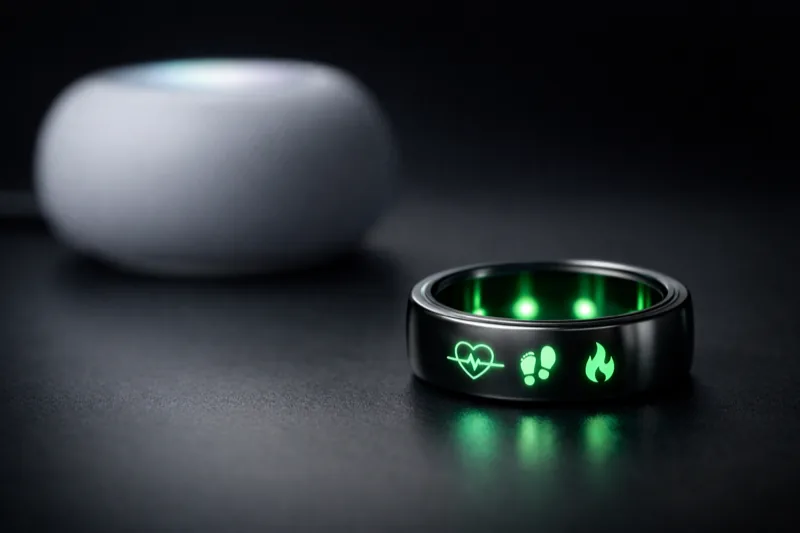
What makes this departure particularly telling is the destination. Oura is not a direct competitor to Apple in any traditional sense — it makes smart rings, a product category Apple has explored but never committed to. Yet Oura has been poaching Apple employees for years, building a team of ex-Apple engineers who apparently prefer working on a simpler, more focused product.
The Oura Ring has become the wearable of choice for health-conscious consumers who do not want to wear a smartwatch. It tracks sleep, heart rate, activity, and stress without the notification overload of an Apple Watch. Lynch's move suggests that even Apple's own engineers see more opportunity in focused health wearables than in Apple's sprawling smart home ambitions.
The Siri Problem Keeps Getting Worse
At the heart of Apple's smart home delays is Siri. The smart home hub was supposed to be the product that proved Apple Intelligence could compete with Alexa and Google Assistant in the home. But Siri's persistent limitations — and the slow pace of Apple Intelligence integration — have pushed the launch back repeatedly.
Now the engineer responsible for the hardware side of that vision is gone. Apple will need to find someone who can execute on products that are already behind schedule, with a voice assistant that still cannot reliably set a timer without misunderstanding you.
The Bottom Line
Brian Lynch's departure to Oura is a symptom, not the disease. The real problem is that Apple's smart home strategy has no urgency and no clear vision. While Amazon and Google have spent a decade iterating on home devices, Apple is still trying to ship its first real smart home product — and now the person building it just left for a company that makes rings.
For Apple fans hoping for a HomePod-meets-iPad kitchen device by Christmas, this is not encouraging. For Oura shareholders, it is a signal that the smart ring company is serious about building hardware that can compete at Apple's level of quality — with the people who literally built Apple's hardware.