Anthropic Tells the Pentagon "No" — But Can It Afford to Keep Saying That?
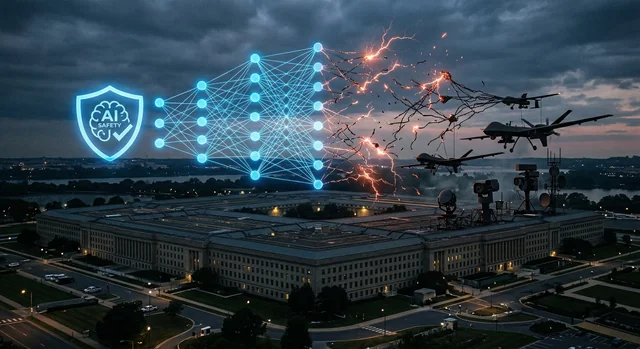
Anthropic, the AI safety company behind Claude, is locked in a high-stakes standoff with the Pentagon over how its AI model can be used by the U.S. military. With a Friday deadline looming, Anthropic says there has been "virtually no progress" on negotiations — and it's refusing to accept what defense officials call their final offer.
What's Going On
The Pentagon wants unrestricted access to Claude for "all lawful purposes" in classified settings. Anthropic wants guardrails — specifically, no mass surveillance of Americans and no fully autonomous weapons. The two sides can't agree, and the clock is ticking.
CEO Dario Amodei published a blog post calling out the Pentagon's contradictory stance: threatening to label Anthropic a security risk while simultaneously calling Claude "essential to national security." You can't have it both ways.
The Pentagon's Impossible Position
The Defense Department's requirement that AI models be available for "all lawful purposes" isn't unique to Anthropic — it's standard policy. But here's the thing: "lawful" and "ethical" aren't always the same thing. Mass surveillance of American citizens could technically be authorized under certain legal frameworks. Fully autonomous weapons aren't explicitly banned by U.S. law.
So when the Pentagon says "all lawful purposes," what it really means is: we want no restrictions, and we'll decide what's appropriate.
The Skeptical Take
Let's be honest about the dynamics here. Anthropic built its entire brand on AI safety. It split from OpenAI specifically because it wanted to prioritize responsible development. Walking away from a Pentagon contract would be the ultimate proof that those principles are real, not just marketing.
But can Anthropic actually afford to say no? The AI arms race is expensive. OpenAI, Google, and Meta are all pouring billions into compute. A major government contract isn't just revenue — it's a signal to investors, partners, and talent that you're a serious player.
And here's the uncomfortable truth: if Anthropic walks away, the Pentagon won't go without AI. It'll just use someone else's model — one that might have fewer safety guardrails, not more. The net effect on the world could actually be worse.
The Bigger Picture
This standoff is really about a fundamental question: who gets to set the rules for how AI is used in warfare and surveillance? The companies that build it, or the governments that deploy it?
Anthropic is trying to establish a precedent that AI companies can set ethical boundaries on their products, even for government customers. The Pentagon is trying to establish the opposite — that national security trumps corporate ethics policies.
Neither side is entirely wrong. But one side has the weight of the U.S. government behind it.
The Bottom Line
Anthropic's stand against the Pentagon is admirable in principle. But principle without leverage is just a press release. The real question isn't whether Anthropic can say no — it's whether saying no actually changes anything, or whether it just hands the contract to a competitor less concerned about surveillance and autonomous weapons.
Sometimes the most responsible thing isn't walking away from the table. It's staying at the table and fighting for better terms — even when the other side isn't listening.