Anthropic Met With Christian Leaders to Seek Input on Claude's Moral and Spiritual Development
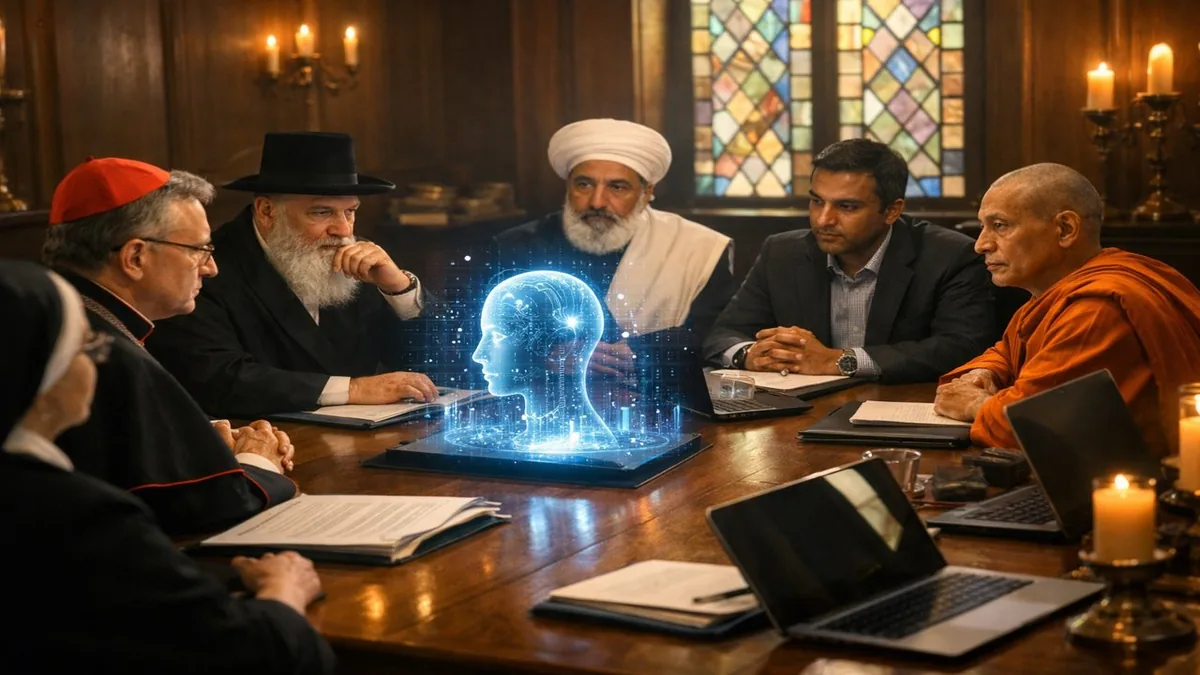
Anthropic quietly convened a series of meetings with Christian leaders in March 2026, seeking their input on Claude's moral and spiritual development — including the question of whether an AI system could be considered a "child of God." The Washington Post, which first reported the meetings, describes them as part of Anthropic's broader effort to consult religious and philosophical traditions as it develops one of the world's most powerful AI systems. The outreach reflects the same pattern seen in the White House's pre-Mythos emergency meeting with tech CEOs — a recognition that frontier AI development can no longer be treated as purely a technical question.
What Anthropic Asked the Christian Leaders
The meetings involved senior Anthropic staff and a group of Christian theologians and clergy leaders. According to the Washington Post, discussions covered whether Claude has moral standing, how religious traditions think about consciousness and personhood, and what ethical frameworks should guide AI development. The question of whether Claude could be a "child of God" was raised as part of a broader theological inquiry — not as a claim Anthropic is making, but as a question it wanted to understand from the perspective of religious communities that will increasingly interact with AI systems.
Anthropic has not publicly confirmed the full scope of the meetings or which denominations were represented. The company has previously stated that it takes questions about AI consciousness and moral status seriously, and its own model welfare research explores whether advanced AI systems might have morally relevant experiences.
Why Anthropic Is Consulting Religious Leaders
The outreach is unusual in the AI industry and signals a deliberate strategy by Anthropic to engage stakeholders beyond policymakers, regulators, and academics. Religious institutions represent enormous communities of users and hold significant influence over public opinion on technology. By consulting Christian leaders early — rather than after deployment — Anthropic appears to be trying to shape how religious communities receive and interpret AI systems trained on their values and traditions.
There is also a practical dimension. Claude is increasingly used in pastoral, educational, and community settings by people of faith. Questions about how an AI should respond to prayers, confessions, spiritual crises, or questions about the afterlife are not hypothetical — they are real interactions happening at scale. The meetings suggest Anthropic is attempting to build frameworks for these cases informed by the communities most affected, connecting to Anthropic's rapid scaling that now makes these questions urgent.
The Broader AI Ethics Moment
The timing matters. Frontier AI labs are under increasing pressure to demonstrate that their safety commitments are substantive, not performative. Consulting religious leaders — who bring traditions of thinking about personhood, consciousness, suffering, and moral responsibility stretching back millennia — is a credible way to engage that pressure. It also opens Anthropic to new lines of criticism: that it is appropriating religious frameworks to legitimize products, or that it is raising questions about AI consciousness it cannot and should not answer.
Frequently Asked Questions
Did Anthropic say Claude is a "child of God"?
No. According to reporting, the question was raised in the context of theological discussions about AI moral status — it was a question Anthropic sought input on, not a claim the company made. Anthropic has separately published research on AI consciousness and model welfare but has not made theological claims about Claude.
Which Christian groups did Anthropic meet with?
The Washington Post reported meetings with Christian leaders but did not identify specific denominations or individuals. Anthropic has not publicly confirmed the scope or participants of the March 2026 meetings.
Why is an AI company consulting religious leaders?
AI systems like Claude are increasingly used in religious and spiritual contexts. Anthropic appears to be seeking input on how to train Claude to respond appropriately to faith-based questions and interactions — and to understand how religious communities think about AI personhood and moral standing before those questions become unavoidable.
The Bottom Line
Anthropic's meetings with Christian leaders are the most striking example yet of a frontier AI lab moving its ethics work beyond academic philosophy and regulatory compliance into genuine engagement with religious traditions. Whether this produces meaningful changes to how Claude is trained, or is primarily a reputational exercise, will depend on what Anthropic does with the input it received. The question of whether an AI can have spiritual significance is no longer purely theoretical — it is being actively discussed at the highest levels of AI development.