Anthropic Defends Its $20M PAC Donation, Says It's About AI Policy Education — Not Elections
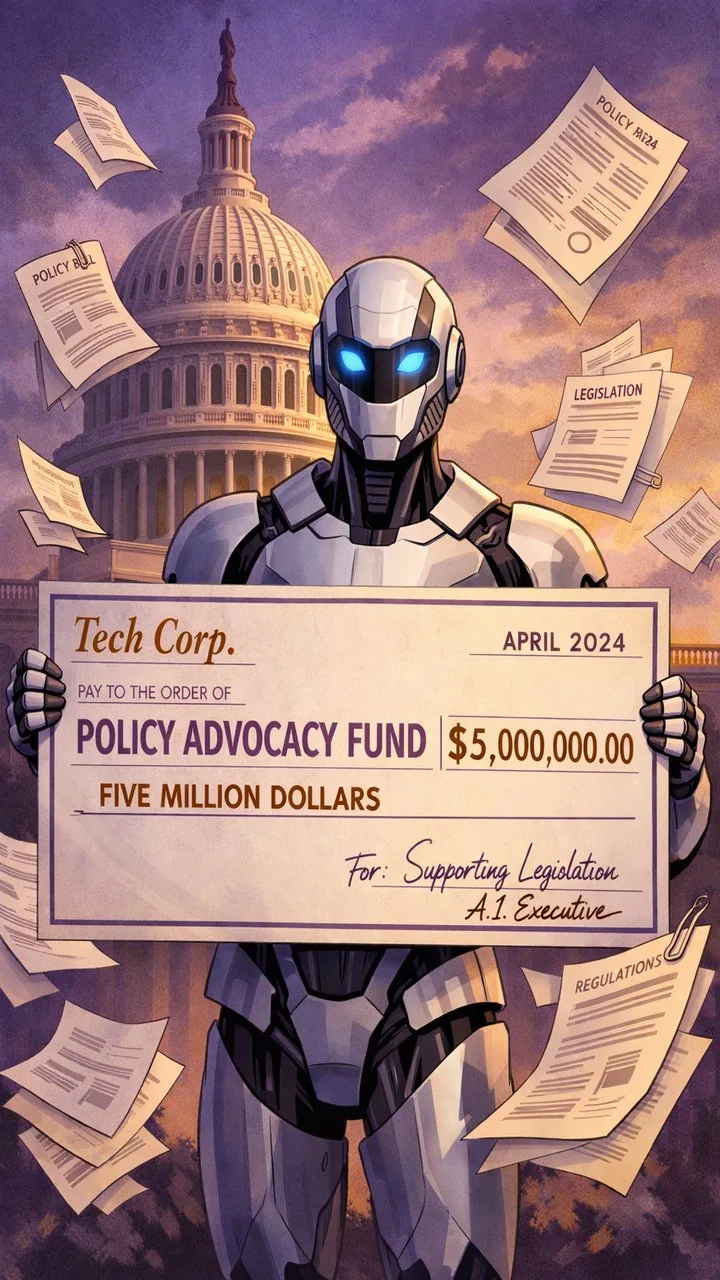
Anthropic has pushed back against characterizations of its $20 million donation to Public First Action as political election spending, insisting the money is intended to "educate the public on AI policy" and promote safe AI development — not to influence federal elections. The clarification comes as scrutiny of tech companies' political spending intensifies in the lead-up to the 2026 midterm elections.
What Is Public First Action?
Public First Action is a nonprofit advocacy organization focused on tech policy issues. Anthropic's $20 million donation makes it a major funder of the group's operations. The organization has been involved in AI policy campaigns at state and federal levels, and its work overlaps significantly with Anthropic's corporate interests in shaping AI regulation in ways favorable to safety-focused labs. Anthropic framed its donation as a civic education effort, not an electoral one.
The Fine Line Between Policy and Politics
Critics have questioned whether the distinction holds. When a $20 billion AI company funds a policy advocacy organization that campaigns on AI legislation, the line between "educating the public" and "lobbying for preferred outcomes" becomes blurry. Anthropic's donation comes at a moment when AI regulation is an active political battleground — with bills moving through Congress, state legislatures, and international bodies all looking at how to govern frontier AI systems. Funding advocacy in that environment inevitably has political dimensions.
Anthropic's Broader Political Activity
The Public First Action donation is not Anthropic's only foray into political influence. The company recently hired Ballard Partners, a lobbying firm with strong ties to the Trump administration, to represent its interests at the Pentagon and White House. Taken together, Anthropic's political spending — on lobbying, policy advocacy, and PAC donations — reflects the reality that shaping AI regulation has become as important as building AI models. Every major AI lab is now engaged in Washington in some form.
Why This Matters for AI Governance
The controversy around Anthropic's donation highlights a fundamental tension in AI governance: the companies best positioned to explain AI risks to policymakers are also the companies with the most to gain or lose from specific regulatory outcomes. When AI labs fund the organizations that shape AI policy debates, the credibility of those debates comes into question. Independent voices — academic researchers, civil society groups, and international bodies — are increasingly important counterweights to industry-funded advocacy.
The Bottom Line
Anthropic's defense of its $20 million PAC donation underscores the company's belief that influencing AI policy is a legitimate and necessary part of its mission. Whether that argument convinces skeptics depends on how clearly the company can demonstrate that its advocacy advances public interests rather than corporate ones. In an era of massive AI investment and rapid regulatory change, that distinction will be tested repeatedly.