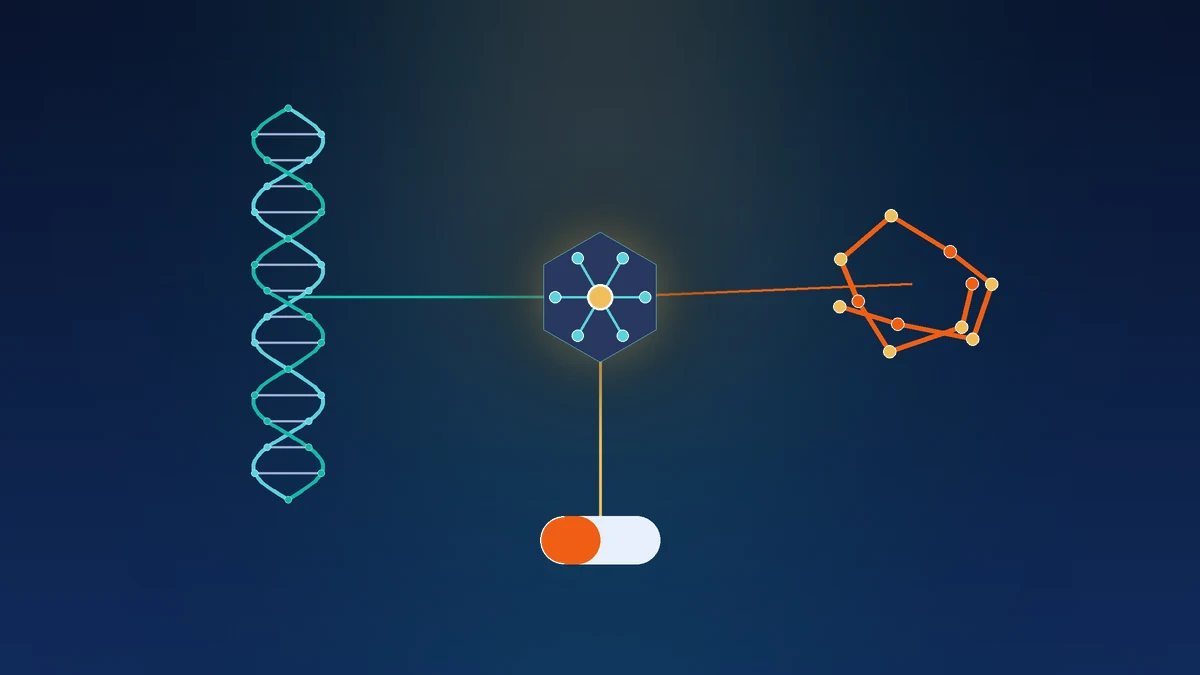
Anthropic has spent 2026 becoming the most valuable AI startup on the planet, largely by making Claude the default coding tool for software engineers. On June 30, at a San Francisco event pointedly titled "The Briefing: AI for Science," it made its next move — and it's aimed squarely at the lab bench.
The company launched Claude Science, a new flagship product built for researchers, and paired it with a genuine surprise: Anthropic is starting its own internal program to discover new drugs. An AI company, in other words, is no longer content to sell shovels to the people mining for medicines — it wants to dig too.
Inside Claude Science
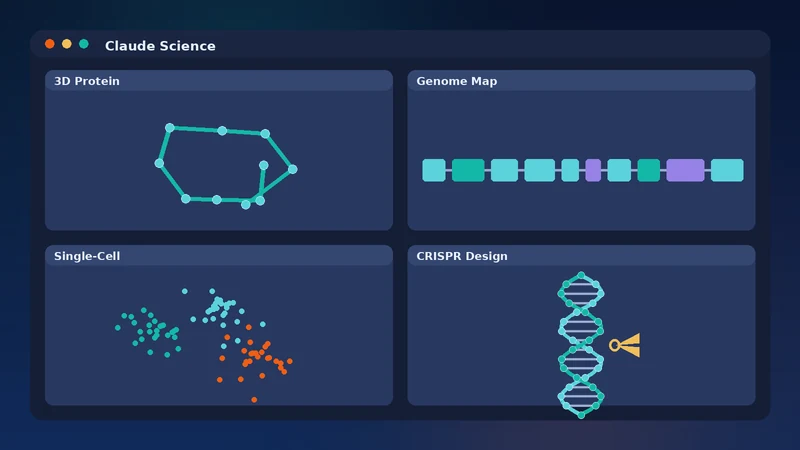
If Claude Code is an AI partner for programmers, Claude Science is the same idea pointed at biology. It's a single research "workbench" that lets a scientist work across dozens of databases, file formats and analysis tools without hopping between a dozen disconnected programs.
Crucially, it's agentic: from a high-level instruction, Claude Science can write code, run it on powerful compute clusters, and carry a piece of research through multiple steps. Anthropic says it deliberately prioritizes reproducibility — researchers can trace and verify how a result was reached, which is the difference between a fun demo and something a peer-reviewed lab can trust.
Under the Hood: 60+ Tools in One Place
The headline number is 60-plus built-in functions, spanning genomics, single-cell studies, proteomics, structural biology and cheminformatics. In everyday research terms, that means Claude Science can render 3D protein structures, analyse genome maps, work with single-cell RNA-sequencing data and even design CRISPR screens — all inside one environment.
It also plugs into serious data. The platform integrates Basecamp Research's EDEN dataset, billed as the world's largest biological dataset, with sequencing data drawn from millions of microbe species. To show it's more than plumbing, Anthropic demonstrated Claude Science autonomously identifying drug candidates for phenylketonuria, a genetic metabolic disorder — the kind of end-to-end task that used to take teams of specialists.
Early testers are enthusiastic. Stephen Francis, an epidemiologist at UCSF who used the beta to study brain-tumour biology, said: "After months of beta testing Claude Science, I'm convinced. This tool is going to accelerate scientific discovery in a big way." Early customers reportedly include drugmaker Novo Nordisk and the Allen Institute.
Anthropic Is Now Making Its Own Drugs
The product is the expected part. The bombshell is the business decision behind it: Anthropic is standing up an internal drug-discovery program of its own, led by head of life sciences Eric Kauderer-Abrams, with Jonah Cool running life-sciences partnerships and deployment.
That's a meaningful shift. Most AI labs sell their models to pharma companies and stop there. Anthropic is choosing to get its hands dirty — partly, it says, to gain firsthand experience using Claude Science on real scientific problems, and to prove the tool can do the job it's selling. The company hasn't said whether it plans to actually commercialize any drug it discovers.
Kauderer-Abrams framed the ambition in sweeping terms: "Our mission is to develop AI that serves humanity's long-term well-being, and we believe that by far the greatest opportunity to do that is in the life sciences."
A Deliberate Focus on Neglected Diseases
Where Anthropic points that program is telling. Rather than chasing the same blockbuster targets as everyone else, it says it will focus on "neglected" diseases — conditions traditional biopharma tends to avoid because they aren't commercially attractive.
It's a smart framing on two fronts. Ethically, it aims AI at problems the market has left underserved. Strategically, it sidesteps a direct fight with entrenched drugmakers and gives Anthropic a lane where "an AI found this" is a feature, not a threat. Whether it produces a real medicine is another question entirely — drug discovery is littered with promising leads that die in trials — but the intent is clear.
Getting Access: Beta, Credits and Grants
Claude Science is live now in beta, available to paid Claude subscribers across the Pro, Max, Team and Enterprise plans. To seed adoption, Anthropic is handing out up to $30,000 in usage credits plus grant funding for research projects, with an early emphasis on biology and biomedical work.
Researchers who want in on that support have a deadline: applications close on July 15, 2026. The timing is no accident — the launch lands just days after the U.S. government lifted export restrictions on Anthropic's most advanced models, clearing the way for the company to push its strongest systems into scientific work.
The Three-Way Race for Science AI
Anthropic is late to a party Google started. DeepMind effectively created the modern "AI for science" field with AlphaFold — which won a Nobel Prize — and spun up Isomorphic Labs to turn that into actual drugs. OpenAI, too, has been showcasing science wins, including GPT-5 helping crack an immunology puzzle.
Claude Science is Anthropic's most direct step onto that turf, and it comes from a position of strength. The company recently became the most valuable AI startup, with a revenue run-rate around $47 billion powered by the runaway success of Claude Code — the same "AI teammate" formula it's now applying to the lab. Its models are also advancing fast, as our breakdown of Claude Sonnet 5 lays out.
The Bottom Line
- Claude Science is a real product, out now. A 60+ tool workbench for genomics, proteins and chemistry, in beta for paid Claude users.
- Anthropic is making its own medicines. An internal drug-discovery program is a rare move for an AI lab — and a signal of how seriously it takes science.
- The target is deliberate. Focusing on neglected diseases is both a public-good pitch and a shrewd way to avoid a head-on fight with big pharma.
- The race just got hotter. Google, OpenAI and now Anthropic are all converging on AI-for-science — arguably the field where the technology could matter most.
Frequently Asked Questions
What is Anthropic's Claude Science?
Claude Science is Anthropic's new flagship AI product for life-science researchers — a single 'workbench' that lets scientists work across dozens of biological databases, file formats and analysis tools in one place. Think of it as Claude Code, but for drug discovery: it can write and run code on compute clusters, interface with genetics, chemistry and protein-biology tools, and carry out multi-step scientific work from a high-level instruction. It launched in beta on June 30, 2026.
Is Anthropic really making its own drugs?
Yes. Alongside the product, Anthropic announced it is starting its own internal drug-discovery program — an AI company deciding to actually hunt for new medicines rather than only selling tools to the labs that do. It is led by Eric Kauderer-Abrams, Anthropic's head of life sciences. The company frames it partly as a way to gain firsthand experience using Claude Science on real scientific problems, and has not said whether it intends to commercialize any drug candidates.
What diseases will Anthropic's drug program target?
Anthropic says it will focus on 'neglected' diseases — conditions that traditional biopharmaceutical companies typically avoid because they aren't commercially attractive targets. The idea is to point AI at problems the market has left underserved, rather than competing head-on for the same blockbuster drugs big pharma already chases.
Who can use Claude Science, and what does it cost?
Claude Science is in beta and available to paid Claude subscribers across the Pro, Max, Team and Enterprise plans. Anthropic is also offering up to $30,000 in usage credits plus grant funding for research projects, with an early focus on biology and biomedical work. Applications for that support close on July 15, 2026.
What can Claude Science actually do?
It ships with 60+ built-in functions spanning genomics, single-cell studies, proteomics, structural biology and cheminformatics. In practice that means rendering 3D protein structures, analysing genome maps, working with single-cell RNA sequencing data and designing CRISPR screens — all in one environment. It also plugs into Basecamp Research's EDEN dataset, billed as the world's largest biological dataset. Anthropic demonstrated it autonomously identifying drug candidates for phenylketonuria, a genetic metabolic disorder.
How does Claude Science compare to Google and OpenAI?
It puts Anthropic squarely into a three-way race for AI in science. Google's DeepMind pioneered the field with AlphaFold and its Isomorphic Labs drug unit, and OpenAI has pushed its own science efforts. Claude Science is Anthropic's most direct move onto that turf — and it arrives while Anthropic is on a tear, having become the most valuable AI startup with a roughly $47 billion revenue run-rate driven largely by Claude Code.
Why is Anthropic moving into science now?
Anthropic argues the biggest opportunity to make AI genuinely useful to humanity is in the life sciences. As head of life sciences Eric Kauderer-Abrams put it, 'Our mission is to develop AI that serves humanity's long-term well-being, and we believe that by far the greatest opportunity to do that is in the life sciences.' The launch also lands just days after the U.S. lifted export restrictions on Anthropic's advanced models, freeing the company to push its most capable systems into research.
Final Thoughts
It's easy to be cynical about AI companies promising to cure disease — the graveyard of hyped drug leads is enormous, and a slick demo on phenylketonuria is a long way from a pill on a pharmacy shelf. Claude Science will ultimately be judged on whether real labs make real discoveries with it, not on launch-day enthusiasm.
But the direction is genuinely notable. In a year dominated by debates over AI hype and spending, Anthropic is betting that the most valuable thing its models can do isn't write more code or answer more emails — it's help find medicines the world has given up on. If even a fraction of that pans out, it may be the most consequential AI story of 2026.