Anthropic Claude Code Source Leak Exposes Hidden Features and Triggers Mass Takedowns
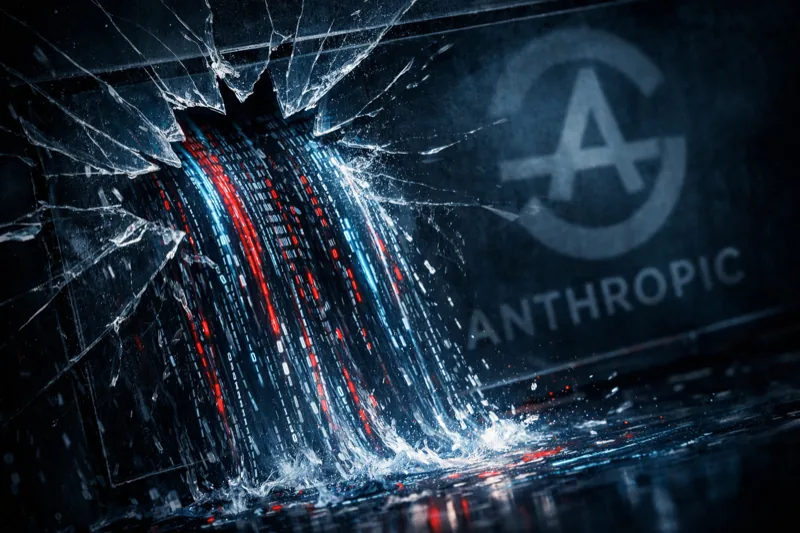
Anthropic is scrambling to contain what may be the most significant accidental source code leak in AI history. The entire codebase of Claude Code — the company's flagship AI coding tool with an estimated $2.5 billion in annualized revenue — was accidentally pushed to the public npm registry, and within hours, over 8,000 copies had been made before Anthropic could issue copyright takedown requests.
How It Happened
The leak was caused by a packaging error — a debug file used internally was accidentally bundled into a routine Claude Code update and published to npm, the public package registry that millions of developers use daily. The misconfigured file pointed to a zip archive hosted on Anthropic's own cloud storage, containing nearly 2,000 files and 500,000 lines of source code.
Anthropic confirmed the incident, stating it was "a release packaging issue caused by human error, not a security breach." But the distinction may be cold comfort given the scale of the exposure.
What the Code Revealed
The leaked source code contained several unreleased features that have sent the AI community into a frenzy:
KAIROS — Always-On Background Agent: Referenced over 150 times in the codebase, KAIROS (named after the Ancient Greek concept of "the right time") appears to be an autonomous daemon mode that would allow Claude Code to operate as a persistent background agent — monitoring, analyzing, and acting on code without requiring explicit user prompts.
Buddy System — A Terminal Tamagotchi: Perhaps the most unexpected discovery was a hidden "Buddy" system — essentially a Tamagotchi-style terminal pet with stats like CHAOS and SNARK. An included string reading "friend-2026-401" strongly suggests this was intended as an April Fools' Day feature, but its existence reveals Anthropic's experimentation with emotional engagement in developer tools.
Dream Mode — Memory Consolidation: The code references a "dream mode" where Claude would consolidate and reorganize its memories during idle periods, similar to how human memory consolidation works during sleep. This could represent a fundamental advance in how AI assistants maintain long-term context.
The Competitive Fallout
For Anthropic, the timing could not be worse. Claude Code has been the company's fastest-growing product, and the leaked source code gives competitors — including OpenAI, Google, and a growing roster of AI coding startups — a detailed blueprint of Anthropic's approach to agent architecture, memory management, and user interaction patterns.
The 8,000+ copies already in circulation mean the genie cannot be put back in the bottle. Even with aggressive DMCA takedowns, the code will continue to circulate through private channels and mirrors.
The Bottom Line
An npm packaging error exposing half a million lines of proprietary code is the kind of mistake that keeps CTOs awake at night. Anthropic's response — framing it as human error rather than a security breach — is technically accurate but strategically insufficient. The real question is not how this happened, but what competitors will build with the knowledge they have gained. In the AI arms race, accidentally handing your rivals a complete technical blueprint is not just embarrassing — it is potentially billions of dollars in lost competitive advantage.