Amazon Autos Expands to Kia, Mazda, Subaru, Chevrolet, and Jeep Across 130+ US Cities
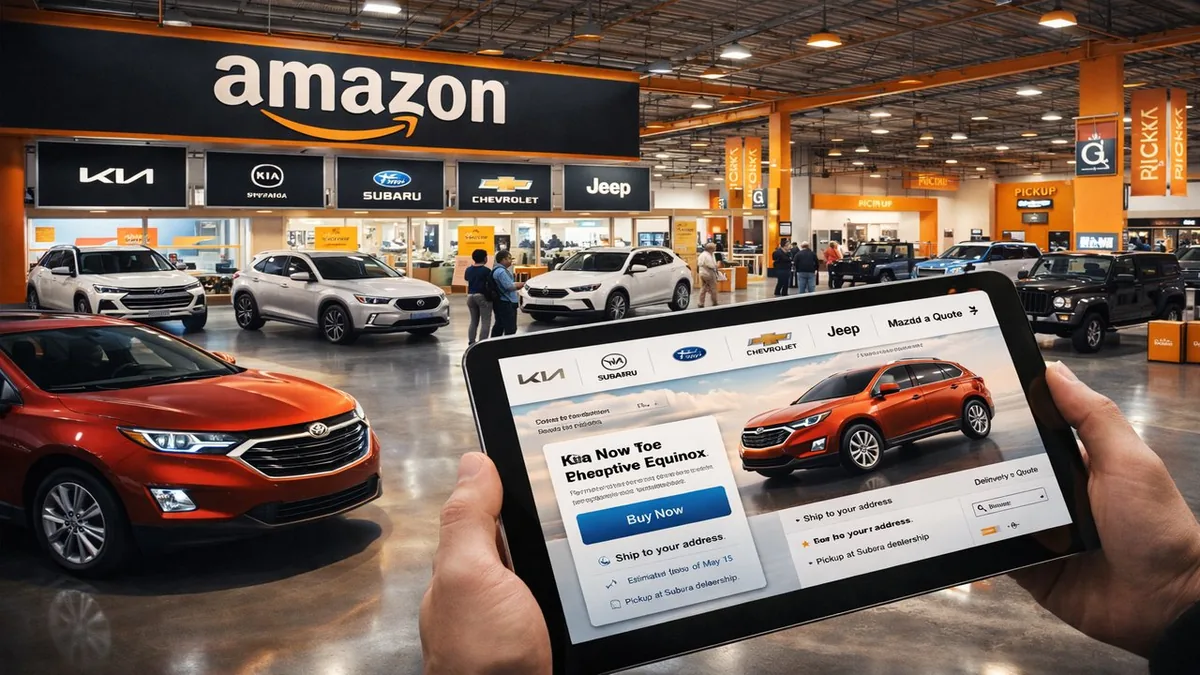
Amazon has quietly expanded its Amazon Autos vehicle marketplace to include cars from Kia, Mazda, Subaru, Chevrolet, and Jeep, according to a report from CNBC — adding five major automotive brands to a service that launched in late 2024 with Hyundai as its exclusive brand partner. The expansion brings Amazon Autos to over 130 US cities, making it one of the most geographically broad online vehicle purchasing platforms in the country. Amazon Autos allows customers to browse inventory, get financing quotes, and complete the purchase transaction online before picking up the vehicle at a local dealership — a model that preserves the physical dealership relationship while moving the research and transaction phases to Amazon's platform.
What Amazon Autos Is and How It Works
Amazon Autos is an online vehicle marketplace integrated directly into Amazon.com, allowing customers to search new car inventory from participating dealerships, configure financing options, and complete a binding purchase agreement without visiting a showroom. The vehicle is then picked up at the selling dealership. The model differs from fully online car retailers like Carvana — which handle inventory directly and deliver vehicles — by keeping dealerships as the physical fulfillment partner. This approach reduces Amazon's capital requirements and avoids the regulatory complexities of operating as a licensed dealer in 50 states, while giving it access to the inventory breadth that franchise dealerships provide.
The expansion from Hyundai to six brands (adding Kia, Mazda, Subaru, Chevrolet, and Jeep) substantially increases the addressable inventory on the platform. Hyundai and Kia together represent a significant volume of US vehicle sales; adding Chevrolet brings the largest US automotive brand by volume into the Amazon ecosystem. Amazon's broader retail expansion strategy has consistently moved into high-consideration purchase categories — appliances, furniture, grocery — where the research-to-purchase journey benefits from Amazon's search, review, and payment infrastructure.
Why Automakers and Dealers Are Participating
For automakers, Amazon Autos offers access to the most visited retail destination in the US — a distribution channel that reaches car buyers earlier in their research process than traditional dealership advertising. For dealerships, participation provides a customer acquisition channel without requiring the dealership to build its own digital sales infrastructure. The Amazon model preserves dealer relationships rather than disintermediating them, which is why the program has attracted willing partners rather than facing the dealer resistance that confronted Tesla's direct sales model and Carvana's dealer-free approach.
Frequently Asked Questions
What brands are available on Amazon Autos?
Amazon Autos now offers vehicles from Hyundai, Kia, Mazda, Subaru, Chevrolet, and Jeep across 130+ US cities, following the service's expansion beyond its Hyundai-exclusive launch.
Can you buy a car completely online through Amazon?
Amazon Autos allows customers to complete the purchase transaction online, but vehicle pickup occurs at the selling dealership. It is not a home-delivery model like Carvana.
How does Amazon Autos make money?
Amazon earns fees from participating dealerships for leads and completed transactions generated through the platform, similar to its marketplace model in other retail categories.
The Bottom Line
Amazon Autos' quiet expansion from one brand to six, across 130+ cities, is the company executing its typical playbook: launch with a single partner, prove the model, then scale to category coverage. Automobiles represent the largest single retail category in the US by dollar volume — a market that Amazon has been unable to meaningfully participate in due to the complexity of the purchase transaction and the regulatory framework protecting franchise dealerships. The dealer-preserving model may be the key that unlocks the automotive category for Amazon in a way that previous direct-to-consumer vehicle marketplace attempts could not achieve.