Amazon: First fully Autonomous Mobile Warehouse Robot
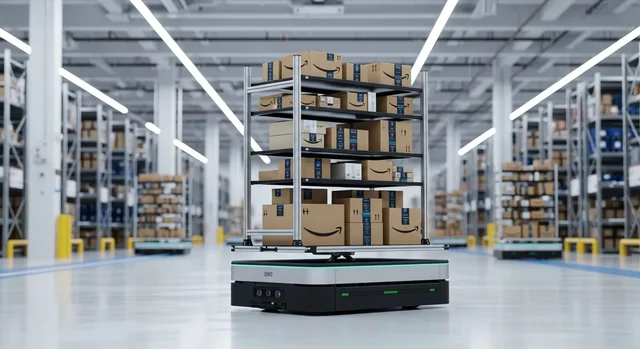
Amazon's relentless pursuit of warehouse automation continues to reshape the logistics landscape. While the initial buzz around robots like Proteus and Cardinal has subsided, their impact, and the introduction of newer systems like Sequoia, are becoming increasingly evident in Amazon's fulfillment centers in 2025. This article delves into the current state of Amazon's autonomous warehouse robots, focusing on their capabilities, deployment, and the future of work within these increasingly automated environments.
Amazon's 2025 Warehouse Robotics: A Deep Dive
Amazon's investment in robotics is not merely about replacing human workers; it's about optimizing efficiency, improving safety, and handling the ever-growing volume of orders. The company's approach involves a diverse ecosystem of robots working in tandem with human employees, each performing tasks best suited to their abilities. Let's examine some key robotic systems in operation during 2025:
Proteus: The Autonomous Mobile Robot (AMR)
Proteus, Amazon's first fully autonomous mobile robot, remains a crucial component of their warehouse infrastructure. Unlike earlier robots confined to designated zones, Proteus can navigate autonomously throughout the warehouse floor, avoiding obstacles and human workers. Its primary function is to transport GoCarts, which are large carts filled with packages, between different areas of the warehouse. In 2025, Proteus has seen significant improvements in its navigation and safety features, thanks to advancements in AI and sensor technology.
For more details, check out our guide on 4 Best YouTube Downloader Apps for Android.
Key Features in 2025:
- Enhanced Navigation: Improved algorithms allow Proteus to navigate more complex and dynamic environments, including crowded aisles and areas with high human traffic.
- Advanced Safety Sensors: Updated sensor suites, including LiDAR and 3D cameras, provide a more comprehensive understanding of the robot's surroundings, enabling it to react quickly and safely to unexpected obstacles.
- Increased Payload Capacity: While the exact specifications remain confidential, industry analysts estimate that Proteus's payload capacity has increased by approximately 15% since its initial introduction, allowing it to transport heavier loads.
- Integration with Warehouse Management System (WMS): Seamless integration with Amazon's WMS ensures that Proteus is efficiently dispatched to the correct locations, minimizing travel time and maximizing throughput.
Sequoia: A Game Changer in Fulfillment
Sequoia represents a significant leap forward in Amazon's warehouse automation efforts. This system, now deployed in select high-volume fulfillment centers, is designed to dramatically accelerate the order fulfillment process. Sequoia integrates multiple robotic systems to automate the picking, sorting, and packing of orders.
How Sequoia Works:
- Robotic Pod Retrieval: Robots retrieve entire shelving units (pods) containing products and bring them to a workstation.
- Robotic Arm Picking: A sophisticated robotic arm identifies and picks the correct items from the pod.
- Automated Packing: The picked items are then automatically packed into boxes, which are then labeled and prepared for shipping.
Benefits of Sequoia:
- Increased Throughput: Sequoia significantly increases the speed and efficiency of order fulfillment, allowing Amazon to process a higher volume of orders with fewer resources.
- Reduced Labor Costs: By automating many of the manual tasks involved in order fulfillment, Sequoia helps Amazon reduce its labor costs.
- Improved Accuracy: Robotic picking and packing minimize the risk of errors, leading to improved order accuracy and customer satisfaction.
- Space Optimization: The dense storage configuration of Sequoia allows Amazon to store more inventory in a smaller footprint.
Cardinal: Robotic Arm for Package Handling
Cardinal, the robotic arm capable of lifting and moving packages weighing up to 50 pounds, continues to play a vital role in sorting and processing packages within Amazon's warehouses. In 2025, Cardinal's capabilities have been enhanced through improved computer vision and AI algorithms.
Key Improvements in 2025:
- Advanced Object Recognition: Enhanced computer vision allows Cardinal to identify and grasp a wider variety of packages, including those with irregular shapes and sizes.
- Improved Dexterity: Refined motor control and gripper design enable Cardinal to manipulate packages with greater precision and dexterity.
- Real-time Optimization: AI algorithms continuously optimize Cardinal's movements to minimize cycle time and maximize throughput.
AI-Powered Scanning and Identification
Amazon continues to refine its AI-powered scanning and identification systems, aimed at eliminating the need for manual barcode scanning. These systems utilize high-resolution cameras and machine learning algorithms to identify packages based on their visual characteristics, such as size, shape, and label text. In 2025, these systems are becoming increasingly accurate and reliable, further streamlining the fulfillment process.
Related: 8 Best And Free Video Streaming Apps For Android Phones.
Benefits of AI-Powered Scanning:
- Increased Speed: Eliminates the need for manual scanning, significantly accelerating the package identification process.
- Reduced Errors: Minimizes the risk of human error associated with manual scanning.
- Improved Efficiency: Frees up human workers to focus on other tasks, such as quality control and problem-solving.
The Impact on Human Workers in 2025
The increasing automation of Amazon's warehouses has raised concerns about the potential displacement of human workers. However, Amazon maintains that its investment in robotics is intended to augment, not replace, human labor. The company argues that automation creates new job opportunities in areas such as robot maintenance, programming, and data analysis. In 2025, the reality is a mixed bag. While some routine tasks have been automated, new roles requiring technical skills and problem-solving abilities have emerged.
New Roles in Automated Warehouses:
- Robot Technicians: Responsible for maintaining and repairing robots, ensuring their optimal performance.
- Automation Specialists: Program and configure robots, optimizing their movements and workflows.
- Data Analysts: Analyze data generated by robots to identify areas for improvement and optimize warehouse operations.
- Workflow Coordinators: Oversee the interaction between robots and human workers, ensuring smooth and efficient operations.
Comparison Table: Amazon Warehouse Robots (2025)
| Robot | Function | Key Features | Impact on Workforce |
|---|---|---|---|
| Proteus | Autonomous mobile transport of GoCarts | Enhanced navigation, advanced safety sensors, increased payload capacity | Reduces manual transport tasks, requires maintenance and support staff |
| Sequoia | Automated picking, sorting, and packing | Robotic pod retrieval, robotic arm picking, automated packing | Significantly reduces manual labor in order fulfillment, creates new roles in robot maintenance and coordination |
| Cardinal | Robotic arm for package handling | Advanced object recognition, improved dexterity, real-time optimization | Automates package sorting and handling, requires skilled technicians for maintenance and programming |
| AI-Powered Scanning | Automated package identification | High-resolution cameras, machine learning algorithms | Eliminates manual barcode scanning, improves efficiency and accuracy |
The Future of Amazon's Automated Warehouses
Looking ahead, Amazon is likely to continue investing heavily in warehouse automation, with a focus on developing more sophisticated and versatile robotic systems. We can expect to see robots that are capable of performing a wider range of tasks, including more complex assembly and packaging operations. Furthermore, the integration of AI and machine learning will continue to play a crucial role in optimizing warehouse operations and improving the overall efficiency of the supply chain. The push for faster delivery times and lower costs will only accelerate this trend. In 2025, Amazon is already experimenting with drone delivery in select areas, and it's conceivable that in the coming years, we'll see even more innovative uses of robotics in the last-mile delivery process.
You might also be interested in Netflix Casting Change: Why the Streaming Giant Is Pulling Back on Phone-to-TV Casting.
FAQ: Amazon Warehouse Robots in 2025
Here are some frequently asked questions about Amazon's warehouse robots and their impact on the company's operations:
- What types of robots does Amazon use in its warehouses?
Amazon uses a variety of robots, including autonomous mobile robots (AMRs) like Proteus, robotic arms like Cardinal, and integrated systems like Sequoia, which combine multiple robotic systems to automate various tasks.
- How do Amazon's robots improve warehouse efficiency?
Amazon's robots improve warehouse efficiency by automating repetitive tasks, reducing manual labor, increasing throughput, and optimizing space utilization.
- Do Amazon's robots replace human workers?
Amazon claims that its robots are intended to augment, not replace, human workers. While some routine tasks are automated, new job opportunities are created in areas such as robot maintenance, programming, and data analysis.
- What are the safety features of Amazon's robots?
Amazon's robots are equipped with a variety of safety features, including sensors, cameras, and algorithms that allow them to detect and avoid obstacles, including human workers.
For more details, check out our guide on Free Music Streaming Apps: Your Complete Guide to Unlimited Music Without Breaking the Bank.
- How does Amazon train its employees to work with robots?
Amazon provides training programs for employees to learn how to operate, maintain, and interact with robots safely and effectively. These programs often include classroom instruction, hands-on training, and on-the-job mentoring.
- What is the impact of Amazon's robots on delivery times?
Amazon's robots help to reduce delivery times by accelerating the order fulfillment process, allowing the company to process and ship orders more quickly.
- Are Amazon's robots used in all of its warehouses?
No, Amazon's robots are not used in all of its warehouses. The deployment of robots depends on factors such as the size and layout of the warehouse, the type of products being handled, and the level of automation desired.
- How much has Amazon invested in warehouse automation?
Amazon has invested billions of dollars in warehouse automation over the past decade, and it continues to invest heavily in this area.
- What are the ethical considerations surrounding Amazon's use of warehouse robots?
Ethical considerations include the potential displacement of human workers, the impact on worker safety and well-being, and the potential for bias in AI algorithms that control the robots.
- What new robotic technologies is Amazon exploring for its warehouses?
Amazon is exploring a variety of new robotic technologies, including robots that can perform more complex assembly and packaging operations, as well as robots that can be used for last-mile delivery.
See also: Best Free iPhone Apps to Watch TV Shows and Movies in 2025: Complete Guide.
Amazon's journey into warehouse automation is a continuous evolution. As technology advances, so too will the capabilities and roles of robots within their fulfillment centers. In 2025, the focus remains on optimizing efficiency, enhancing safety, and adapting the workforce to thrive in this new era of human-robot collaboration.