AI Police Body Cameras Enter Critical Facial Recognition Test
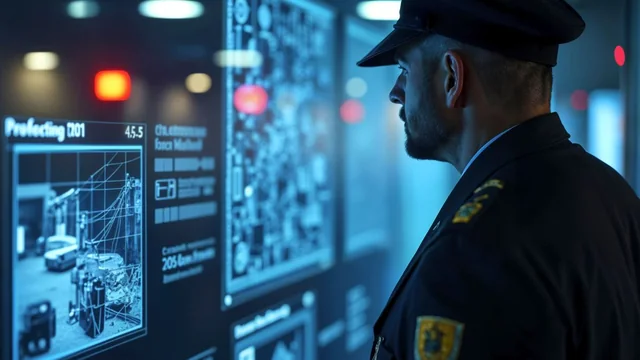
AI Police Body Cameras: Why This New Experiment Matters
As reported by the Associated Press [LINK TO SOURCE], Edmonton, Canada has become the testing ground for one of the most controversial ideas in modern policing: AI police body cameras equipped with real-time facial recognition. It’s a move that could reshape law enforcement across North America — or intensify long-standing debates about privacy, bias, and state surveillance.
To understand what’s happening now, it’s crucial to look past the headlines. The pilot isn’t just about new technology — it’s a public experiment in where society chooses to draw the line between safety and civil liberties.
Key Facts You Need to Know
Here’s a condensed breakdown of the pilot program:
-
Edmonton police are testing AI-enabled body cameras that scan faces against a watch list of roughly 7,000 “high-risk” individuals, plus another 700 with serious warrants.
-
The technology comes from Axon, the largest body-camera supplier in North America, which previously paused facial recognition due to ethical concerns.
-
Officers wearing the cameras won’t receive real-time alerts during the pilot; results will be reviewed afterward to test accuracy.
-
The program was launched with minimal public visibility, raising transparency concerns among privacy experts.
-
Lighting, weather, and accuracy — especially for darker-skinned individuals — remain known limitations of facial recognition models.
-
Alberta now mandates body cameras for all police agencies, making this pilot unusually influential in shaping future policies.
Why This Experiment Matters Far Beyond One City
1. Facial Recognition Is Jumping From Theory to Street-Level Reality
For years, facial recognition lived mostly in the realm of lab tests, airports, and limited deployments. Edmonton’s pilot represents the next frontier: embedding AI directly into frontline policing tools.
This shift sets the stage for widespread adoption if the technology “passes” the test — even though ethics boards, academics, and civil rights advocates argue that success metrics haven’t been clearly defined.
2. Body Cameras Were Introduced for Transparency — Not Surveillance
Body cameras originally gained traction as an accountability mechanism. Turning them into proactive detection tools fundamentally changes their social contract.
For communities already struggling with trust in law enforcement — especially Indigenous and Black residents in Edmonton — adding AI-driven identification raises real fears of misidentification, escalation, or disproportionate targeting.
3. The Tech Industry Is Moving Faster Than Public Policy
While the EU has banned real-time facial recognition except for extreme emergencies, North America lacks such guardrails. The Edmonton pilot effectively becomes a test case for future regulation, whether intentionally or not.
As one expert told AP, deploying this technology without robust public debate means “vendors, not legislators,” are shaping policing norms.
What This Means for the Future of Policing
A. If the pilot succeeds, expect rapid adoption
Axon supplies police agencies across the U.S. and Canada. A strong performance in Edmonton could accelerate:
-
AI-powered threat detection
-
Automated officer safety alerts
-
Real-time warrant flagging
-
Centralized databases of “high-risk” individuals
Police agencies under political pressure to modernize may adopt the tech before communities understand its implications.
B. If the pilot fails, expect intensified regulatory pressure
Poor accuracy, biased results, or privacy violations could fuel:
-
New laws restricting real-time facial recognition
-
Public demands for body-camera usage limits
-
Pressure on vendors to redesign or abandon the feature
Either way, this pilot will influence legislative conversations for years.
C. Transparency becomes the deciding factor
Even skeptics don’t universally oppose testing. Their concern is how it’s being tested:
-
Who approves watch lists?
-
Who reviews flagged matches?
-
How will false positives be handled?
-
Will results be published?
Without clear answers, public trust will erode — regardless of the tech’s accuracy.
Practical Implications & Predictions
-
Expect U.S. police departments to watch this pilot closely.
Agencies are looking for frameworks to justify adopting the tech themselves. -
Communities will demand stronger oversight boards.
Independent ethics reviews may become non-negotiable for future AI deployments. -
AI body-camera policies will soon define political platforms.
Technology that identifies people in public spaces is no longer hypothetical — and politicians will need a stance. -
Vendors may face pressure to publish accuracy data.
Especially concerning demographic bias, which remains a documented issue.
Conclusion: Policing Is Entering a New AI Era
AI police body cameras are no longer futuristic concepts — they’re being tested right now in real-world conditions. Whether this pilot becomes a model for responsible innovation or a cautionary tale depends on transparency, public debate, and the willingness of lawmakers to catch up with technology.
Either way, the decisions made today will shape how communities experience policing for decades to come.
FAQ SECTION
Q: Are AI police body cameras already in use in the U.S.?
A: Not in real-time facial recognition mode. Several agencies use AI for transcription or categorization, but live facial matching remains paused or banned in many states.
Q: How accurate is real-time facial recognition technology today?
A: Accuracy varies by lighting, distance, and skin tone. Even Axon acknowledges disparities, particularly for darker-skinned individuals. This is a core reason for ongoing public scrutiny.
Q: Can police scan crowds without cause using this tech?
A: Edmonton’s pilot says no — officers must be responding to an active call. But critics note that without strict legislation, these boundaries could shift over time.