AI in Healthcare: Why the UK Is Betting Big on Artificial Intelligence to Fight Drug Resistance
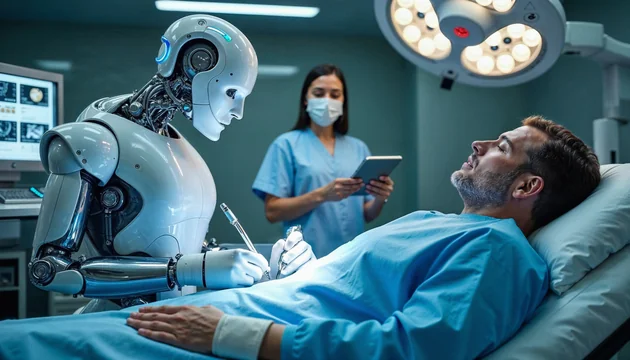
AI vs. Superbugs: Why the UK’s Bold £45M Initiative Signals a New Era in Global Health
Antibiotic resistance has been quietly escalating for years, but it’s no longer a distant threat—it’s a present-day crisis. A new UK initiative is taking aim at this “silent pandemic” with a weapon that bacteria can’t evolve their way out of fast enough: artificial intelligence.
While the BBC recently reported on the UK’s £45 million collaboration between the Fleming Initiative and GSK to accelerate antibiotic discovery, the real story isn’t just about new drugs. It’s about a fundamental shift in how humanity plans to keep pace with an enemy that adapts faster than any scientific lab can.
For a world increasingly dependent on digital innovation, this project signals an important pivot: AI is no longer just transforming industries—it’s becoming a frontline defender of human survival.
The Core News: A UK Initiative Uses AI to Decode Drug-Resistant Infections
The newly announced project will funnel £45 million into six areas of research focused on discovering new antibiotics and developing strategies to combat both bacterial and fungal infections. The central challenge is Gram-negative bacteria, a class of pathogens with natural armor that makes them notoriously difficult to treat.
Scientists plan to analyze how different molecules interact with these bacteria—specifically, what allows certain compounds to enter the cell and stay there long enough to be effective. By feeding these data points into AI models, the team aims to uncover the “chemical patterns” that define successful antibiotics.
This is not about tweaking old drugs—it’s about generating a new blueprint for modern antimicrobial discovery.
Why This Matters: We’re Running Out of Treatments Faster Than We Can Invent Them
Drug-resistant infections now kill an estimated one million people every year, with millions more affected by complications. And these numbers are rising.
The sheer speed at which bacteria adapt has outpaced human innovation for decades. In conflict zones like Ukraine, doctors are already encountering infections that simply have no effective antibiotic left—forcing medical teams into devastating last-resort measures like amputations.
For healthcare systems, businesses, and everyday citizens, this isn’t a theoretical concern:
-
Minor injuries could again become life-threatening.
-
Routine surgeries could carry serious infection risks.
-
Global supply chains could be disrupted by infectious disease outbreaks.
-
Immunocompromised individuals could face unprecedented danger.
Antibiotics have quietly underpinned modern life for nearly a century; losing them would ripple into every aspect of society.
The Bigger Picture: AI Is Reshaping the Future of Medicine
The real value of this initiative isn’t just faster drug discovery—it’s the long-term framework it establishes.
1. AI can compress decades of lab research into months
Traditional discovery often involves trial and error. AI thrives on pattern recognition—meaning it can analyze vast chemical libraries and predict which compounds could defeat resistant pathogens.
2. Predictive modeling will finally give us a chance to stay ahead
Using AI like a “weather system” for superbugs may allow scientists to anticipate how resistance will spread, evolve, or jump between communities—offering opportunities to intervene early.
3. The approach extends beyond bacteria
Fungal infections like those caused by Aspergillus are rising worldwide, especially among immunocompromised patients. AI could help identify entirely new antifungal treatments—an area severely underserved by pharmaceutical pipelines.
4. This may create a global blueprint
If successful, other countries may adopt AI-driven antibiotic discovery as a standard national defense strategy—much like cybersecurity or pandemic preparedness.
Our Take: AI Won’t Replace Scientists—It Will Supercharge Them
There’s a misconception that AI simply “generates answers.” But as experts in the project emphasize, AI is only as powerful as the data it’s trained on.
Its strength lies in analyzing patterns too complex or time-consuming for humans to detect.
Humans define the questions.
AI accelerates the solutions.
This partnership between data science and microbiology represents the beginning of a new biomedical era—one where computers help unravel nature’s most stubborn puzzles.
If the UK initiative succeeds, it could mark a turning point in the global fight against antimicrobial resistance. Instead of always reacting to emerging threats, we may finally gain the ability to predict, prevent, and outpace them.
Conclusion: A Tech-Driven Fight for the Future of Global Health
The antibiotic crisis has reached a breaking point, but the UK–GSK collaboration shows what’s possible when cutting-edge technology meets scientific urgency.
This isn’t just another research project—it’s a blueprint for survival in an age where microbial evolution outpaces human response.
Our dependence on antibiotics is deeper than most people realize. And if AI can help safeguard this cornerstone of modern medicine, the implications stretch far beyond the lab.
The future of public health may depend not just on discovering new drugs, but on embracing the digital tools that can help us stay ahead of the next microbial threat.