AI in 2026: Why Practical AI Matters More Than Bigger Models
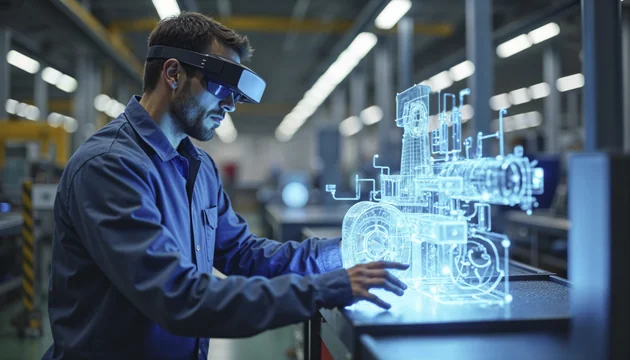
AI Industry Shift in 2026: From Hype to Practical Impact
As reported by TechCrunch [LINK TO SOURCE], the AI industry is entering a quieter—but far more consequential—phase. After years dominated by eye-catching demos and ever-larger models, 2026 is shaping up to be the year AI finally proves its usefulness in the real world.
The “AI industry shift” now underway isn’t about dazzling capabilities. It’s about reliability, cost, integration, and trust—factors that actually determine whether AI becomes part of daily work or remains a futuristic experiment.
Key Facts: What’s Changing in AI
Over the past decade, AI progress largely followed one rule: bigger models, more data, more compute. That approach peaked with massive language models that showed surprising reasoning and coding abilities.
However, experts now agree that scaling alone is hitting limits. Model improvements are slowing, costs are rising, and businesses are demanding solutions that fit into existing workflows. As a result, 2026 marks a transition toward:
-
Smaller, fine-tuned language models
-
AI agents connected to real tools and systems
-
World models that learn through simulated experience
-
Physical AI embedded in devices, not just the cloud
Why the AI Industry Shift Matters Now
This shift matters because it separates AI spectacle from AI value. Enterprises are no longer asking, “What can AI do?” They’re asking, “Where does AI actually save time, money, or effort?”
The underlying trend is maturity. Like cloud computing before it, AI is moving from experimentation to infrastructure. That means fewer grand promises—and more measurable outcomes.
For business leaders, this also reduces risk. Smaller, targeted models are cheaper to run, easier to control, and simpler to govern. Instead of betting everything on one massive system, companies can deploy AI precisely where it delivers the most return.
Smaller Models, Bigger Wins
One of the clearest signs of practical AI adoption is the rise of small language models (SLMs). Unlike general-purpose models, SLMs are trained or fine-tuned for specific tasks—customer support, document processing, compliance, or analytics.
When properly tuned, these models often match larger systems in accuracy for narrow use cases while being faster and dramatically cheaper. They’re also easier to deploy on local or edge devices, reducing latency and data exposure.
This “less is more” approach reflects a broader lesson of the AI industry shift: intelligence doesn’t need to be massive to be effective—it needs to be relevant.
From AI Agents to Real Workflows
AI agents were heavily hyped in 2025 but struggled to deliver consistent results. The problem wasn’t intelligence—it was isolation. Agents couldn’t easily access business tools, databases, or real-time context.
That’s changing with standardized protocols that allow agents to securely connect to enterprise systems. Once agents can retrieve data, trigger actions, and operate within guardrails, they move from demos into daily operations.
In 2026, expect AI agents to quietly take on routine coordination tasks—intake, scheduling, support triage—while humans remain responsible for judgment and oversight.
Augmentation Over Automation
Despite fears of mass layoffs, the AI industry shift points in a different direction: augmentation, not replacement. Most organizations are discovering that fully autonomous AI isn’t reliable enough for complex, high-stakes work.
Instead, AI is becoming a productivity layer—speeding up research, drafting, analysis, and decision support. This creates demand for new roles in AI governance, data management, and system oversight.
The takeaway for professionals is clear: people who learn to work with AI will be more valuable than those waiting to be replaced by it.
What to Expect Next
Looking ahead, practical AI adoption will accelerate in three areas:
-
Embedded AI in wearables, vehicles, and industrial systems
-
Simulation-driven learning through world models
-
Workflow-native AI that fits existing tools instead of replacing them
The AI industry shift of 2026 isn’t flashy—but it’s foundational. This is the year AI stops trying to impress everyone and starts delivering for the people who actually use it.
Conclusion: The Quiet Year That Changes Everything
The AI industry shift underway in 2026 marks a turning point from ambition to execution. By prioritizing usability, integration, and human-centered design, AI finally earns its place as everyday infrastructure—not experimental tech.
The companies and professionals who succeed won’t chase the biggest models. They’ll build the smartest systems.