AI Engineering Revolution: How Nvidia’s $2B Synopsys Deal Changes Everything
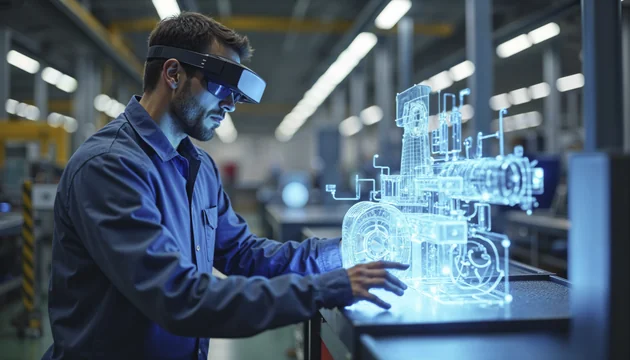
How Nvidia’s $2B Synopsys Investment Signals the Next Era of Accelerated Engineering
The tech world just witnessed a power move that goes far beyond a financial transaction. Nvidia’s $2 billion stake in Synopsys isn’t just another investment—it’s a blueprint for the future of AI-driven engineering. While the headlines highlight the money, the real story is about the rapidly shifting architecture of computing and what this means for the next wave of innovation.
The Core News (In Brief)
Nvidia has purchased $2B worth of Synopsys stock (at $414.79/share) as part of a multiyear strategic partnership. The collaboration aims to supercharge Synopsys’ compute-intensive design tools using Nvidia’s accelerated computing technologies—specifically GPUs and advanced AI engineering pipelines.
Both companies emphasize that this isn’t a new relationship; it’s an evolution of years-long collaboration. And importantly, it’s not exclusive—both firms will continue working within their broader ecosystems.
Why This Move Matters (The Bigger Picture)
1. Engineering Workloads Are Hitting a Wall
Traditional CPU-driven computing can’t keep up with the explosion of AI-heavy design tasks—chip simulation, electronic design automation, silicon verification, and more. What used to take weeks could soon take hours, according to Synopsys CEO Sassine Ghazi.
That’s not an optimization. That’s an industry reset.
2. AI Isn’t Just Building Products—It’s Building the Tools That Build Products
This partnership accelerates a major trend:
AI is increasingly shaping the tools engineers use to create new AI-powered products.
Nvidia’s GPU-accelerated workflows will allow Synopsys to push EDA (Electronic Design Automation) into a new realm where generative agents, simulation intelligence, and rapid prototyping become standard rather than experimental.
3. GPU-Centric Computing Is Becoming the New Default
Nvidia CEO Jensen Huang has been vocal: computing is moving from general-purpose CPUs to accelerated GPU architectures.
This partnership is proof in motion.
And because the deal is non-exclusive, it reinforces something else:
The foundational layer of the AI era will be open, modular, and ecosystem-driven, not locked into single-vendor silos.
What This Means for AI, Engineering & the Market
1. Faster Chip Development Cycles
Shorter design cycles mean more innovation, quicker iterations, and significantly lower R&D risk.
2. Democratization of AI-Powered Engineering
With expanded cloud access, advanced design tools—once limited to top semiconductor giants—could become available to startups, researchers, and emerging markets.
3. Massive Upside for AI Infrastructure
Nvidia continues to cement itself as the backbone of global AI infrastructure. Investments like this aren’t just bets—they’re strategically securing Nvidia's dominance over next-generation workloads.
4. A Glimpse at the Future: Agentic AI Engineering
Agentic AI systems—autonomous, multi-step reasoning agents—will play a growing role in designing chips, systems, and complex architectures.
This partnership fast-tracks that future.
Our Take: This Deal Redefines the Engineering Landscape
This isn’t simply a financial stake—it’s Nvidia’s way of shaping the future of engineering intelligence.
Synopsys brings decades of expertise in chip design automation. Nvidia brings unparalleled GPU horsepower and AI research excellence. Together, they’re building a future where:
-
Engineering cycles shrink dramatically
-
AI agents assist (and eventually co-design) complex systems
-
GPU-accelerated workflows become the new baseline for innovation
Expect ripple effects throughout semiconductor, robotics, automotive, aerospace, and AI-hardware development.
This is the kind of partnership that doesn’t just evolve an industry—it reinvents it.
Conclusion
Nvidia’s $2B investment in Synopsys is a clear signal: the age of accelerated, AI-first engineering has officially begun. For innovators, founders, engineers, and tech leaders, this is a moment to watch—and an opportunity to ride the next wave of computational transformation.