AI Data Center Boom Spawns "Man Camps" Across Rural America
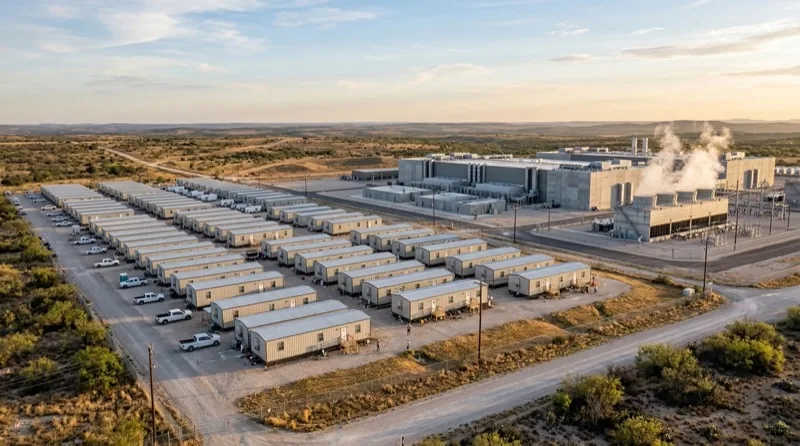
The $700 Billion AI Boom Is Building “Man Camps” Across Rural America
The AI data center construction frenzy has created an unexpected consequence: sprawling temporary housing villages — known as “man camps” — are popping up across rural Texas, Louisiana, and other states to house the thousands of workers needed to build the infrastructure powering artificial intelligence.
As competition for water and power pushes data center construction further into rural areas, small towns that lack housing for even a few hundred newcomers are suddenly expected to absorb thousands of temporary workers. The solution? The same kind of worker camps used in oil boom towns and fracking operations.
Free Steaks and Golf Courses in Rural Texas
In Dickens County, Texas, a former Bitcoin mining facility is being converted into a 1.6 gigawatt data center. Target Hospitality has signed contracts worth $132 million to build and operate a camp that could house more than 1,000 workers. These aren’t bare-bones barracks — the camps come with gyms, laundromats, game rooms, and cafeterias that grill steaks on demand. Some even offer golf courses.
The amenities reflect the fierce competition for skilled construction workers. With multiple massive data center projects competing for the same limited labor pool, companies are betting that resort-like perks will help them recruit and retain workers willing to live far from home for months at a time.
Meta’s Louisiana Megaproject Transforms a Rural Community
In northeastern Louisiana, Meta’s push to build one of the world’s largest data centers has transformed the surrounding community almost overnight. Roads are now dotted with signs advertising RV parks and man camps, built to house the 5,000 to 7,000 construction workers expected on site at peak. Local infrastructure — roads, water systems, emergency services — was never designed for this kind of population surge.
From ICE Detention to Data Center Housing
Perhaps the most unsettling development: companies that previously built and operated ICE detention facilities are now pivoting to the AI man camp business. They see the same core competency — housing large numbers of people in remote locations with tight security and managed services — as directly transferable to data center worker housing.
The military veteran community has also become a key recruitment target, as veterans are accustomed to the separation from family and long hours in harsh conditions that characterize data center construction work.
The Bottom Line
The AI industry loves to talk about the future in abstract terms — intelligence, reasoning, creativity. But behind every chatbot response is physical infrastructure, and behind that infrastructure are real workers living in temporary camps far from their families. The $700 billion data center buildout is creating a modern gold rush, complete with boomtown housing, strained local resources, and the uncomfortable reality that the companies building detention centers are now building the housing for the AI economy. The future is being built by people living in trailers.