A Beginner’s Guide to Spearguns and Polespears
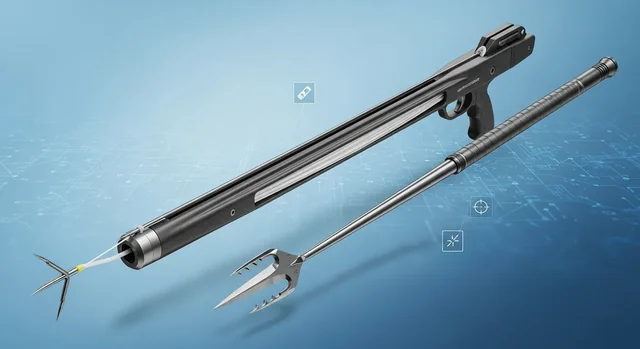
Spearfishing Gear Guide: Spearguns vs. Polespears (2025)
Spearfishing offers an unparalleled connection to the ocean and a thrilling way to harvest your own seafood. Whether you're a complete novice or looking to upgrade your gear, this 2025 guide provides a comprehensive overview of spearguns, polespears, essential equipment, and expert tips to get you started safely and successfully.
Introduction to Spearfishing: Choosing Your Weapon
The two primary tools for spearfishing are spearguns and polespears. Each has its advantages and disadvantages, making them suitable for different environments, target species, and skill levels. Understanding the nuances of each will help you make the right choice for your spearfishing journey.
Spearguns: Power and Precision
Spearguns utilize elastic bands or compressed air (pneumatic) to propel a spear. They offer greater range and power compared to polespears, making them ideal for larger fish and deeper waters. However, they also require more skill and maintenance.
Types of Spearguns:
- Band-Powered Spearguns: The most common type, using rubber bands to generate power. They are reliable, relatively easy to maintain, and offer a good balance of power and accuracy.
- Pneumatic Spearguns: Use compressed air to propel the spear. They offer exceptional power and are often shorter in length than band-powered guns, making them maneuverable in tight spaces. However, they require specialized maintenance and can be more complex to operate.
Key Features to Look For in a Speargun:
- Length: Speargun length affects range and maneuverability. Shorter guns (75cm-90cm) are suitable for reef hunting and murky water, while longer guns (110cm-130cm) are better for open water and targeting larger fish.
- Band Configuration: Single-band guns are easier to load, while multi-band guns offer more power.
- Trigger Mechanism: A smooth and reliable trigger mechanism is crucial for accuracy and safety. Look for stainless steel mechanisms for durability.
- Material: Spearguns are typically made from wood, aluminum, or carbon fiber. Wood guns offer buoyancy and dampen recoil, while aluminum and carbon fiber guns are lighter and more durable.
- Muzzle Type: Open muzzles allow for faster aiming, while closed muzzles offer more control.
Polespears: Simplicity and Connection
Polespears are long, slender shafts propelled by hand using a rubber sling. They offer a more direct connection to the hunt and are ideal for shallow water, reef hunting, and smaller fish. Polespears are generally more affordable and require less maintenance than spearguns.
Types of Polespears:
- One-Piece Polespears: Simple and durable, but less portable.
- Multi-Piece Polespears: Easier to transport and can be adjusted for length.
- Hawaiian Slings: A variation where the spear is launched from a separate handle, providing more power and range than a traditional polespear.
Key Features to Look For in a Polespear:
- Material: Polespears are typically made from aluminum, fiberglass, or carbon fiber. Carbon fiber polespears are the lightest and offer the best performance.
- Length: Polespear length affects range and maneuverability. Shorter polespears (6-7 feet) are suitable for shallow water, while longer polespears (8-9 feet) offer more range.
- Tip: Choose a tip appropriate for the type of fish you're targeting. Breakaway tips are recommended for larger fish.
- Grip: A comfortable and secure grip is essential for accurate shots.
Speargun vs. Polespear: A Detailed Comparison
| Feature | Speargun | Polespear |
|---|---|---|
| Range | Greater (15-25 feet) | Shorter (5-10 feet) |
| Power | Higher | Lower |
| Accuracy | Potentially higher with practice | Requires precise technique |
| Target Species | Larger fish, open water species | Smaller fish, reef species |
| Skill Level | Intermediate to Advanced | Beginner to Intermediate |
| Cost | Higher ($150 - $1000+) | Lower ($50 - $300) |
| Maintenance | More complex | Simpler |
| Portability | Can be bulky | More portable, especially multi-piece models |
| Environment | Open water, deeper depths | Reefs, shallow depths |
Essential Spearfishing Equipment (Beyond the Weapon)
Regardless of whether you choose a speargun or polespear, certain equipment is essential for safety and success:
- Mask, Snorkel, and Fins: A properly fitting mask, a comfortable snorkel, and powerful fins are crucial for underwater visibility and maneuverability.
- Wetsuit or Drysuit: Provides thermal protection and buoyancy. Choose a wetsuit thickness appropriate for the water temperature.
- Weight Belt: Helps you maintain neutral buoyancy at your desired depth.
- Dive Knife: An essential safety tool for cutting yourself free from entanglement.
- Float and Flag: A highly visible float and flag are required by law in many areas and alert boaters to your presence.
- Gloves and Booties: Protect your hands and feet from the cold and sharp objects.
- Reel or Float Line (for Spearguns): Connects your speargun to your float, allowing you to land larger fish.
- Stringer: For securing your catch.
Spearfishing on a Budget: Gear Recommendations (2025)
Spearfishing gear can range from affordable to quite expensive. Here's a breakdown of what you can expect at different budget levels:
Budget Tier 1: $0 - $150 (Entry-Level)
At this price point, you'll primarily be looking at basic polespear setups and essential accessories. Focus on quality over features.
- Polespear: Mares Viper Pro Polespear ($80-120). A durable aluminum polespear suitable for beginners.
- Mask/Snorkel: Cressi Palau Mask Fin Snorkel Set ($60-80). A reliable and affordable set for clear vision and comfortable breathing.
Budget Tier 2: $150 - $350 (Mid-Range)
This budget allows you to get a decent entry-level speargun or a higher-quality polespear setup, along with better-quality accessories.
- Speargun: Cressi Cherokee Fast 75 ($200-250). A good entry-level band-powered speargun known for its accuracy and ease of use.
- Polespear: Hammerhead Kaudal Carbon Fiber Polespear ($180-$250). A lightweight and powerful carbon fiber polespear for improved performance.
- Float/Flag: RAH Float with Flag ($50-70). A durable and visible float to mark your location.
Budget Tier 3: $350+ (High-End)
With a higher budget, you can invest in top-of-the-line spearguns, polespears, and accessories that offer superior performance, durability, and comfort.
- Speargun: Rob Allen Tuna Railgun 110 ($450-600). A renowned speargun known for its power, accuracy, and durability.
- Speargun: Pathos Laser Carbon Roller 110 ($600-800). A high-performance roller gun for increased power and range.
- Wetsuit: Elios Sub Custom Wetsuit ($400+). A custom-fit wetsuit for maximum comfort and thermal protection.
Top Picks by Category (2025)
- Best Beginner Speargun: Cressi Cherokee Fast 75
- Best Intermediate Speargun: Rob Allen Tuna Railgun 110
- Best High-End Speargun: Pathos Laser Carbon Roller 110
- Best Beginner Polespear: Mares Viper Pro Polespear
- Best Carbon Fiber Polespear: Hammerhead Kaudal Carbon Fiber Polespear
- Best Value Mask/Snorkel Set: Cressi Palau Mask Fin Snorkel Set
- Best Dive Knife: Mako Spearguns Predator Knife
Essential Safety Tips for Spearfishing
Spearfishing can be a dangerous activity if proper safety precautions are not taken. Always prioritize safety and follow these guidelines:
- Never spearfish alone. Always dive with a buddy.
- Know your limits. Don't dive beyond your capabilities.
- Be aware of your surroundings. Watch out for boat traffic and marine life.
- Never point a loaded speargun at anything you don't intend to shoot.
- Always use a float and flag.
- Learn CPR and first aid.
- Check local regulations and obtain any necessary licenses.
- Respect marine life and practice sustainable harvesting.
- Don't consume reef fish without knowing the risks of Ciguatera poisoning.
Approach Techniques and Effective Ranges
Successful spearfishing requires more than just good gear. Mastering approach techniques and understanding effective ranges are crucial for landing your target.
- Stealth: Move slowly and quietly to avoid spooking fish.
- Camouflage: Wear camouflage clothing to blend in with your surroundings.
- Patience: Wait for the right opportunity to take a shot.
- Effective Range: Understand the effective range of your speargun or polespear and avoid taking shots beyond that range.
For polespears, the effective range is typically within 5-10 feet. For spearguns, it depends on the gun's length and power, but generally ranges from 10-25 feet.
Finding a Spearfishing Mentor
One of the best ways to learn spearfishing is to find a mentor who can share their knowledge and experience. Look for experienced spearfishers in your local community or join a spearfishing club.
Common Mistakes to Avoid
- Buying the wrong gear for your needs. Research your local environment and target species before making a purchase.
- Not practicing enough. Practice loading, aiming, and shooting your speargun or polespear in a safe environment before heading out to the ocean.
- Ignoring safety precautions. Always prioritize safety and follow the guidelines outlined above.
- Overconfidence. Start in shallow water and gradually progress to deeper depths as your skills improve.
- Poor maintenance. Regularly clean and inspect your gear to ensure it's in good working order.
FAQ: Your Spearfishing Questions Answered (2025)
- What is the best speargun for a beginner? The Cressi Cherokee Fast 75 is a great option for beginners due to its ease of use and accuracy.
- Is spearfishing legal where I live? Check your local regulations before spearfishing. Many areas require a license and have restrictions on what species you can harvest.
- What is the ideal depth for beginner spearfishing? Start in shallow water (15-30 feet) and gradually progress to deeper depths as your skills improve.
- How do I maintain my speargun? Rinse your speargun with fresh water after each use and lubricate the moving parts. Inspect the bands regularly for wear and tear.
- What should I do if I encounter a shark while spearfishing? Remain calm and avoid making sudden movements. Slowly back away and keep the shark in sight.
- What is Ciguatera poisoning? Ciguatera is a type of food poisoning caused by eating reef fish that have accumulated toxins. Avoid consuming reef fish from areas known to have Ciguatera.
- What is the best way to attract fish while spearfishing? Chumming (releasing bait into the water) can attract fish, but be aware of local regulations regarding chumming.
- How do I choose the right size wetsuit? Consult a wetsuit size chart and measure your chest, waist, and height. A properly fitting wetsuit should be snug but not restrictive.
- Can I use a speargun for freshwater fishing? While possible, spearguns are designed for saltwater environments. Consider the legality and ethics of using them in freshwater.
- What is the difference between a reel and a float line? A reel attaches directly to the speargun and allows you to retrieve the spear and fish. A float line connects the speargun to a float, allowing you to fight larger fish without being directly connected to the gun.
Conclusion
Spearfishing is a rewarding and challenging activity that connects you to the ocean in a unique way. By understanding the different types of gear, mastering essential techniques, and prioritizing safety, you can embark on an unforgettable spearfishing adventure. Remember to always respect the marine environment and practice sustainable harvesting.