Meta's Second-Generation Ray-Ban Smart Glasses: A Comprehensive Review Roundup
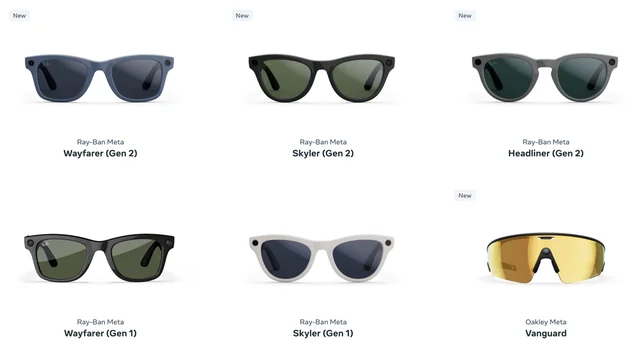
The tech world is buzzing about Meta's latest wearable innovation. After several years of development and refinement, the company has released an updated version of its popular smart eyewear collaboration with Ray-Ban. But does this second iteration deliver meaningful improvements, or is it just an incremental update?
Understanding What's New (And What's Not)
Before diving into the details, it's essential to clarify what we're examining. These are the second-generation Meta Ray-Ban smart glasses—an evolution of the original model that launched several years ago. However, they're distinct from Meta's upcoming display-equipped version, which will feature an integrated screen in one lens.
The current generation maintains a display-free design while incorporating built-in cameras and artificial intelligence capabilities. Several prominent technology publications have tested these glasses extensively, and their findings reveal a mixed but generally positive reception.
Battery Performance: A Game-Changing Improvement
Extended Usage Times
The most significant enhancement in the second-generation model centers on battery longevity. Meta officially claims approximately eight hours of continuous use per charge—a substantial improvement over the original version.
Real-world testing has yielded varying results depending on usage patterns. During intensive stress testing involving continuous music playback, one reviewer achieved just over five and a half hours of operation. While this falls short of Meta's official rating, it still represents a notable advancement compared to the aging first-generation model.
Real-World Performance Scenarios
Under typical daily usage conditions, the glasses performed even better. One tech journalist documented a full workday of use—from 8 AM to nearly 9 PM—incorporating occasional AI queries, photography, video recording, music streaming, and phone calls. Another test involved continuous audio playback during a morning commute, lasting from breakfast at 9 AM through a 1 PM flight departure.
The consensus among reviewers is clear: while actual battery life varies based on how intensively you use the glasses' features, users no longer need to worry about their device dying unexpectedly during the day.
Video Recording Capabilities: Resolution Boost
Enhanced Recording Quality
While the still photography specifications remain unchanged at 12 megapixels with a maximum resolution of 3024x4032 pixels, Meta has significantly upgraded the video recording capabilities.
The new glasses support recording in either 3K resolution or 60 frames per second—though not simultaneously. It's worth noting that the 60 FPS option wasn't available during initial review periods, as it requires a forthcoming software update.
Reviewer Perspectives on Video Quality
Opinions on the video improvements varied among reviewers. Some praised the enhanced clarity, noting that previously blurred edges now appear sharper and more lifelike. For users interested in capturing outdoor adventures like cycling through scenic landscapes, the 3K recording option delivers noticeably better results.
However, other reviewers found the improvement less dramatic than expected. Some expressed disappointment that Meta didn't enhance still photography capabilities alongside video, pointing out that while photo quality remains excellent in optimal lighting, there's room for improvement in low-light performance, color balance, and potentially optical zoom functionality in future iterations.
Artificial Intelligence Features: A Work in Progress
Voice-Activated Assistance
Like their predecessors, these smart glasses offer hands-free, voice-controlled AI functionality. Users can activate the assistant to identify objects captured by the camera, answer questions, or provide information about their surroundings.
Mixed Performance Reviews
The AI capabilities received the most varied feedback from reviewers. While the technology can be genuinely useful for quick queries and information retrieval, its reliability and usefulness remain inconsistent.
Practical Limitations
Several reviewers noted frustrating limitations. The AI assistant sometimes struggles with device-specific questions, such as current video resolution settings or touchpad shortcuts, redirecting users to manual resources instead. When asked to perform tasks beyond its capabilities—like recording a specific video length—the system often responds with a generic "I can't help with that, but I'm learning more every day" message.
Visual Recognition Challenges
The object and scene recognition feature produced unpredictable results during testing. While sometimes accurate in describing surroundings or providing helpful commentary on photographed items, the system occasionally generates inaccurate information or fabricated details. One reviewer described having repeated discussions with the AI (voiced by one of several celebrity options, including Judi Dench) that challenged the accuracy of its interpretations.
Translation Functionality Shines
Despite other AI shortcomings, the live translation feature earned praise from reviewers. One journalist successfully used it during an international trip to follow a guided walking tour in a foreign language. While acknowledging that the feature works better for natural conversations than extended monologues, they noted it enabled participation in an experience that would have otherwise been inaccessible.
The translation capability does come with a caveat: it significantly drains battery life during extended use.
Should You Buy These Smart Glasses?
The second-generation Meta Ray-Ban smart glasses represent a solid evolutionary step forward, particularly regarding battery performance and video recording quality. Current owners of the original model will find meaningful improvements, especially if battery life has been a pain point.
However, prospective buyers should carefully consider their expectations. The AI features, while innovative, remain somewhat unreliable and limited in scope. Those seeking cutting-edge augmented reality experiences might prefer waiting for the upcoming display-equipped version, which promises a more futuristic interface.
For users prioritizing extended wearability, improved video capture, and basic smart features in a stylish package, these glasses deliver value. But if you're expecting revolutionary AI capabilities or dramatic improvements in all areas, tempering expectations is advisable.
Final Verdict
Meta's latest smart glasses collaboration with Ray-Ban demonstrates the company's commitment to refining its wearable technology. While not perfect, the improvements in battery life and video quality address key complaints from the original model. The AI features show promise but need further development to become truly dependable.
Whether these glasses are right for you depends on your specific needs and willingness to embrace technology that's still maturing. They're best suited for early adopters who value the convenience of hands-free recording and audio features in a fashionable form factor, rather than those expecting fully realized augmented reality experiences.