6 Sources of Protein That Aren't Meat: Healthier Alternatives Backed by Science
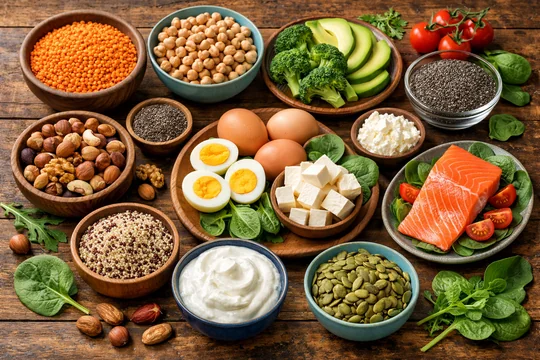
Scientists have long known about the downsides of red and processed meats. Eating them has been linked with increased risks of heart disease, some types of cancer, and earlier death. But the good news is that replacing those protein sources with nonmeat alternatives like legumes, nuts, whole grains, and more can significantly improve your health in the long run — while also being better for the environment and your wallet.
For a practical estimate tailored to your goals, use our calorie target calculator to calculate daily calorie needs, BMR, and TDEE.
Federal guidelines recommend that most adults get about 0.36 grams of protein per pound of body weight per day. For a 150-pound adult, that translates to roughly 54 grams of protein daily. Here are six excellent sources that can help you hit that mark without reaching for red or processed meat.
1. Legumes
Beans, peas, lentils, and peanuts are what Julia Wolfson, an associate professor at the Johns Hopkins Bloomberg School of Public Health, calls "affordable, nutritious and delicious." A half cup of cooked lentils alone packs nearly nine grams of protein.
But protein is just the beginning. Legumes are loaded with fiber, antioxidants, and nutrients like B vitamins, iron, and potassium. Some beans even have more cancer-fighting antioxidants than berries, according to Sara Elnakib, a dietitian at Rutgers University. They're also linked to reduced risks of heart disease and Type 2 diabetes, and they're one of the least resource-intensive protein sources on the planet.
2. Eggs
One egg packs six grams of protein for a relatively low 70 calories, along with vitamin B12, riboflavin, and vitamin D. Eggs are an especially good protein source for vegetarians or anyone wanting to incorporate more meatless meals into their routine.
Experts encourage thinking beyond breakfast — try eggs in a savory omelet or frittata for dinner, or add a hard-boiled egg alongside a vegetable-centric entree.
3. Fish
A 3.5-ounce serving of wild-caught salmon delivers about 22 grams of protein. But the real nutritional advantage of fish over meat is its heart-healthy unsaturated fats. Red meat, by comparison, is rich in saturated fats that can increase heart disease risk.
Dr. Qi Sun of Harvard's T.H. Chan School of Public Health recommends choosing fish that are low in mercury and high in omega-3 fatty acids — like salmon, sardines, anchovies, and trout. Eating omega-3-rich foods has been associated with a reduced risk of heart disease, "especially fatal heart disease," Dr. Sun says.
4. Dairy
Low- and no-fat dairy products are often overlooked protein powerhouses. A one-cup serving of low-fat milk contains about eight grams of protein, two-thirds of a cup of plain nonfat Greek yogurt has roughly 18 grams, and a half cup of low-fat cottage cheese delivers about 12 grams.
According to Alice H. Lichtenstein, a professor at Tufts University, dairy products supply high-quality protein containing every essential amino acid "in the right proportions for the human body to function optimally." They're also rich in calcium and vitamin D — nutrients many people don't consume enough of.
5. Nuts and Seeds
Nuts like almonds, walnuts, pistachios, pecans, and cashews offer between three and six grams of protein per one-ounce serving, along with fiber and healthy fats that support gut health, heart health, and blood sugar control.
Seeds — including sesame, hemp, pumpkin, chia, flax, and sunflower — pack even more punch, with five to nine grams of protein per ounce. They can be incorporated into salads, sandwiches, smoothies, breakfast puddings, or eaten plain as a snack.
6. Whole Grains
Quinoa stands out with about eight grams of protein per cooked cup, along with fiber and unsaturated fats. But there are plenty of other high-protein whole grains to explore, including rolled oats, wild rice, buckwheat, teff, millet, and amaranth. All supply protein along with a variety of essential vitamins and minerals.
The Bottom Line
You don't need to go fully vegetarian to reap the benefits of these protein sources. Even partially replacing red and processed meat with plant-based alternatives, fish, eggs, or dairy can make a meaningful difference in your long-term health. As Dr. Elnakib puts it: "Whatever way you can get them into your system, do that."
The swap doesn't have to be complicated or expensive. Beans can be eaten right out of the can, whole grains can be heated in the microwave, and eggs take just minutes to prepare. Small changes, backed by science from institutions like Harvard, Johns Hopkins, Rutgers, and Tufts, can add up to a healthier life.