5 Surprising Truths About Today's Best Camera Phones
The Illusion of Perfection
At a glance, the camera systems on today's flagship smartphones seem to have reached a plateau of near-perfection. The marketing promises and on-paper specifications for every new "Pro" model suggest they are all incredible, and perhaps, nearly indistinguishable. But is that really the case?
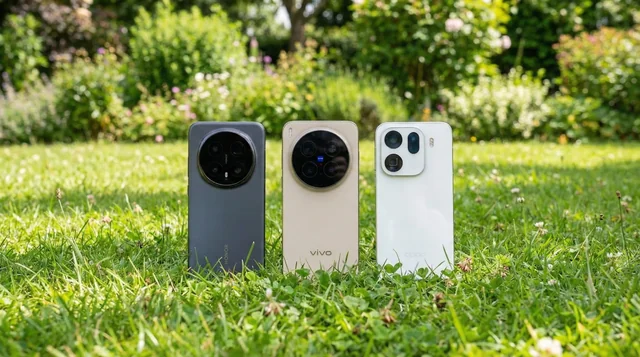
A deep-dive comparison between three of today's top contenders—the Honor Magic8 Pro, Oppo Find X9 Pro, and vivo X300 Pro—reveals a more complex reality. Beneath the surface of similar hardware and pricing, we found surprising and counter-intuitive truths that reveal a fascinating battle between raw hardware specs and the invisible hand of computational photography.
1. The Shortest Lens Can Win the Zoom Race
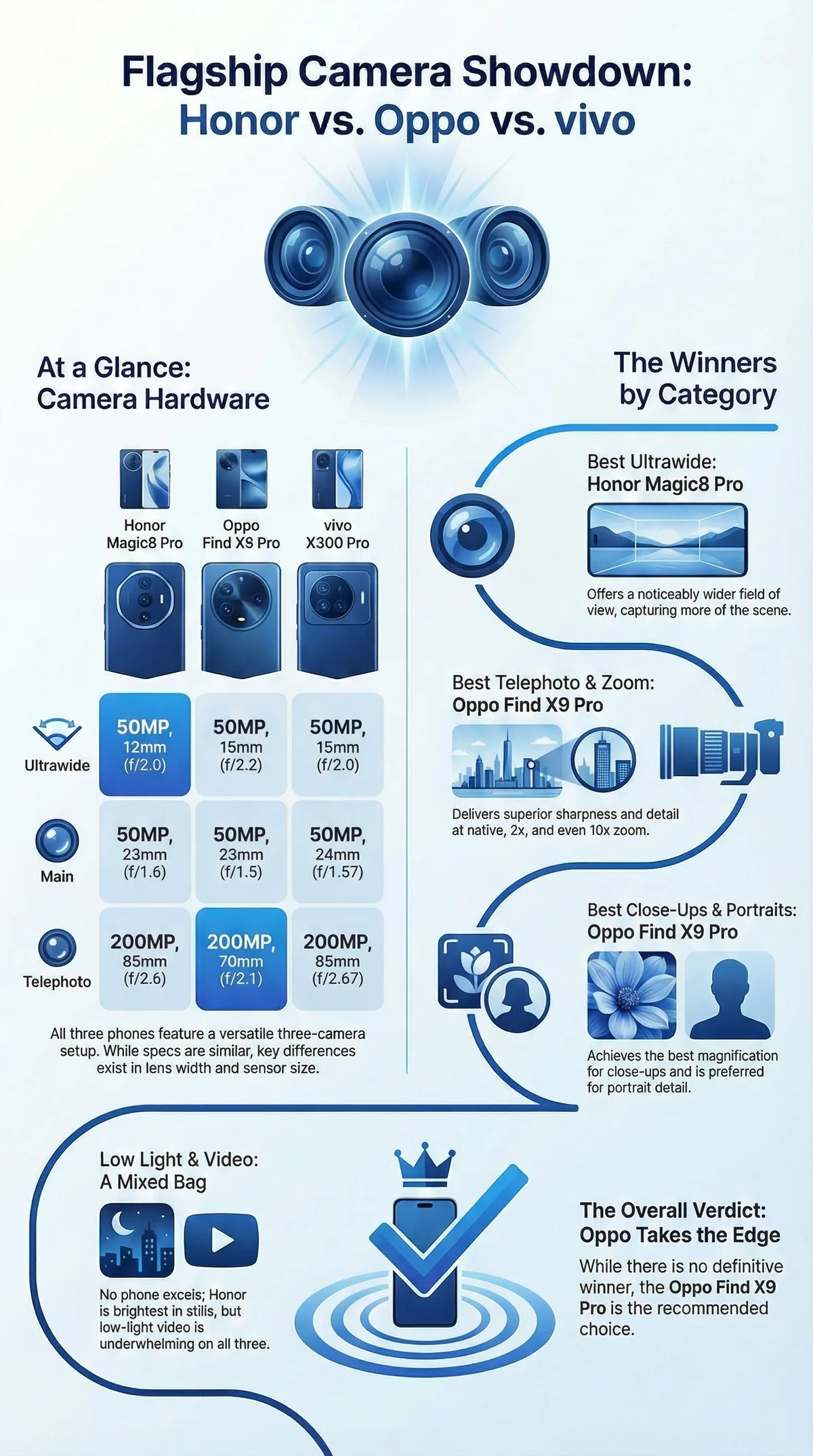
Conventional wisdom in photography suggests that a longer focal length is always better for zooming in on distant subjects. However, our comparison turned this idea on its head. In daylight conditions, the Oppo Find X9 Pro, equipped with a 70mm telephoto lens, consistently produced sharper and more detailed images at extended zoom ranges than its competitors, which both feature longer 85mm lenses.
On a pixel level, the Oppo's daylight images simply look the best. This holds true not just at its native magnification but also when pushed further to 6x and even 10x zoom. In low light, however, the race is much closer, where it's "hard to name a winner," and the Honor's detail often appears more natural. Still, the Oppo's daytime performance is a powerful reminder that a combination of superior lens optics, a wider aperture (f/2.1 vs f/2.6-f/2.7), and sophisticated image processing are just as critical as raw focal length in the race for zoom supremacy.
2. Even "Pro" Phones Can Underwhelm on Video
Despite boasting impressive on-paper video capabilities, including 4K recording at 120 frames per second and support for advanced HDR formats, the real-world video performance of all three flagships was not as impressive as expected.
This disappointment in low light was particularly striking because daylight performance, while not perfect, was a more nuanced affair with each phone showing specific strengths and weaknesses. But when the lights go down, so does the quality. Footage captured with the ultrawide cameras was described as "hard to like," often appearing soft and noisy. Even when shooting with the more capable main and telephoto cameras in low light, the resulting clips were merely "usable without being truly great."
Video recording is something that none of these has us excited about. While more in-depth exploration can yield specific pros and cons, general 4K output is a bit too saturated on the Magic, and a bit lacking in sharpness on the others. Nighttime results aren't wow-grade either.
3. AI Is Getting "Dishonest"—And You Might Love It
Artificial intelligence is playing an increasingly aggressive role in shaping our photos, and the Honor Magic8 Pro is a prime example. For zoomed-in shots in low light, the phone features an "AI enhanced" toggle that dramatically improves perceived sharpness and detail, making photos look undeniably better at a glance.
However, this enhancement was described as being "particularly dishonest" with its rendering of detail, creating a version of the scene that is more algorithmically pleasing than photographically accurate. This trend isn't isolated; the vivo employs a similar zoom enhancement algorithm, but its implementation is even more aggressive as it is enabled by default. This isn't just a feature; it represents a philosophical crossroads for the future of photography.
...is that a bad thing if it delivers results which will look good when shared on socials?
4. A High-End Selfie Camera Can Still Miss the Basics
In a surprising oversight for a premium device, the Honor Magic8 Pro's front-facing camera falls short on a fundamental feature. While all three phones boast 50MP sensors for selfies, the Magic8 Pro uses a fixed-focus (FF) lens—a baffling omission when its rivals feature full autofocus (AF).
This puts the Honor at a clear disadvantage. The fixed-focus system results in "odd occasional softness" in photos, a flaw that is "hardly befitting the phone's high-end aspirations." This basic miss leaves the more capable Oppo and vivo to battle for the top spot in selfie quality.
5. There Is No "Best"—Only the Right Set of Compromises
After extensive testing, the overarching conclusion is clear: at this elite level, there is no single, definitive winner. While the Honor Magic8 Pro, Oppo Find X9 Pro, and vivo X300 Pro share similar hardware and price points, their performance is filled with nuances, trade-offs, and distinct personalities.
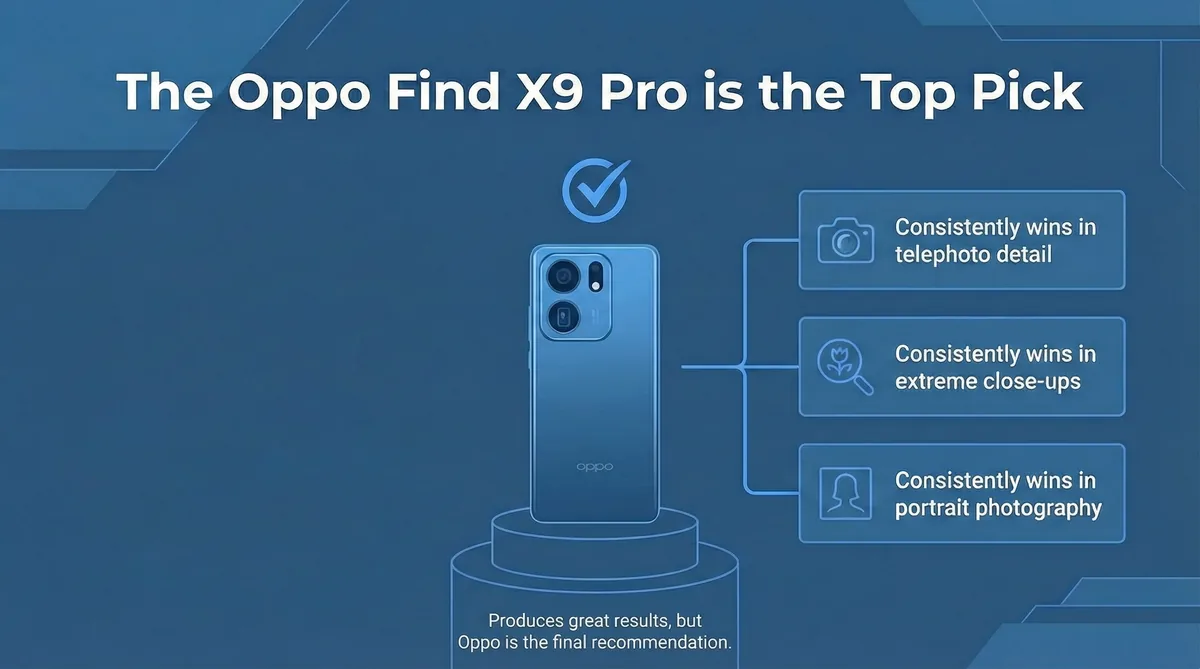
The Honor boasts the widest ultrawide lens by a significant margin. The vivo likely captures the most well-rounded photos with its main camera at 1x, but unexpectedly becomes the weakest of the three at 2x zoom. The Oppo, with its shorter but sharper telephoto lens, consistently excels at portraits and extreme closeups. This makes the choice deeply personal. And yet, when pressed for a single pick, the original reviewers conceded that if they could only walk away with one, it would be the Oppo.
If you're shopping for a high-end cameraphone, you're bound to be faced with compromises in this or that area, but the good news is we've probably reached a point where no compromise is too big to be a dealbreaker.
Conclusion: Your Shot, Your Choice
The battle for the best camera phone is no longer about crowning a single champion. Instead, it's about understanding the subtle but important differences that define each device. The ideal camera is a moving target, defined by a user's unique priorities—whether that's the widest possible view, the most detailed portrait, or the sharpest zoom.
As algorithms become capable of generating detail that never existed, which camera do you truly want: the one that's most faithful to reality, or the one that creates the most beautiful lie?