4 Surprising Changes in iOS 26.3 (And Why the Best One Might Not Be for You)
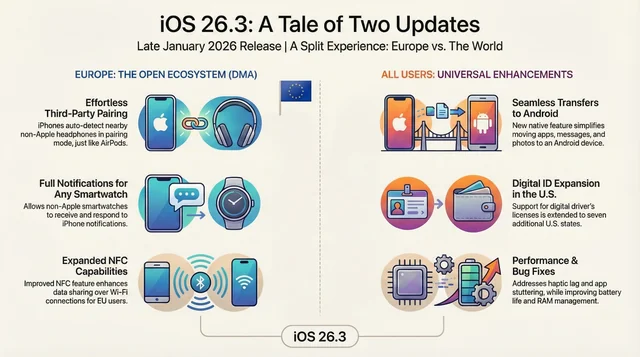
The arrival of a new iPhone software update always brings a sense of anticipation. Users eagerly await the new features, performance enhancements, and bug fixes that promise to refine their daily digital experience. The next major update, iOS 26.3, is expected to continue this tradition, with industry analysis pointing to a release in the last week of January 2026, with January 26th being the most likely date.
But to dismiss iOS 26.3 as a routine update would be to miss the bigger picture: Apple is no longer the sole architect of the iPhone's evolution. Beyond the expected performance tweaks and stability improvements, this update contains genuinely surprising changes that reshape how your iPhone interacts with other devices.
More intriguingly, the most significant and game-changing features are a direct result of where you live. For the first time on this scale, your geographic location will determine which new abilities your iPhone unlocks.
The Big Takeaways from iOS 26.3
1. The Most Game-Changing Features Are Only for Europe
While iPhone users in the United States can expect bug fixes and minor improvements, their European counterparts are set to receive a substantial upgrade. These new capabilities are a direct result of Apple’s compliance with the European Commission’s Digital Markets Act (DMA), a regulation aimed at creating a more open and competitive digital marketplace.
Three EU-exclusive features stand out:
- Proximity Pairing: Third-party wireless headphones and earbuds will now connect with the seamless ease previously reserved for AirPods. An iPhone will automatically detect nearby headphones in pairing mode and display a prompt to connect, eliminating the need to dig through the Settings menu.
- Enhanced Smartwatch Support: The walled garden around notifications is coming down. For the first time, third-party smartwatches will be able to receive and respond to iPhone notifications, a core function that was once the exclusive domain of the Apple Watch.
- Expanded NFC Sharing: A new near-field communication (NFC) feature will improve the ability to share data over a Wi-Fi connection, further opening up the iPhone's hardware for interoperability with other devices and services.
A spokesperson for the EU highlighted the significance of this shift, stating that:
it’s “another step towards a more interconnected digital ecosystem to the benefit of all EU citizens.”
This development creates a two-tiered feature set based on geography and is reminiscent of how EU legislation previously compelled Apple to abandon its proprietary Lightning port in favor of the universal USB-C standard.
2. Your iPhone Gets Closer to Replacing Your Physical Wallet
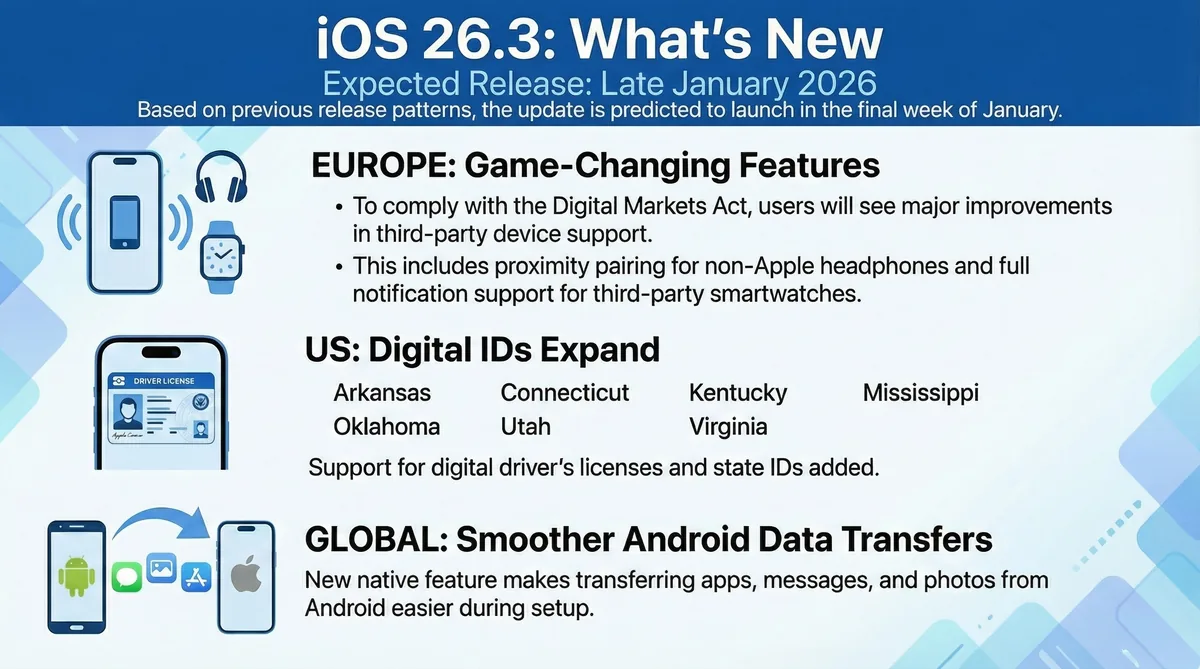
In the United States, Apple is making a significant stride toward a wallet-free future by expanding its digital ID support. With iOS 26.3, seven additional U.S. states will gain the ability to store official driver's licenses and passports directly in the Apple Wallet app.
The newly supported states are:
- Arkansas
- Connecticut
- Kentucky
- Mississippi
- Oklahoma
- Utah
- Virginia
While the expansion is a clear step toward digital convenience, its slow, state-by-state adoption highlights the primary hurdle to widespread use. However, each new state added strengthens Apple Wallet's position as an indispensable "super app," further embedding the iPhone into the essential infrastructure of daily life and making the device even stickier for its users.
3. Apple Is Making It Easier to Switch from Android
Lowering the barrier for new users to enter its ecosystem has become a clear priority for Apple. iOS 26.3 introduces a new native feature designed to make transferring data from an Android device to a new iPhone more seamless than ever.
Developed in collaboration with Google for its upcoming Android 16 release, this feature replaces previous proprietary app-based solutions with a more deeply integrated process. It allows for a direct and reliable transfer of core data—including apps, messages, and photos—during the initial iPhone setup. This strategic move makes the prospect of switching from Android less daunting and directly targets "switchers" as a key growth vector in a saturated global smartphone market.
4. It’s Fixing the Annoying Little Things
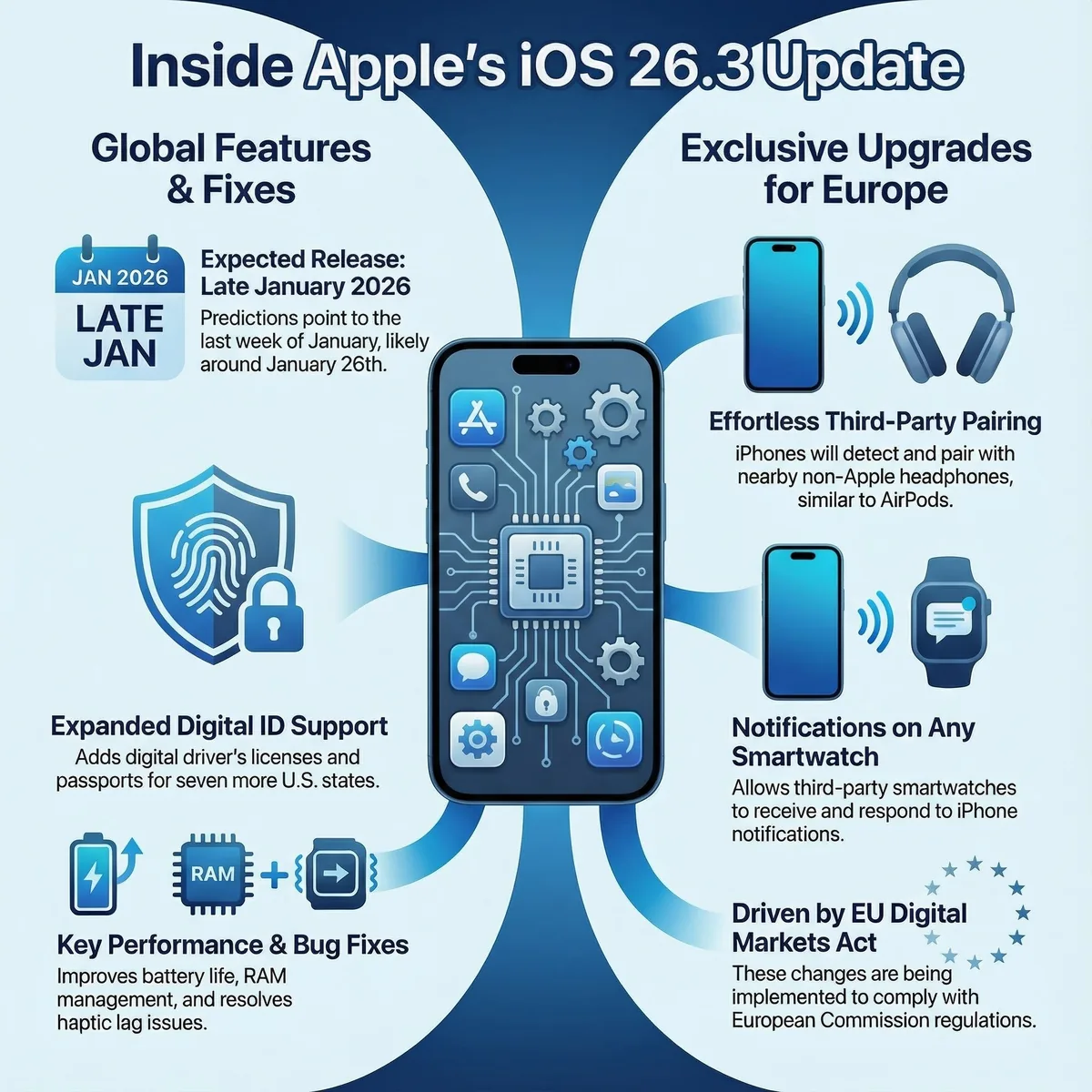
While major features grab the headlines, the most crucial updates often involve fixing the small but persistent annoyances that impact daily use. The beta versions of iOS 26.3 show a strong focus on stability and performance, addressing several user-reported issues.
Key performance improvements and bug fixes include:
- Haptic lag resolution: Feedback in the control center is now smoother and more responsive.
- App library optimization: Navigating through the app library is less prone to stuttering.
- Enhanced RAM management: Multitasking feels smoother thanks to better memory allocation.
- Improved battery life: The update includes key optimizations designed to extend usage time.
While beta feedback indicates this is a solid step toward a more stable operating system, some long-standing issues may persist. Users should be aware of reports of continued keyboard lag, occasional freezing in the camera app, intermittent Wi-Fi disconnections, and CarPlay connectivity problems.
iOS 26.3 perfectly illustrates the fragmentation of the global software experience, showcasing how a single operating system must now serve two masters: Apple's strategic product roadmap in the US and the European Commission's regulatory agenda abroad. It simultaneously opens up the iPhone ecosystem in one part of the world while deepening its integration into government services in another.
This release highlights a growing trend where the evolution of our most personal devices is no longer dictated solely by the companies that make them. It leaves us with a compelling question for the future: as our devices become more integrated into our lives, will the most impactful software changes come from a company's own innovation, or from the push of outside regulation?