12 US States Introduced Data Center Moratorium Bills in 2026 — Only One Is Still Advancing
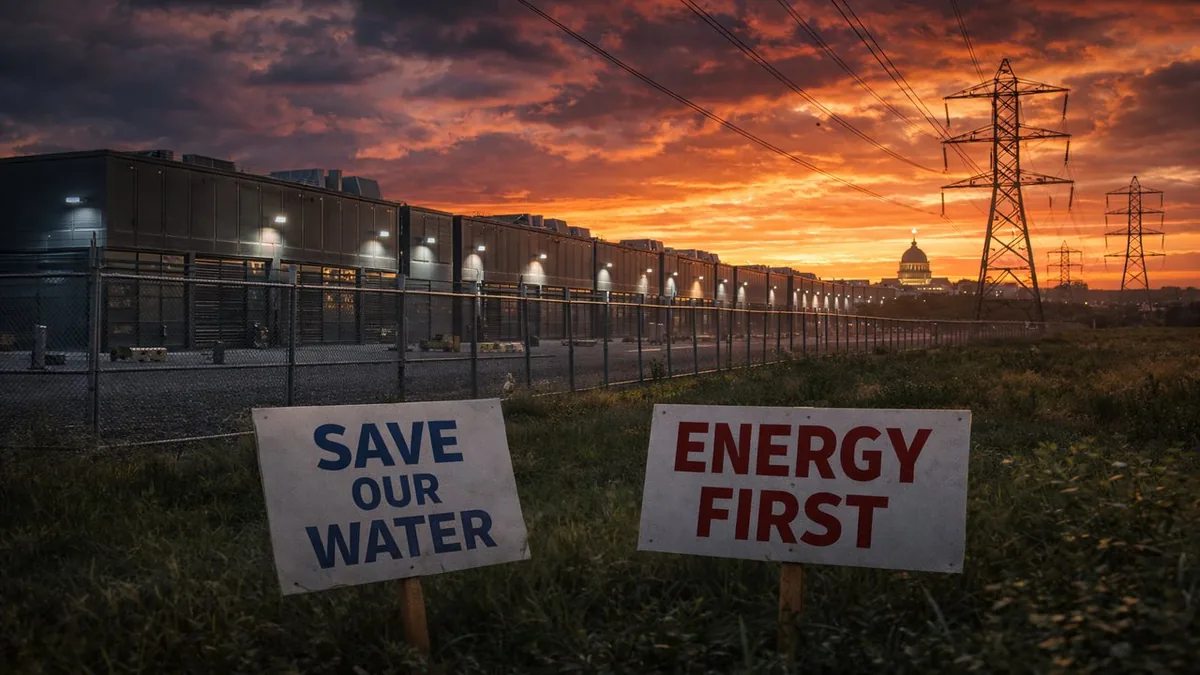
US state lawmakers introduced 12 separate bills in 2026 seeking to impose moratoriums or restrictions on AI data center development — a wave of local resistance to the infrastructure buildout underpinning the AI boom. Of those 12 bills, 11 have stalled in committee or been voted down, reflecting the strong opposition from tech industry lobbying and economic development interests. One bill, in Maine, is advancing to a final floor vote on April 15, making it the only active legislative threat to data center expansion in any US state, Business Insider reported.
Why States Are Pushing Back on Data Centers
Data centers are infrastructure-intensive facilities that consume enormous amounts of electricity and water for cooling, require significant land, generate significant noise from cooling systems, and — despite the economic development arguments made by their proponents — create relatively few permanent local jobs per dollar invested. A hyperscale AI data center might employ dozens of permanent staff while consuming the electricity of tens of thousands of homes. For communities near proposed facilities, the cost-benefit calculation looks very different than it does for state economic development agencies competing for investment.
Water consumption has become a particularly acute concern. AI training and inference workloads generate substantial heat; liquid cooling systems — increasingly the default for high-density GPU clusters — consume millions of gallons of water annually at the facility level. In water-stressed regions, including parts of the US Southwest and increasingly the Southeast, water-intensive data centers face local opposition that has translated into legislative action. Maine's bill focuses on energy grid strain and local environmental impact, reflecting concerns specific to that state's smaller grid and environmental priorities.
Why 11 of 12 Bills Failed
The failure rate of data center moratorium bills reflects the political economy of large-scale infrastructure investment. Tech companies building AI data centers bring investment commitments measured in billions of dollars, construction jobs, and the cachet of association with the AI economy. State economic development agencies compete aggressively for these investments, and the companies wield these commitments as political leverage. The Amazon Mississippi data center investment announcement illustrates the pattern: $25 billion in announced investment creates powerful political incentives to welcome data centers rather than restrict them. Bills that would block or slow data centers face organized, well-funded opposition from both the tech industry and the state officials who secured the investments.
Frequently Asked Questions
What are data center moratorium bills?
Data center moratorium bills are proposed state laws that would pause, restrict, or impose new requirements on the construction of large-scale data center facilities. In 2026, 12 such bills were introduced across US states, primarily due to concerns about energy consumption, water use, and local environmental impact.
Which state has the best chance of passing a data center moratorium?
Maine's bill is the only one of 12 introduced in 2026 that has advanced to a final floor vote, scheduled for April 15, 2026. The other 11 bills have stalled or been voted down.
Why do AI data centers face local opposition?
AI data centers consume electricity equivalent to thousands of homes, use millions of gallons of water annually for cooling, and create relatively few permanent local jobs per dollar invested. Communities near proposed facilities often see the environmental and infrastructure costs as outweighing the economic benefits.
The Bottom Line
The near-complete failure of data center moratorium bills in 2026 reflects the overwhelming economic and political momentum behind AI infrastructure investment — but the persistence of the effort signals that local communities are not uniformly welcoming the AI buildout. Maine's April 15 vote is worth watching: if it passes, it will be the first US state to impose a legal restriction on AI data center development, potentially creating a template that other states revisit. More broadly, the pattern of local resistance to energy-intensive infrastructure — whether data centers, natural gas plants, or transmission lines — is a structural constraint on how quickly the AI industry can build the compute capacity it needs.